

n our most recent “On Your Mark” columns, we’ve focused on ANSI Z535 – the U.S. standards that create a guide for the design, application, and use of signs, colors, and symbols intended to identify and warn against hazards and for other accident prevention purposes. These standards, along with their international counterpart, ISO 3864-2, can be effective starting points in helping you to develop adequate warnings. The standards are intended to be guidelines, not prescriptive instructions for the right symbol or content choices for your product or situation. And, that’s why implementation can be tricky; you need to understand the standards and best practices and then apply them in a way that works best for your product and its audience. In this column, we’ll look at the practical implications of implementing a “wordless” approach to your safety labels or safety label program.
“Wordless label formats are able to be used domestically in the U.S. and internationally; they meet both the ANSI Z535.4 and ISO 3864-2 standards. The ANSI Z535.4 standard doesn’t specifically include this label format, but ANSI allows manufacturers to use it through its section 3.1.1, which allows for the use of ISO formats,” says Angela Lambert, ANSI Z535 committee member and head of standards compliance at Clarion Safety Systems.
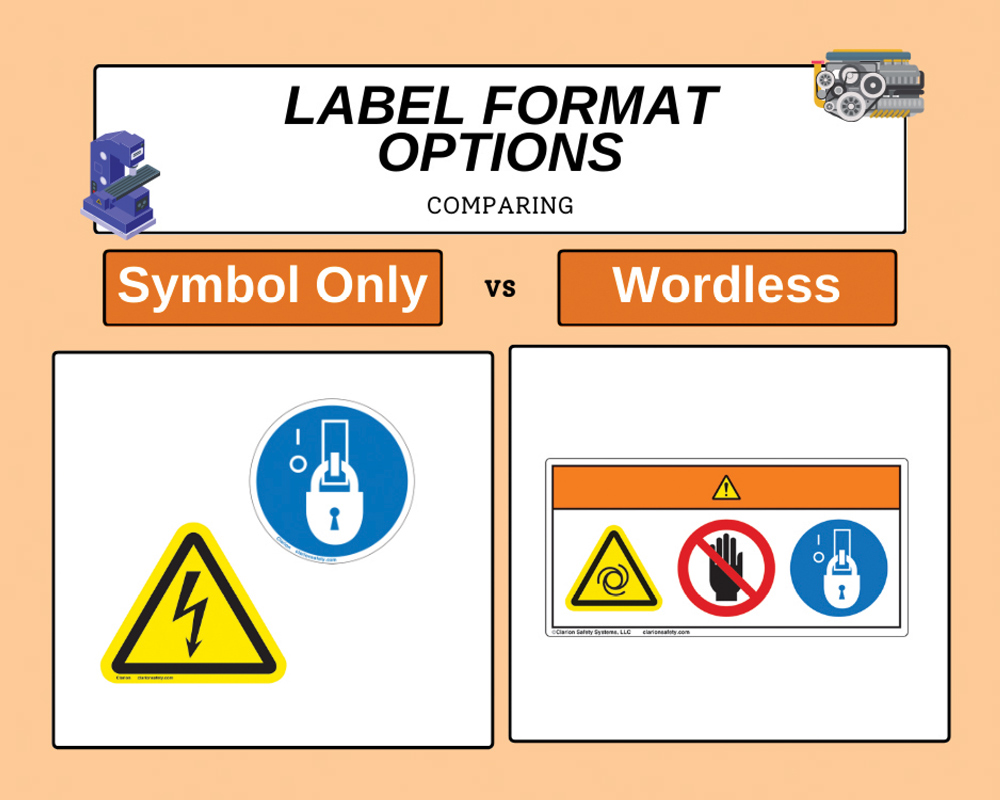
“While warnings do need to have complete information so product users can be fully informed, they also have to clearly communicate,” Lambert says. “That can be the first hurdle that those responsible for product safety face. The existing labels being used may show a long list of information or too much text, potentially without the use of symbols. That can lead to the warning being illegible or even ignored.”
A case in point is shown in Figure 2, in the example at left. The content in the label shown is text-heavy, not well-organized, redundant, and isn’t complemented with symbols to call attention and reinforce meaning.
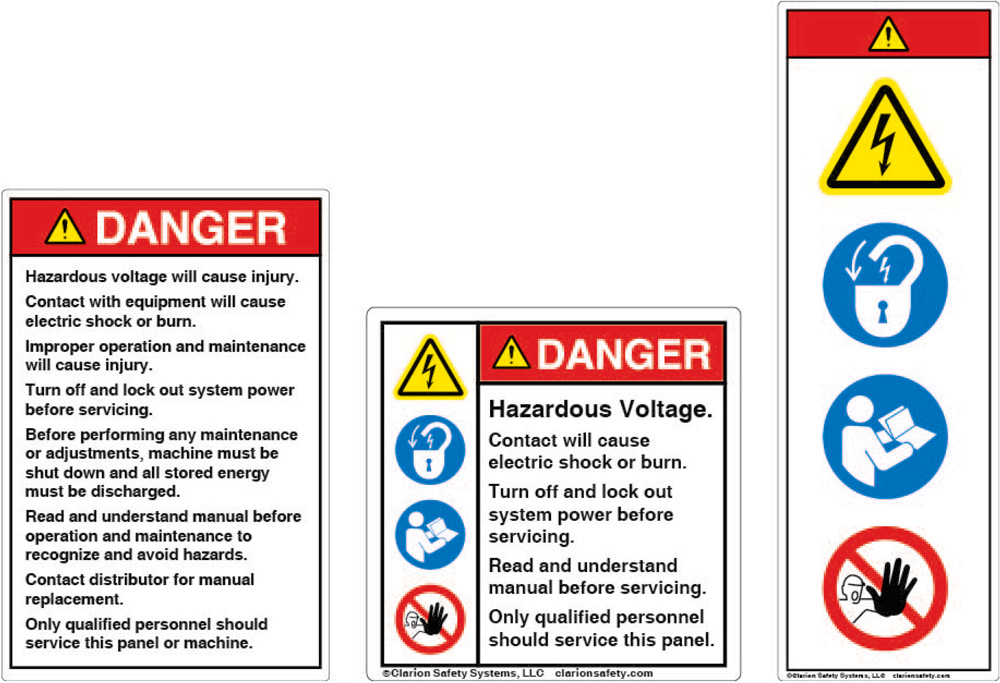
Lambert continues that when choosing to implement a wordless approach rather than an ANSI-style symbol and text approach, it’s important to weigh the pros and cons related to the product and its anticipated audience.
“The wordless approach is acceptable for use domestically in the U.S. and internationally – and certainly has benefits when it comes to communicating across language barriers, without translations. If the aim is to have one format of label that can be used for a variety of markets, wordless format labels may be especially appealing,” Lambert says.
“Those striving to implement this format will want to look closely at comprehension concerns. Consider items like use of standardized symbols and comprehension of the symbols used as well as the characteristics of the audience and if warnings are supported by a well-structured, clear and accessible manual that provides further context and instructions.”
While there’s not one perfect or failsafe solution to labeling or implementing a wordless approach, reviewing the standards and spending time to interpret how best to implement them can help in the journey to create effective, best practice labels, as part of a comprehensive product safety strategy.