

his investigation is the first to examine how mechanical movements impact CDM stress, revealing that such movements add stress to the Device Under Test—a finding relevant for Field‑Induced CDM testers and any tester requiring part movement to trigger a zap. The study provided clear evidence of unwanted zaps caused by contact bouncing and proposed mitigation solutions. Based on these findings, the tester supplier modified the tester’s software, representing evolutionary but significant progress in improving test accuracy and reliability.
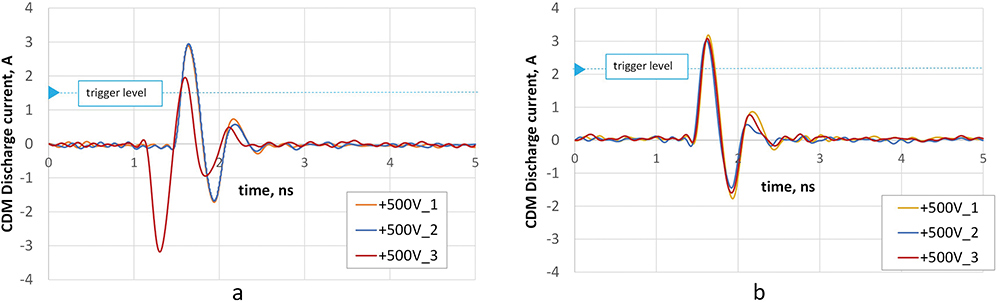
During FI-CDM testing, discharge current polarity can sometimes oppose the stress condition. In Figure 1, a negative zap occurs despite a +500V stress condition. We refer to this unintended zap as a secondary discharge.
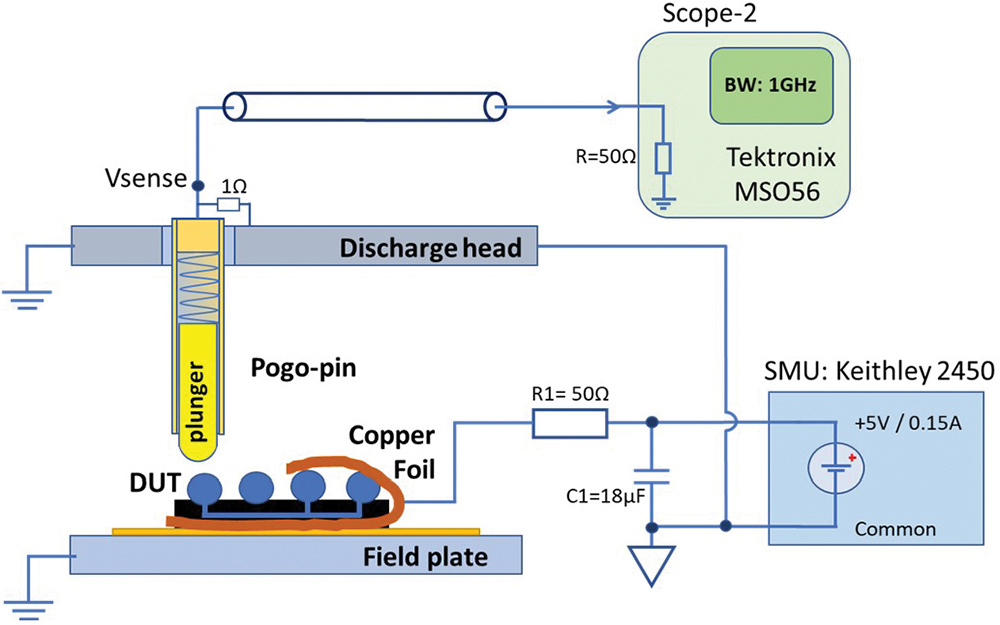
During CDM stress, the test part is placed in a dead‑bug position on a field plate. A CDM discharge is triggered when the pogo pin contacts the part [1]. Both the discharge head and pogo pin are grounded. The discharge head’s movement is motor-controlled, guided by software and the x, y, z coordinates set during part alignment [2].
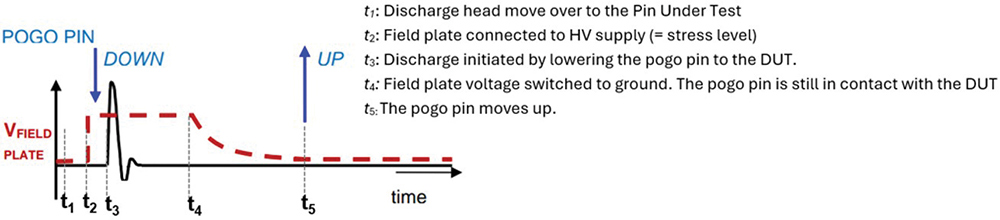
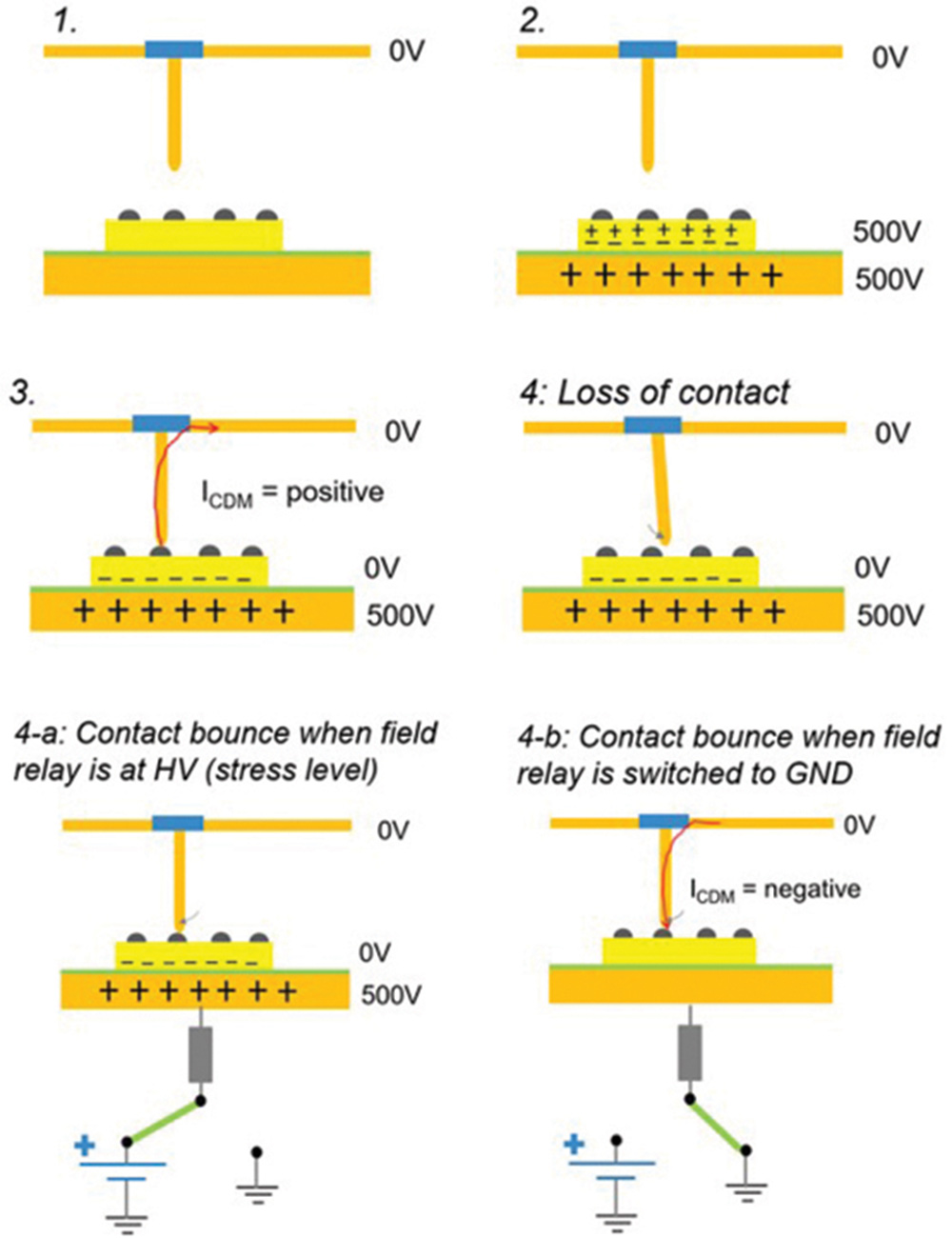
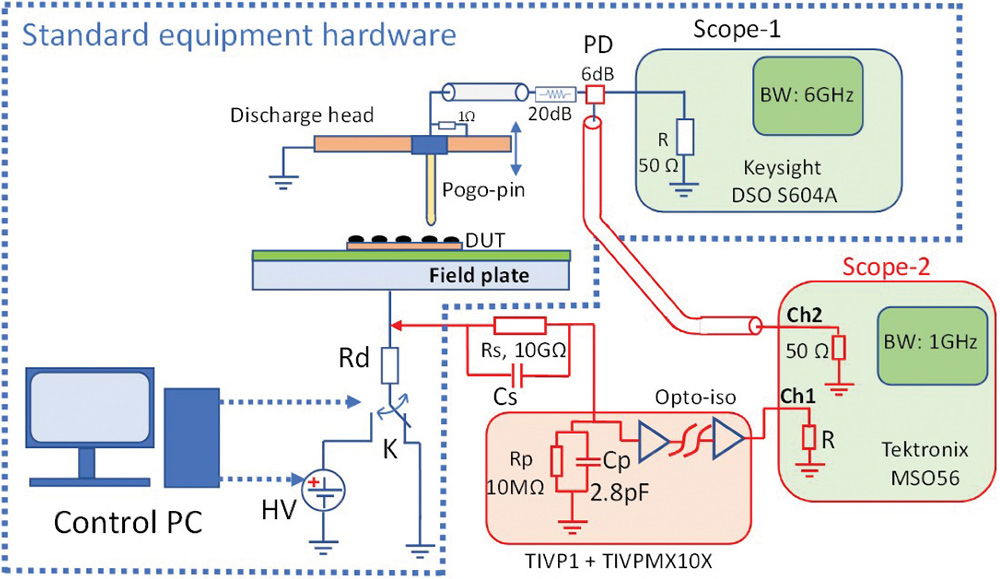
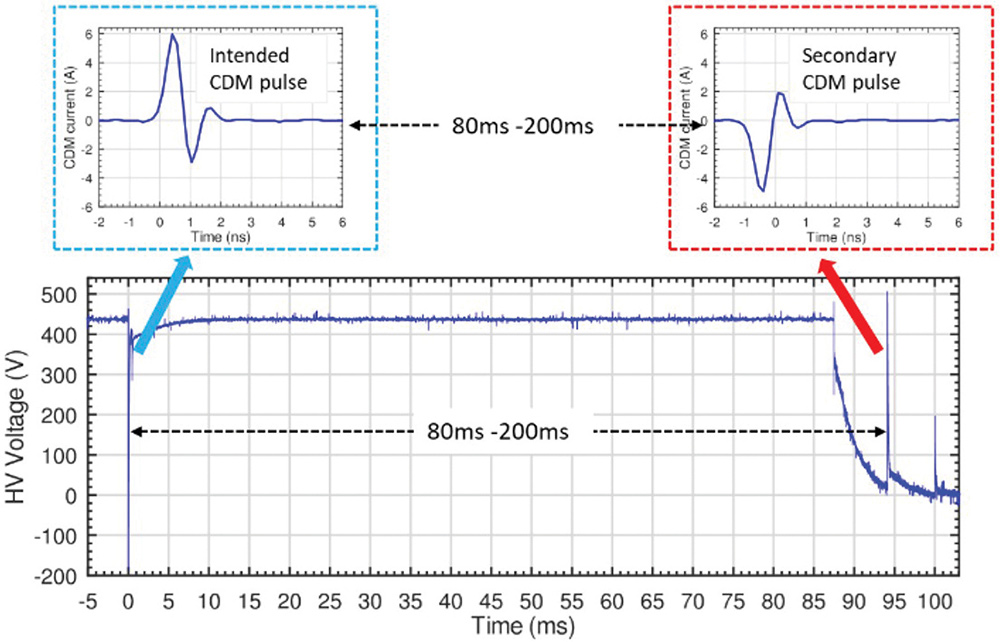
- In the SD mode, secondary discharge occurs just after the voltage on field plate switches from HV to ground.
- The discharge time set in the test program does not have any impact on the duration of the HV on field plate nor the time at which the secondary discharge occurs.
Voltage measured at Vsense for several Z-stop settings is shown in Figure 7. Z-stop is the alignment position in the z-direction. Also marked in the graph are the timings of the relevant events. When z = Z-stop, the motor stops movement. The higher the magnitude of z, the deeper the pogo is pushed. From Figure 12-d we see that when Z-stop = 100.96mm, there is no mechanical bouncing. But when Z-stop=100.83mm, the pogo pin does not make contact for most of the time. For any z in between, the contact is broken several times.
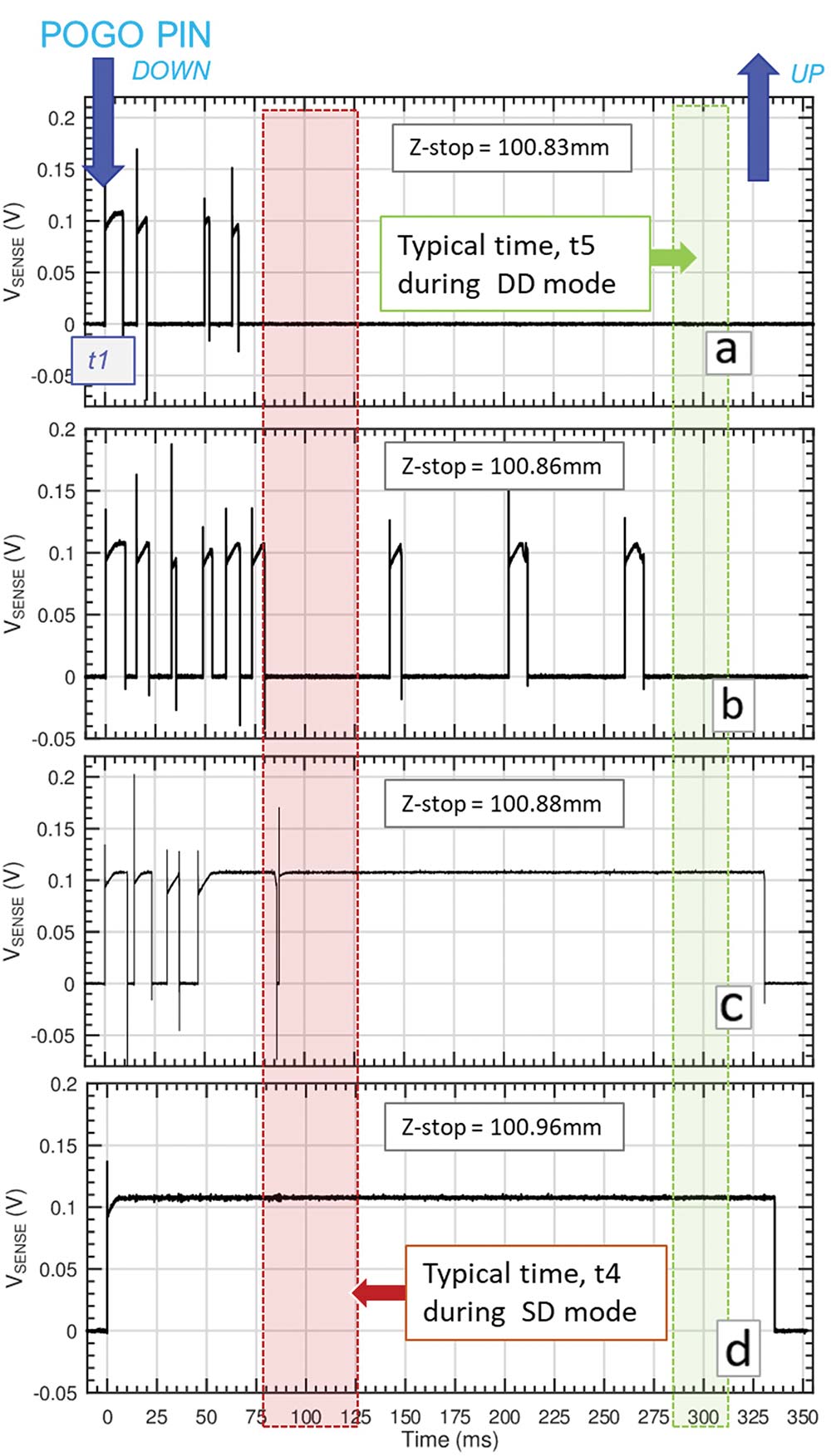
- Increase the overdrive in z-direction. Be careful. too much overdrive can push the sample away.
- Change tester firmware to ensure switching of the field plate voltage after the vibrations have damped out.
- ESDA/JEDEC JS-002-2022, “Charged Device Model (CDM) Device Level”, 2022.
- Orion 3 CDM Test System. Operation Manual MA-70-100-005-00-A Thermo Fisher Scientific, 2017.