

he shift from internal combustion engine (ICE) automobiles to electric vehicles (EVs) has come with an array of new subsystems and components that introduce new EMC considerations. The level of complexity involved in automotive electromagnetic compatibility (EMC) testing increases with dynamic driving conditions, where manufacturers not only have to refer to the framework standards offered but must also improvise and establish new internal standards to ensure the vehicle and its internal components all function properly under all driving conditions. A number of challenges may arise when building a suitable test bench that thoroughly tests EVs and electrical components.
This article discusses the importance of EMC testing in the automotive industry, as well as dynamic EMC test systems and their inherent challenges. It also describes the development of a unified EMC test platform for dynamic driving conditions.
- High-voltage battery system
- E-drive (inverter + electric motor)
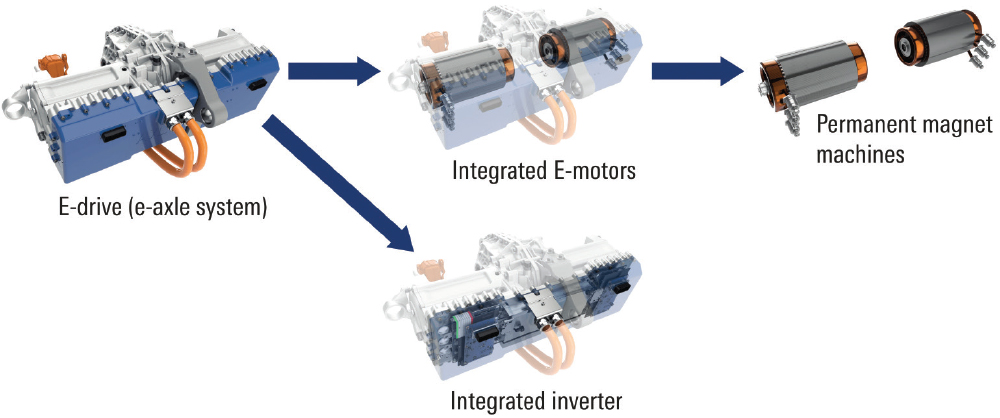
The EMI problem worsens with the integration of more sensors and communications technology (e.g.,Bluetooth®, Wi-Fi, LTE) that may be easily disturbed by the EMI from the E-drive. Sensitive radar, LiDAR sensors, and cameras that are integrated into Advanced Driver-Assistance System (ADAS) systems will be affected by excessive EMI. This is an unacceptable risk in safety-critical systems such as brake assistance and cruise control, making EMC testing a top priority for OEMs.
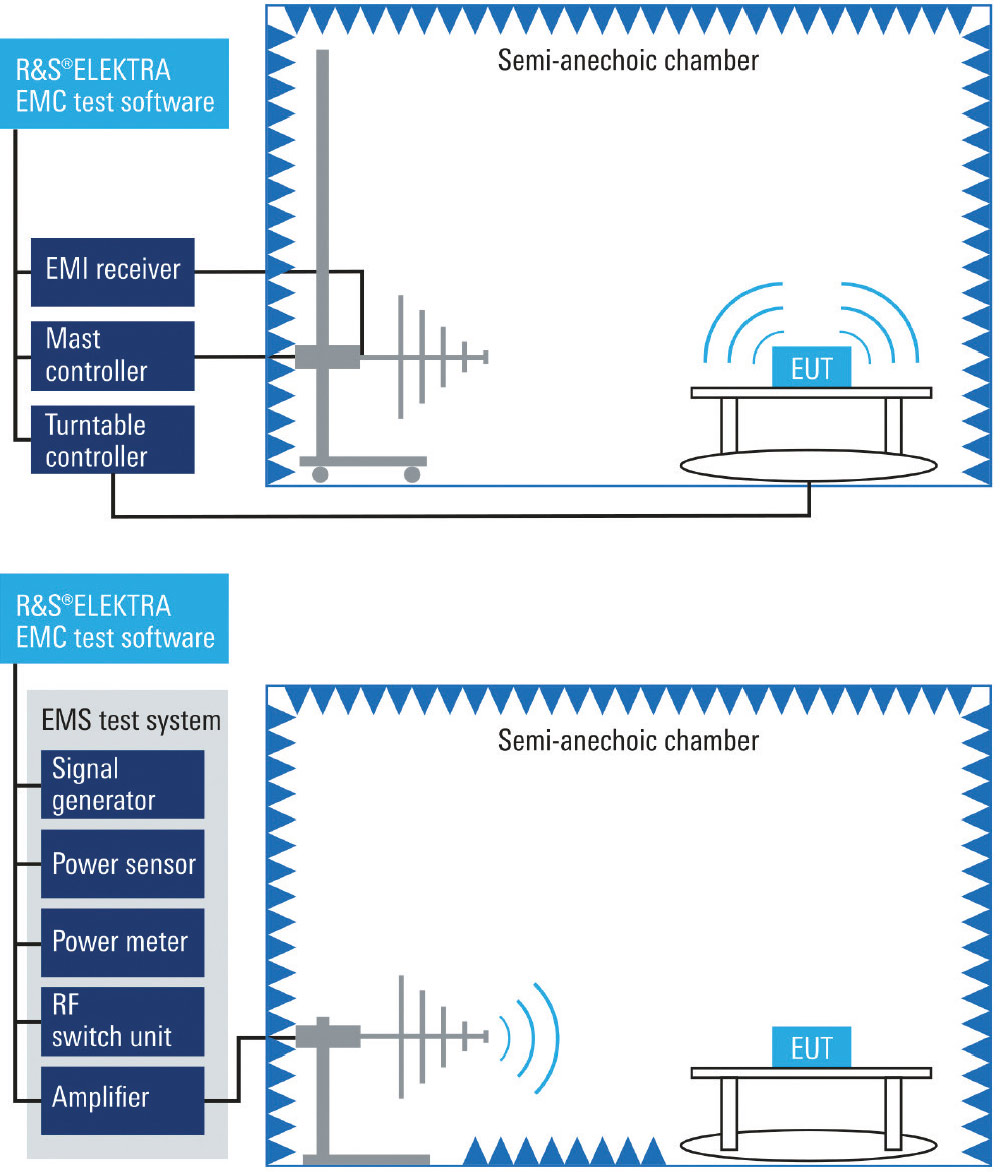
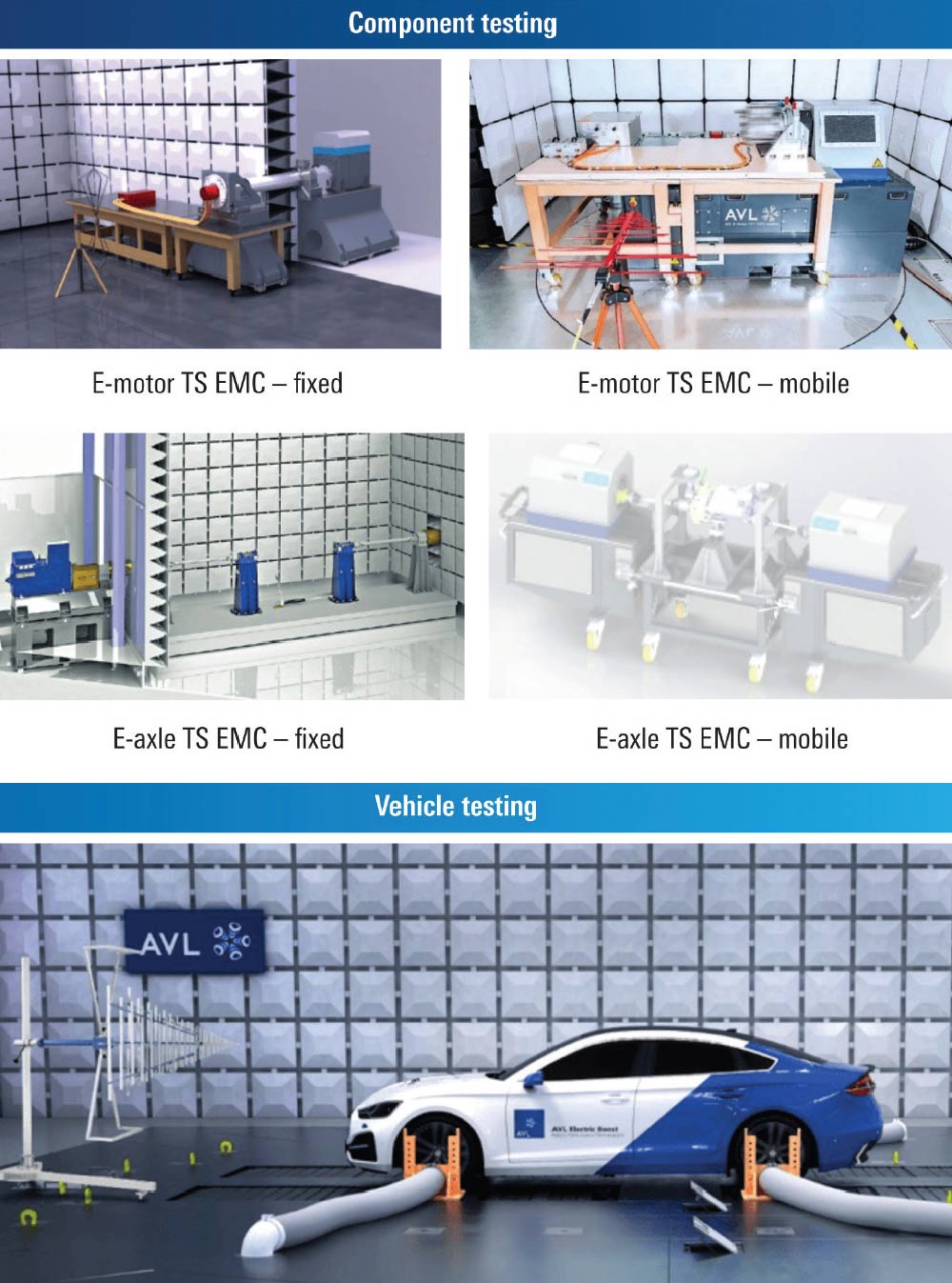
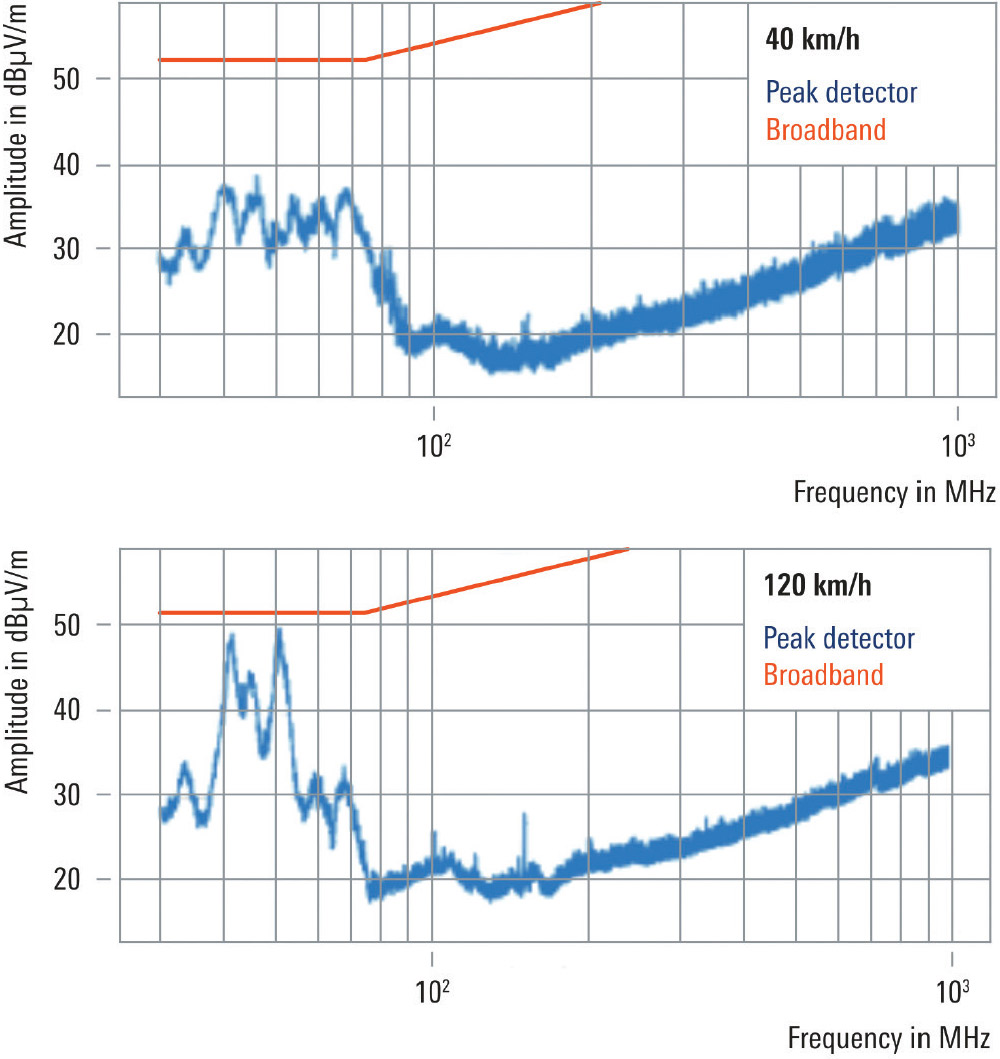
As an example, the CISPR12 standard requires EVs to be tested while at a constant speed of 40 km/h. However, emissions are quite different at varying speeds (Figure 4). When the vehicle runs at a speed of 120 km/h, emissions nearly reach the CISPR12 standard limits. This problem becomes even more pronounced under dynamic vehicle conditions such as vehicle acceleration or speed reduction and battery charging (recuperation).
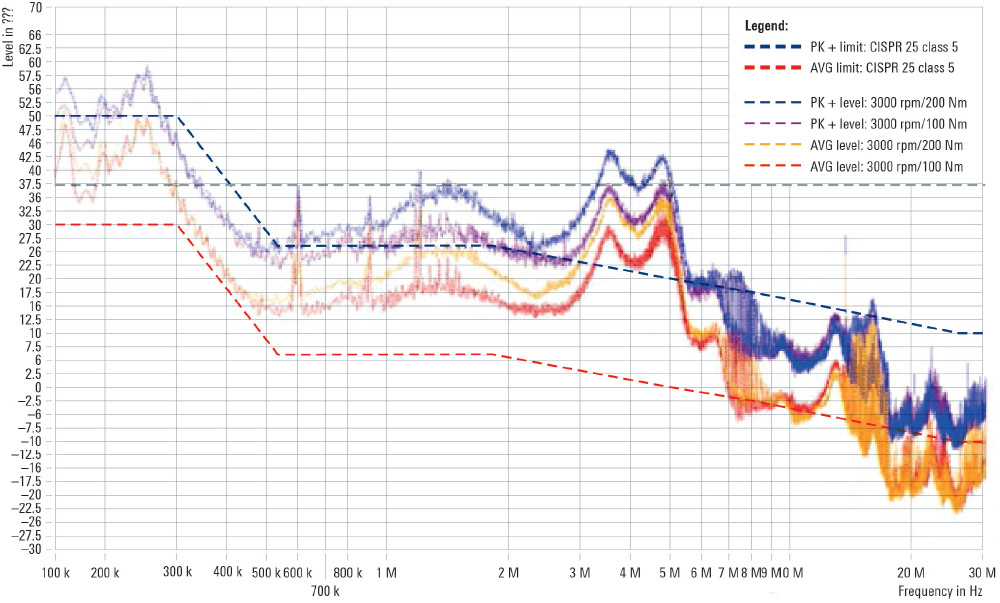
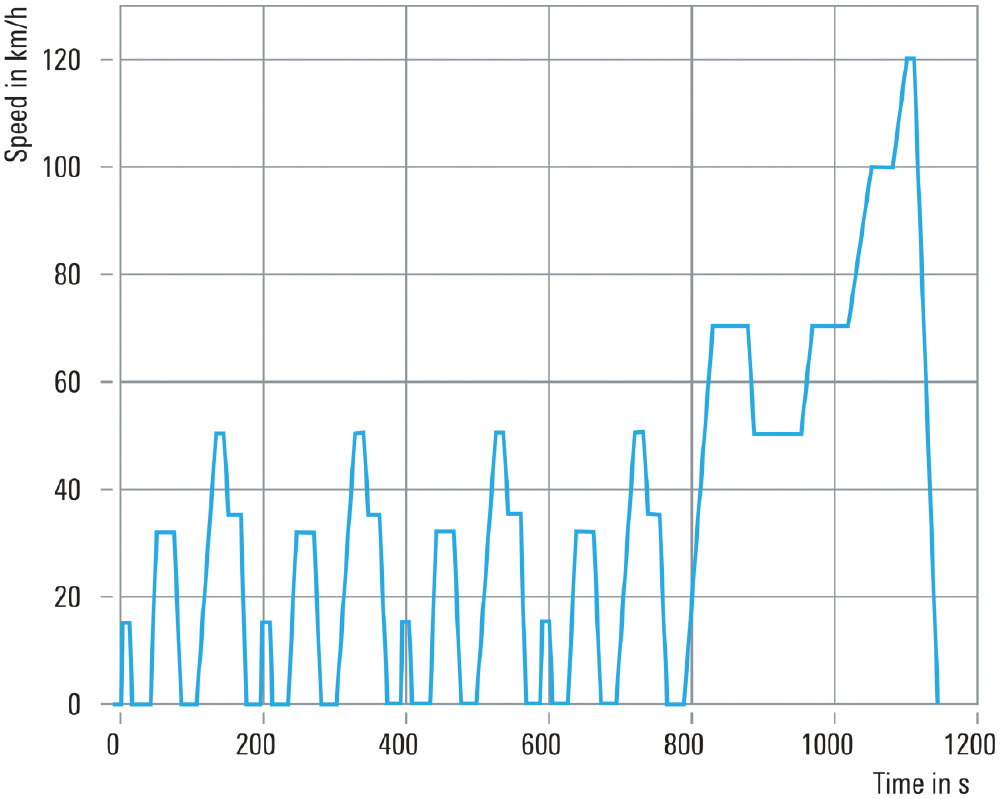
Setting these dynamic speed (rpm) and torque (Nm) conditions on an EUT has grown in complexity. In the past, it was possible to run EMC test software on a vehicle that was simply running at a constant speed. However, this is not sufficient for accurately characterizing a vehicle’s emissions. Now, more complex speed profiles or driving cycles (DC) are used for vehicle energy simulation and evaluation with standard profiles such as the worldwide harmonized light vehicle test cycle (WLTC) and new European driving cycle (NEDC) for Europe and 10 mode (J10) for Japan (Figure 6).
- Constant speed
- High speed
- Low speed
- Acceleration
- Deceleration
- High torque
- Low torque
Finding worst-case issues with the EUT by varying parameters such as torque and speed, for example, requires more advanced communications between the EMC automation software and the test bench that simulates the road and driving conditions.
On top of this, OEMs add their own EMC testing standards and requirements. While some may change a few parameters to modify the testing to their own specific needs, most will raise the bar of the general standards even higher. Existing EMC standards may not be sufficient to ensure their products work properly. Establishing international standards is often a long, drawn-out process that involves studies, multiple proposals, and alignment between different parties.
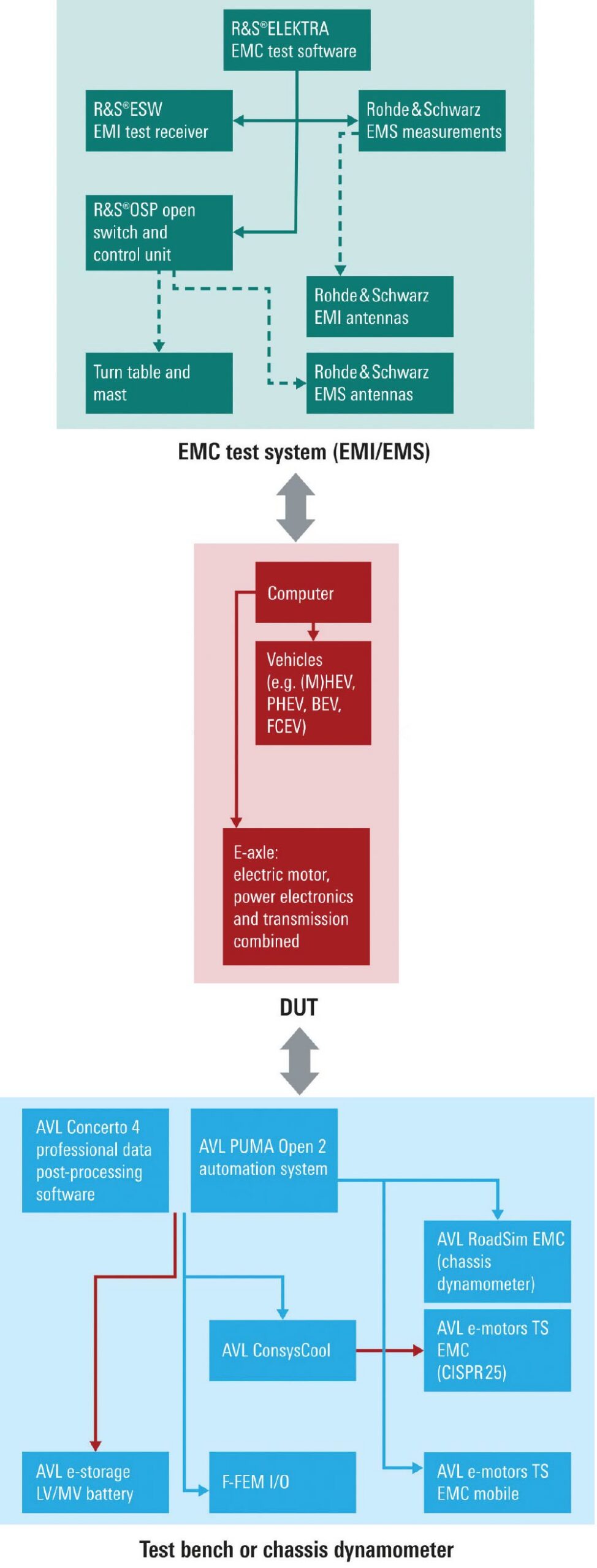
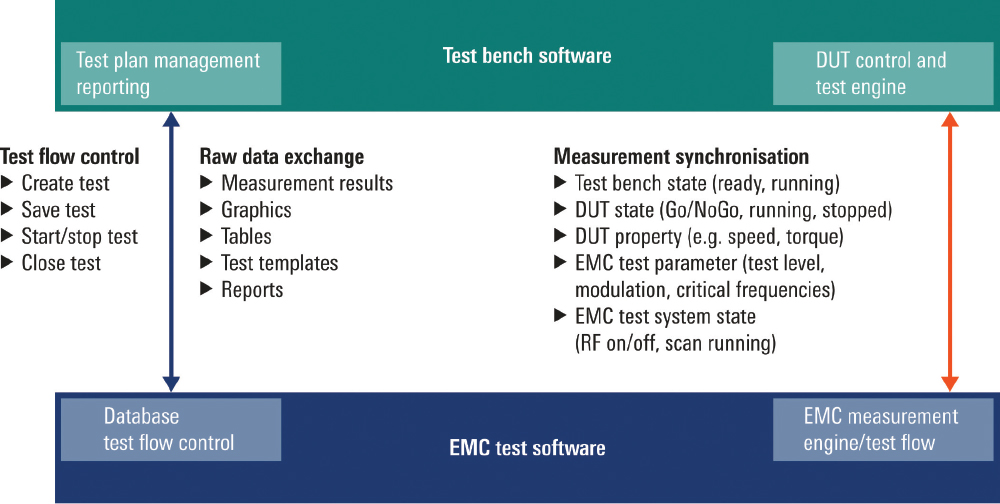
This is a challenge that often involves users manually controlling the test bench software and EMC measurement system, with little to no collaboration between the two systems. The combined approach presented in this article provides full testing coverage in one integrated system, where one software package can remotely and automatically control the other. This eases EMC testing – particularly dynamic automotive testing – where complex sequences can be easily run.
The combined solution also simplifies testing for OEMs with custom-tailored EMC testing and allows companies to be ahead of the market and easily prepare for new EMC compliance requirements with testing beyond current established standards.
