

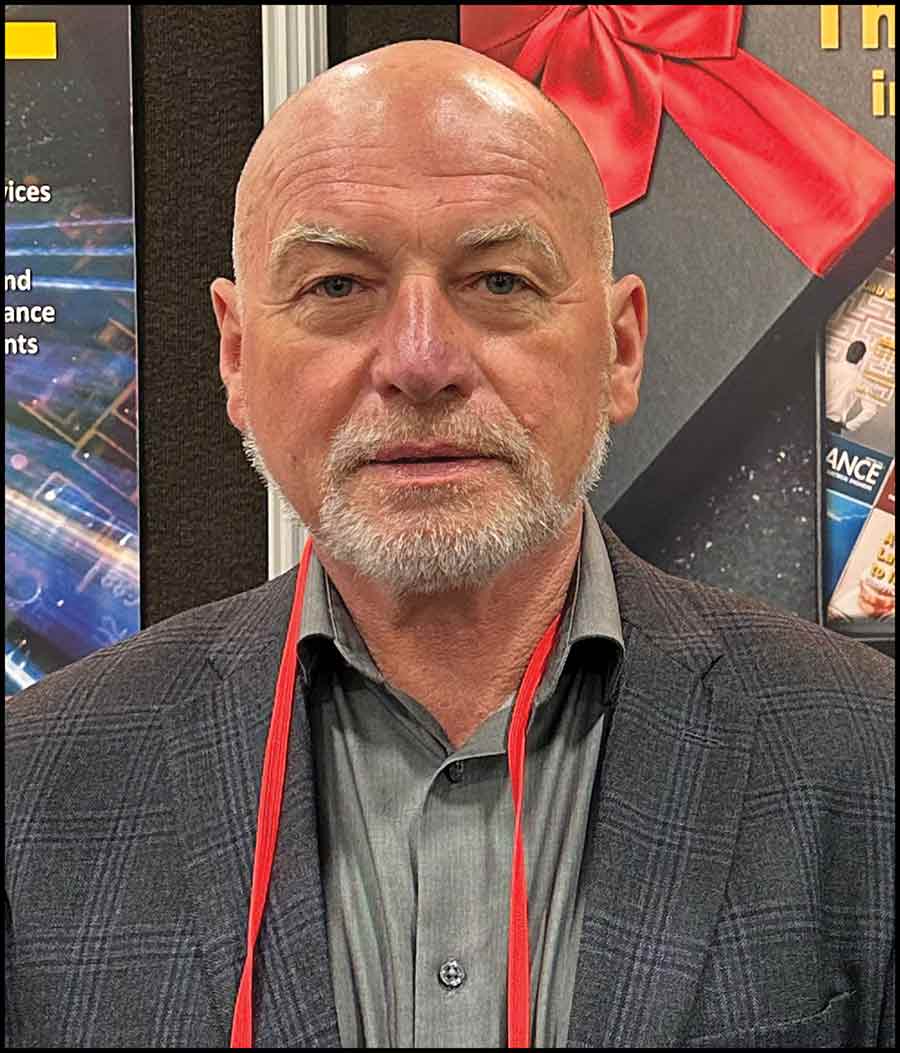
Bogdan’s knack for taking the thorniest corners of EMC (shielding effectiveness, reciprocity, near- and far-field behavior) and working through them until they actually click has been a rare gift to In Compliance readers over all those years.
We’re grateful for every installment, and we wish Bogdan a well-earned retirement.
The ICM Team
The guidance, titled “Intent to Exempt Certain Unclassified Medical Devices from Premarket Notification Requirements,” expands to 13 the list of medical device product codes that meet the standards for exemption under the agency’s premarket notification requirements detailed in section 510(k) of the FDA’s Safety and Innovation Act.
The updated list covers a range of devices, including ear, nose, and throat devices (such as hearing protectors and speech training aids for the hearing impaired), general and plastic surgical devices (e.g., pads, alcohol, and device disinfectants), obstetrical and gynecological devices (including fertility diagnostic devices), and toxicology devices (isoniazid test strips).
As a reminder, guidance documents issued by the FDA are not a substitute for applicable laws and regulations and are intended solely to provide information on the agency’s current perspective.
A team headed by Charles Buhler, a former engineer at the U.S. National Aeronautic and Space Administration (NASA), has developed a propulsion system for use aboard spacecraft that utilizes electric power generated in an onboard vacuum chamber.
Buhler, who, during his tenure at NASA, worked on groundbreaking spacecraft designs, including the Space Shuttle, the International Space Station, and the Hubble Space Telescope, is reportedly well-versed in the innovative use and management of electrostatic energy. Buhler now co-leads a private company that focuses on the development of new and innovative propulsion systems and technologies.
Buhler says that their newly developed electrostatic energy system is not ready for a test deployment and that further development and testing will rely on future partnerships and additional funding. But he is optimistic.
According to a Public Notice, the Commission’s latest action follows a National Security Determination issued by the U.S. Department of War (DoW) that “toy drones” and “toy drones that contain foreign-produced components,” two specific classes of uncrewed aircraft systems (UAS, or drones), do not pose an unacceptable risk to U.S. national security or the safety and security of U.S. persons.
Further, the Determination states that:
“The core of this determination rests on a clear distinction between unsophisticated, low-risk toys that are not capable of operating efficiently in U.S. airspace”…and that “Toy drones lack the organic capabilities and features in range, endurance, sensing, payload, connectivity, and data collection and storage.”
The Determination then details a list of criteria that drones must meet to qualify for exemption from the Covered List, including a maximum take-off weight of not more than 150 grams, and a line‑of-sight operational limit not to exceed 100 meters.
In the first case, the Bureau has proposed a fine of $25,000 for Albercio Mercado for “willfully and knowingly” operating radio station “Manzana FM” in the Bronx without proper FCC authorization. The illegal operation was confirmed by agents from the FCC’s New York Field Office, who investigated the alleged unauthorized broadcast following consumer complaints, and tracked the location using direction finding techniques.
The field agents confirmed that Mercado was the operator of the illegal broadcasting through a video posted on his Facebook page, in which Mercado identifies himself, the station name, and the station’s frequency.
In the second case, the Enforcement Bureau has proposed a fine of $20,000 for Neville and Lilleth Morgan for the illegal operation of their radio station “TOG Radio.” In this case, agents from the Bureau’s New York Field Office observed an unauthorized FM broadcast station operating at 105.3 MHz in the Bronx and were able to match audio recordings of the broadcast to audio streaming from the Morgans’ “Sweet Hour of Prayer” website.
According to the FCC, the testing lab, SLG-CPC Test Laboratory, based in Dongguan, China, has admitted to submitting numerous test reports with data copied and pasted from other reports.
The FCC’s action to withdraw SLG‑CPC’s test lab authorization follows an investigation that identified 33 separate FCC-authorized identifications that were based on identical testing reports prepared by the laboratory. When SLG-CPC was notified of the discovery, the laboratory blamed the falsified reports on “inadequate, non‑systematic review procedures carried out by the review staff.”
The pending withdrawal of SLG‑CPC’s authorization is just one of 23 separate withdrawals of testing lab authorization under the Commission’s “Bad Labs” initiative, which prohibits the recognition of testing laboratories owned or subject to the direction of a foreign adversary. The initiative is part of the FCC’s overall effort to secure and protect U.S.-based communications networks and infrastructure.
Auction 113 (also known as the AWS-3 auction) opened bidding for spectrum licenses in the 1695‑1710 MHz, 1755-1780 MHz, and 2155-2180 MHz bands—mid-band wireless spectrum that had not previously been allocated. The license areas covered geographic regions in the U.S. with more than 100 million consumers, including major cities like New York, Chicago, Boston, Tampa, and Charlotte. The licenses were originally made available for auction back in 2014, but a number of the bids from that round were withdrawn or defaulted, leaving 200 licenses unsold.
According to a press release issued by the Commission, seventeen qualified bidders participated in the auction over 72 rounds of bidding, with total winning bids reportedly exceeding $3.5 billion—surpassing the FCC’s expectations. The FCC says the results confirm the strength of its auctions program.
4.3.11.2 Antenna factors.
Factors for test antennas shall be determined in accordance with SAE ARP958, only utilizing horizontal polarization correction factors across all testing.
In Compliance Magazine regrets the omission. The author has noted that this sub-paragraph warrants considerable discussion, including supporting test data from a commercial calibration facility, and we are pleased to share that a forthcoming article will explore the background and implications of Section 4.3.11.2 in full.