




RFI Mitigation Systems For Smart Phones by Automatic Calibration of MIPI Data Rate


ISSN 1948-8254 (print)
ISSN 1948-8262 (online)
is published by
Same Page Publishing Inc.
451 King Street, #458
Littleton, MA 01460
tel: (978) 486-4684
fax: (978) 486-4691
© Copyright 2026 Same Page Publishing, Inc. all rights reserved
Contents may not be reproduced in any form without the prior consent of the publisher. While every attempt is made to provide accurate information, neither the publisher nor the authors accept any liability for errors or omissions.
editor-in-chief
Please contact our circulation department at circulation@incompliancemag.com




Bogdan’s knack for taking the thorniest corners of EMC (shielding effectiveness, reciprocity, near- and far-field behavior) and working through them until they actually click has been a rare gift to In Compliance readers over all those years.
We’re grateful for every installment, and we wish Bogdan a well-earned retirement.
The ICM Team
The guidance, titled “Intent to Exempt Certain Unclassified Medical Devices from Premarket Notification Requirements,” expands to 13 the list of medical device product codes that meet the standards for exemption under the agency’s premarket…
According to the FCC, the testing lab, SLG-CPC Test Laboratory, based in Dongguan, China, has admitted to submitting numerous test reports with data copied and pasted from other reports…
lectromagnetic compatibility (EMC) is crucial to industrial equipment design and operation. In industrial environments, where numerous electronic devices and systems coexist, the potential for electromagnetic interference (EMI) is significant. Ensuring EMC compliance is essential for industrial equipment’s reliable and safe operation, preventing disruptions and maintaining productivity. This article explores the unique EMC challenges in industrial settings, discusses strategies to achieve EMC compliance, and provides real-world examples of successful implementations.
ccasionally, a design needs to be updated because it is being placed on a new platform, or because the parts needed to build the equipment are no longer manufactured. Does the equipment need to be requalified, or will replacement parts change the electromagnetic profile, and therefore the original test results? If the original equipment was tested to an older standard, are the new and old standards similar enough to assume compliance? If you have had these questions, know that you are not alone. They are commonly asked.
Companies may try to avoid performing new EMC testing by supplying “Qualification by Similarity” analysis and reports. To properly report similarity to a previous design, all aspects of the electromagnetic profile of the changes made should be addressed. This can be a rather complicated process and difficult to analyze completely. And the smallest changes in components, positions, routings, and the like, can drastically change the electromagnetic profile. And yet full requalification can be expensive and possibly outside the budget or the timeframe allowed.

power management integrated circuit (PMIC) is more than a collection of regulators in an integrated circuit package. It is a coordinated power system, often paired with a complex or specialized microprocessor (MPU) or system-on-chip (SoC), that typically features:
- Centralized sequencing logic to control startup and shutdown procedures;
- Fault aggregation, where faults are collected and reported in one place;
- Digital control logic, usually including a register map and watchdog logic; and
- Some form of non-volatile configurable memory that allows you, the system integrator, to match the device to the specific needs of your system.






his is Part 3 of our discussion on filter design for switched-mode power supplies. Previously, we discussed the basic operation of switched-mode power supplies, the role of the input and output capacitors, and the grounding design of isolated switched-mode power supplies.
In this article, we will demonstrate EMI filter design principles, especially the use of simulation tools such as SPICE software to accelerate the filter design process. Since a detailed SPICE model discussion is beyond the scope of this article, the focus here is instead on demonstrating the general concept of using SPICE‑based simulation tools during the EMI filter design process.



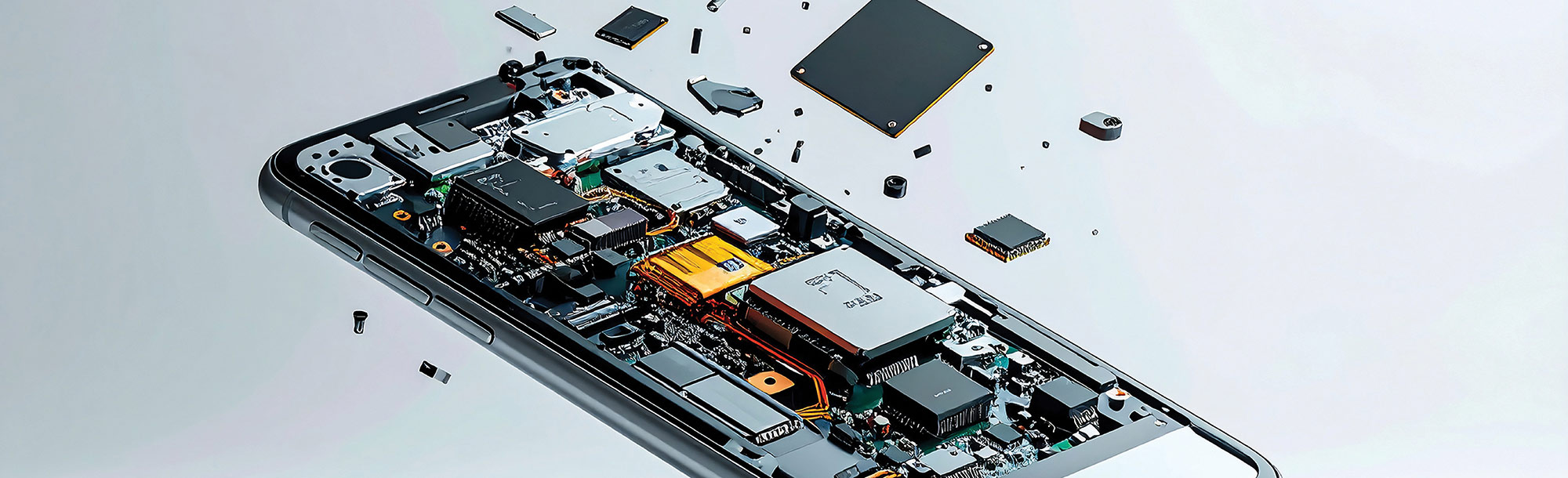
n recent years, the number of mounted semiconductor IC modules and the operating frequency have increased along with the enhancement of functions of smart phones. In the design of smart phones, the risk of electromagnetic interference (hereinafter referred to as EMI) generation is rising, leading to higher costs associated with EMC design.










lectrostatic discharge (ESD) has long been recognized as a significant reliability and yield risk in electronics manufacturing. For over 25 years, ANSI/ESD S20.20 has served as the foundation for certifiable ESD control programs across back-end semiconductor operations, electronics assembly, subassembly, and test environments. However, the growing complexity and automation of semiconductor wafer fabrication facilities (“fabs”) present unique ESD and electrostatic attraction (ESA) risks that are not fully addressed by traditional electronics-focused standards.
As device geometries shrink, materials diversify, and advanced integration techniques expand into the front end of manufacturing, there is an increasing need for clear fab-specific guidance. An ESD guidance document tailored to semiconductor fabrication environments is essential to ensure risks are properly identified, mitigated, and managed—without imposing unnecessary controls that increase cost, reduce flexibility, or inadvertently introduce new hazards. This article explains why such a document is needed and how it should complement ANSI/ESD S20.20 in creating an effective ESD control program in modern semi-fab environments.



View Index
You can do that here.