

FCC Launches Inquiry Into AI‑Based Robocalls/Texts
The U.S. Federal Communications Commission (FCC) has voted to initiate a formal inquiry into how the use of artificial intelligence (AI) may impact illegal and unwanted robocalls and robotexts.
The FCC’s Notice of Inquiry is an effort on the part of the Commission to gather information about how AI and AI-influenced technology will impact calling and texting processes and the extent to which such impacts may or may not compromise consumer privacy rights under the Telephone Consumer Protection Act (TCPA). Specific areas of inquiry include defining AI, detailing the current use of AI in calling and texting technologies, and discussing the potential impact of emerging AI technologies on consumer rights.
The FCC’s inquiry into the impact of AI on robocalls is part of a larger effort by the Commission to fully explore and understand the opportunities and challenges posed by AI and machine learning to communications networks.
FCC “Modernizes” Amateur Radio Service Rules
The U.S. Federal Communications Commission (FCC) has adopted new rules that eliminate transmission rate limitations currently applicable in certain amateur radio bands.
According to a Report and Order issued by the Commission, the new rules replace limitations on the so‑called baud rate applicable to data emissions in specific bands, establishing instead a 2.8 kHz bandwidth limitation. The Commission says that the changes are consistent with its treatment of other wireless radio services and will facilitate more efficient operations of amateur radio transmissions, especially in support of emergency response communications.
The action by the FCC won a prompt endorsement by the ARRL, the National Association for Amateur Radio, which acknowledges that the rule changes will also incentivize future innovation and experimentation in amateur radio bands by giving users the flexibility to use modern digital emissions.
Concurrently, the FCC also adopted a Further Notice of Proposed Rulemaking, seeking comment on a proposal to remove the current baud rate limitations on the VHF and UHF bands and in the 2200-meter and 630-meter bands, as well as recommendations on appropriate limitations in those bandwidths.
FCC Issues Proposed Rules to Prevent Digital Discrimination
As expected, the U.S. Federal Communications Commission (FCC) has implemented new rules that it says will help to prevent and eliminate discrimination in public access to broadband services.
The Commission provided details on its new rules in an extensive November Report and Order running more than 230 pages in length. In brief, the new rules:
- Directly address companies’ policies and practices if they differentially impact consumers’ access to broadband internet access service or are intended to do so;
- Apply these protections to ensure communities see equitable broadband deployment, network upgrades, and maintenance;
- Investigate possible instances of discrimination of broadband access, work to solve and, when necessary, penalize companies for failing to meet the obligations defined in the rules;
- Review consumer complaints of digital discrimination through an improved consumer complaint portal; and
- Help protect both current and prospective subscribers to a broadband internet service.
The Report and Order also includes several in-depth appendices providing detailed background on the Commission’s position, along with lengthy statements by each of the FCC Commissioners regarding the new rules.
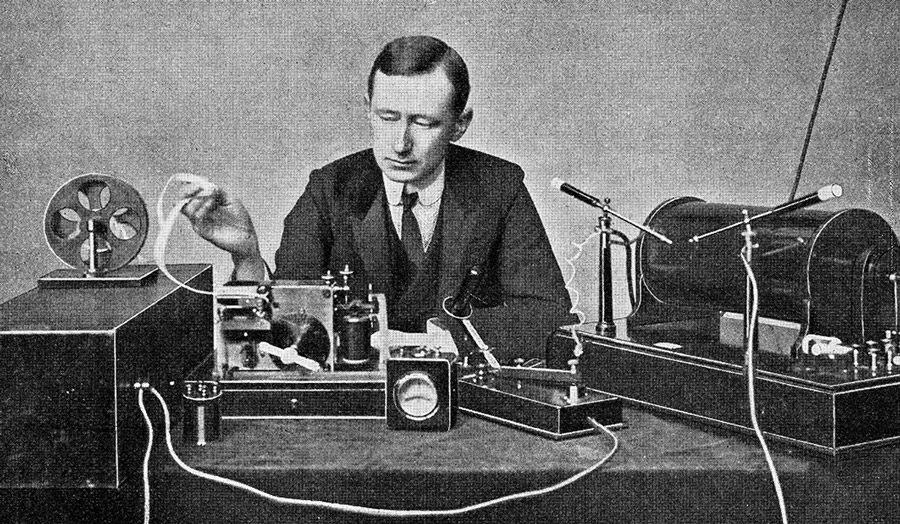
Most historians attribute the invention of radio technology to Guglielmo Marconi, an electrical engineer whose pioneering work in the late 19th century led to the creation of a wireless telegraph system and resulted in his being named a co-winner of the 1909 Nobel Prize in Physics.
But, like most things, the story behind the invention of radio technology is far more complex and reflects the contributions of other notable scientists, including James Maxwell, Nikola Tesla, and Alexander Popov. An interesting article recently published on the “Truth or Fiction” website, titled “Decoding the Invention of the Radio: A Scientific Retrospection,” details the contributions of Maxwell, Tesla, Popov, and others in the development and evolution of modern radio technology.
The article gives due credit to Marconi, whose initial efforts to develop a wireless system to transmit Morse Code soon expanded to experiments involving voice transmissions. But it also acknowledges the work and the contributions of a number of other scientists and researchers, who worked tirelessly over the ensuing 100-plus years to perfect wireless radio communications technology, making it essential to all types of communications technologies in the 21st Century.