


A major failure mechanism that can lead to fires and explosions is a thermal runaway event. In large battery packs, many cells can be packed in close proximity to each other. If one of the cells goes into thermal runaway, the energy released can heat up neighboring cells, which may lead to a thermal cascade throughout the battery pack. A pack design that mitigates this hazard may incorporate cell-to-cell gaps filled with insulating materials, potting compounds, or specialty materials designed to transfer the energy generated during the battery failure to less critical areas of the pack to be dissipated safely. From a risk assessment standpoint, it is generally expected that a single-cell failure within a large multi-cell battery pack might be rare but inevitable. This potential for failure propagation introduces an increased risk of property damage and safety issues. Thermal runaway events can result in the venting of flammable gases, which can generate fire or even an overpressure event if ignited in a confined space. The propagation of failures increases the total energy released during the event, as well as the volume of flammable gases and ejecta released.
As such, an accurate evaluation of the energy yielded during a thermal runaway event is beneficial for the design of battery-powered consumer electronics for both performance and safety. Accurate energy yield estimates are a valuable parameter for a wide range of design tasks, such as but not limited to:
- Comparing failure characteristics of cells of different formats, batches, or from different vendors
- Evaluating the energy release mechanism (i.e., Is the energy released within the cell casing or in the gas and ejecta?)
- Designing safer battery packs that minimize propagation of failure events to neighboring cells, and
- Generating reliable inputs for mechanical/thermal models of devices and/or battery packs.
OCC has been used for many years to estimate the energy released during combustion by collecting and analyzing the oxygen, carbon dioxide, and carbon monoxide concentrations of the exhaust gases. This technique can be used to obtain an estimate of the chemical energy associated with the combustion of the flammable vent gases released during a thermal runaway event. It should be noted that additional complexity is associated with OCC testing of Li-ion cells given cell composition, non-standard reaction paths, and generation of oxygen during the thermal runaway failure.

This work provides an overview of a relatively novel experimental apparatus, fractional thermal runaway calorimetry (FTRC), designed to measure the energy output and mass ejections associated with a thermal runaway event. Compared to ARC, which relies on relatively coarse temperature measurements in a sealed vessel, the FTRC provides better estimates of the thermal runaway energy given the high-fidelity temperature mapping of each section of the apparatus. For this reason, the FTRC can provide additional information on the energy fractions of failures associated with (1) vent gases and ejecta compared to the cell body and (2) the positive and negative terminals of the cell.
All thermal runaway events are a result of elevated temperature in the cell. This temperature rise can be caused in many ways, including, but not limited to:
- External heating from a high ambient temperature, thermal abuse, or external fire
- An internal cell defect resulting in an internal short circuit which can cause heating at the site of the defect
- A surge in charge/discharge current and the resulting heat generated
- Improper electrical connection at the tab of a battery that can cause increased electrical resistance, generating heat at the contact location or
- Mechanical damage to the cell which can lead to internal shorts, resulting in heat generation.
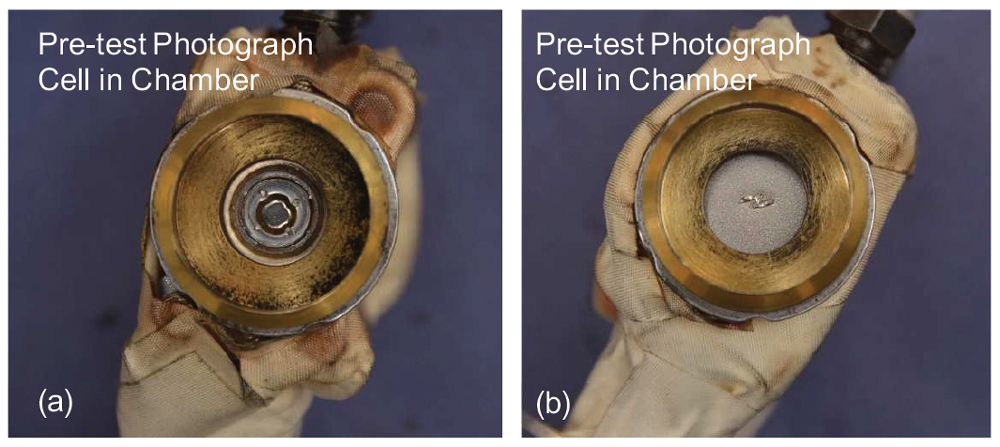
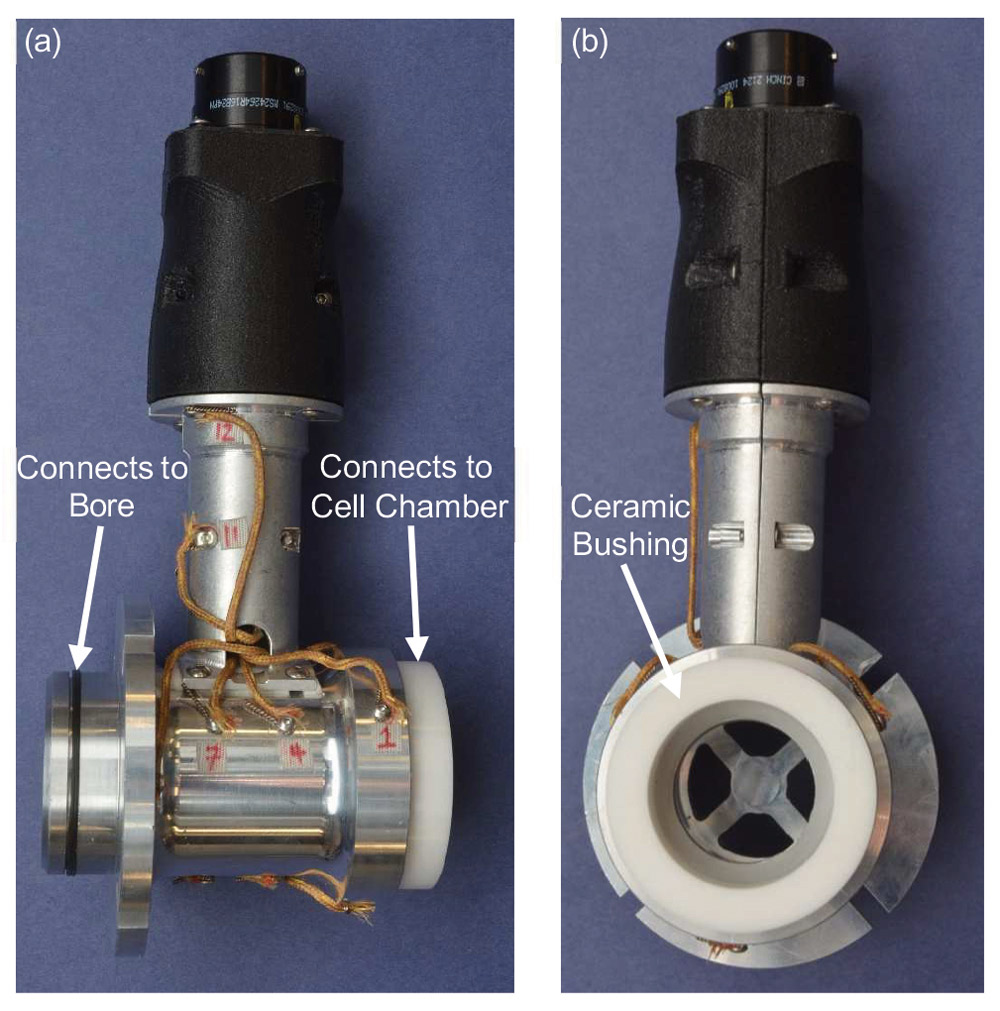
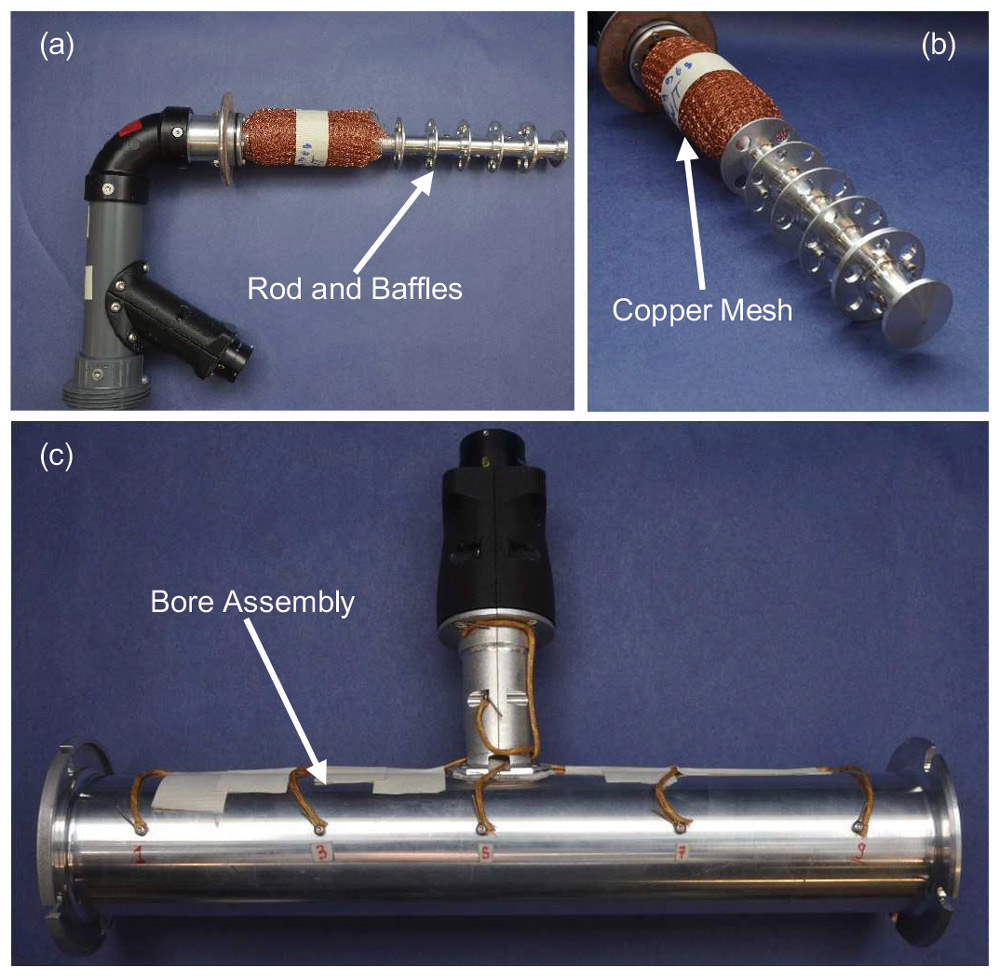
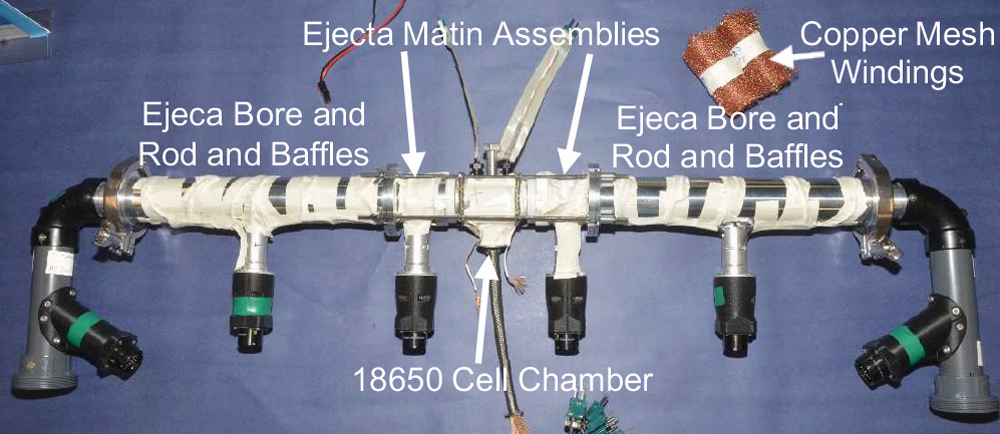
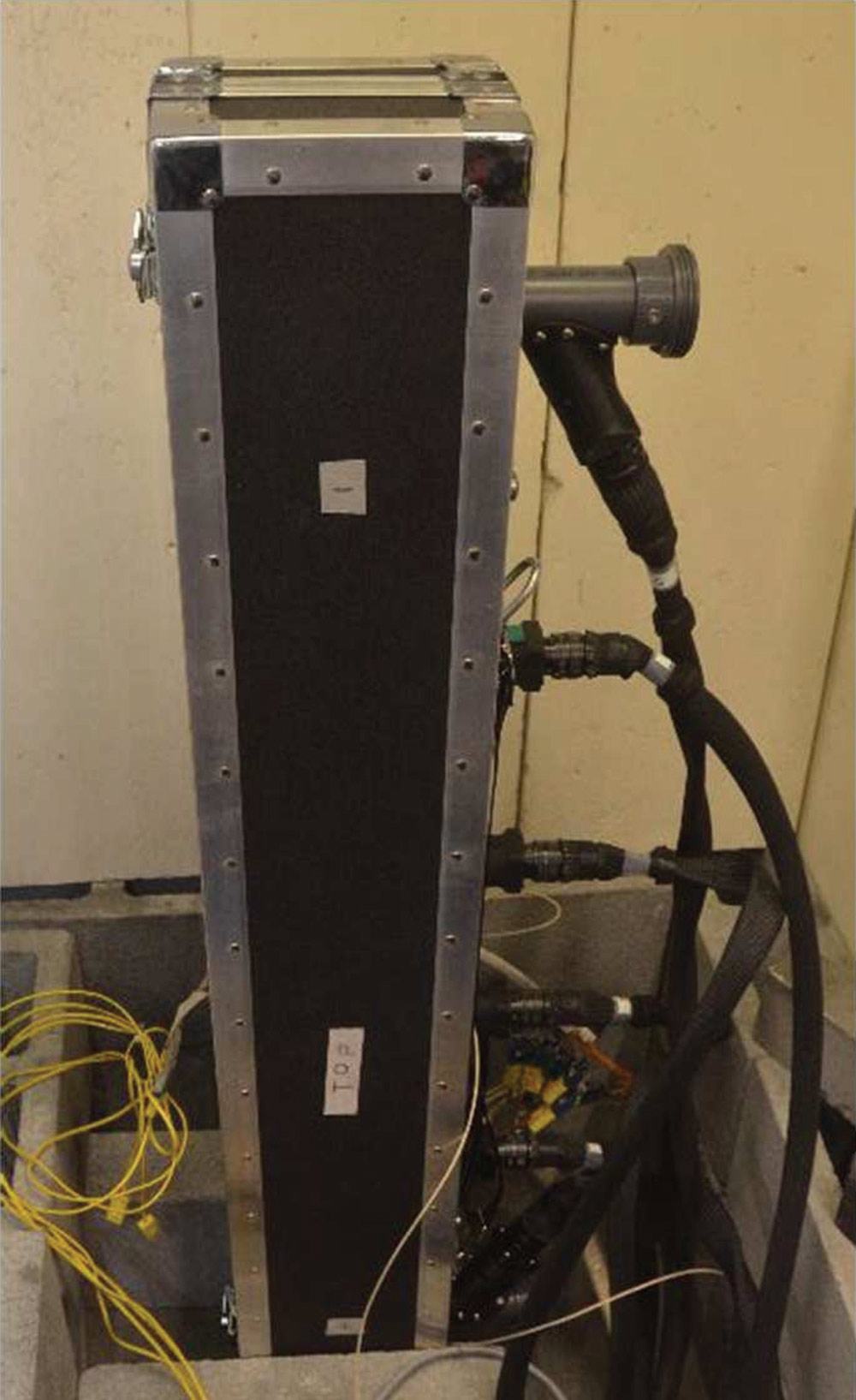
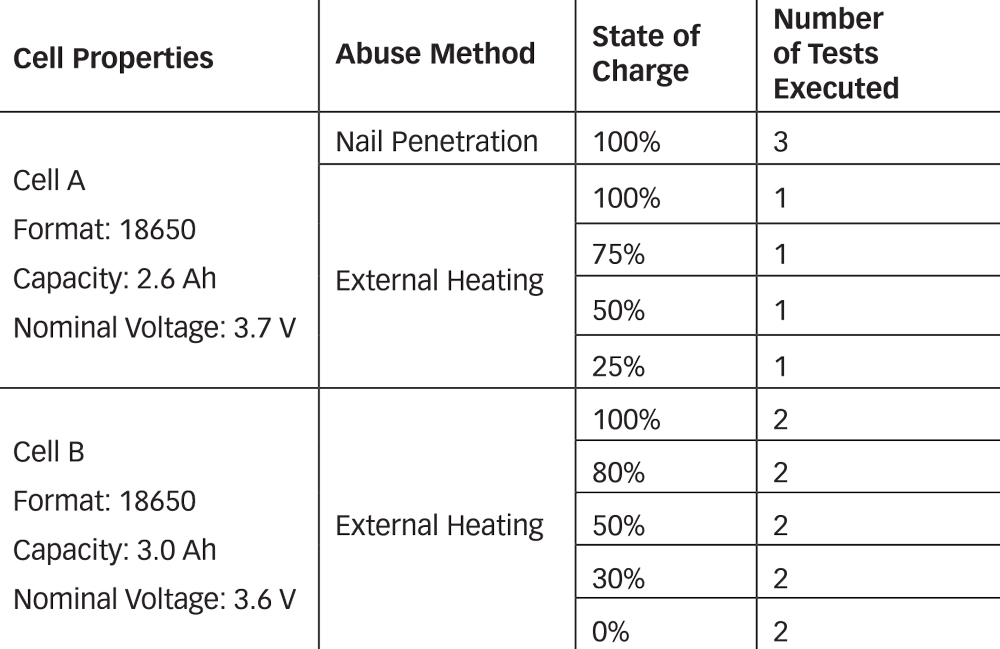
- Cells A were charged at a constant current of 1.3 A, a voltage limit of 4.2 V, and a current cutoff of 0.13 A.
- Cells B were charged at a constant current of 3 A, a voltage limit of 4.2 V and a current cutoff of 0.15 A.
- Cells A were discharged at a CC of 1.3 A and a lower voltage limit of 2.75 V.
- Cells B were discharged at a CC of 3 A and a lower voltage limit of 2.5 V.
- Nail penetration: Cells were penetrated using a conductive stainless-steel nail with a diameter of 3 mm. The nail was sharpened to a 30-degree angle. The nail was inserted into the middle of the cylindrical face of the cell at a rate of 80 mm/s. In some cases, nail penetration tests at low SOCs did not result in thermal runaway. Therefore, only 100% SOC nail penetration tests are reported here.
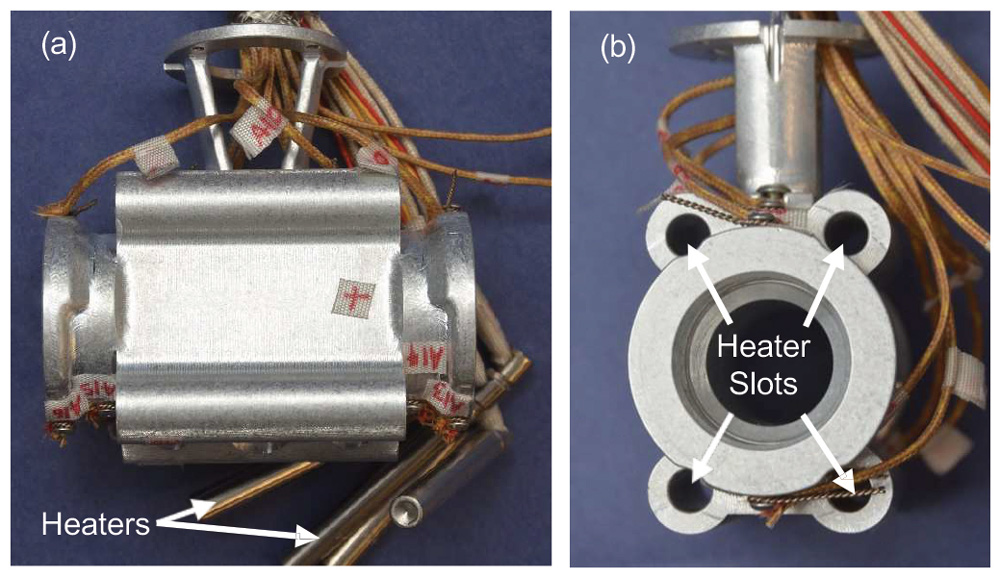
- External heating: FTRC cell chamber is equipped with four cartridge heaters with the total rated power of 1 kW. These heaters are used to increase the temperature of the chamber, which in turn heats the cells. Heaters were operated at their maximum power until cell failure occurred, or until a cell surface temperature reached 300 °C. The energy supplied by the heaters was measured during the test and was ultimately subtracted from the total energy of the system to calculate the energy released by the cell.
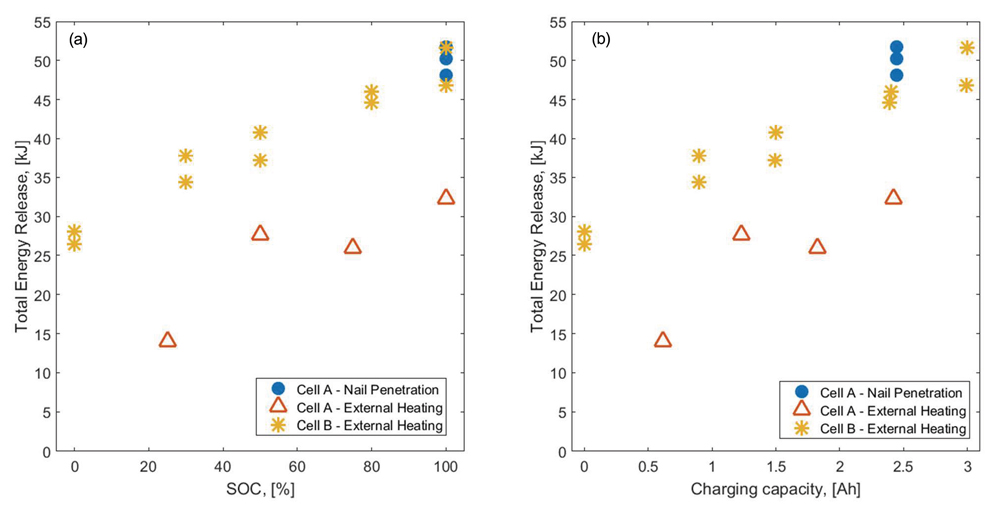
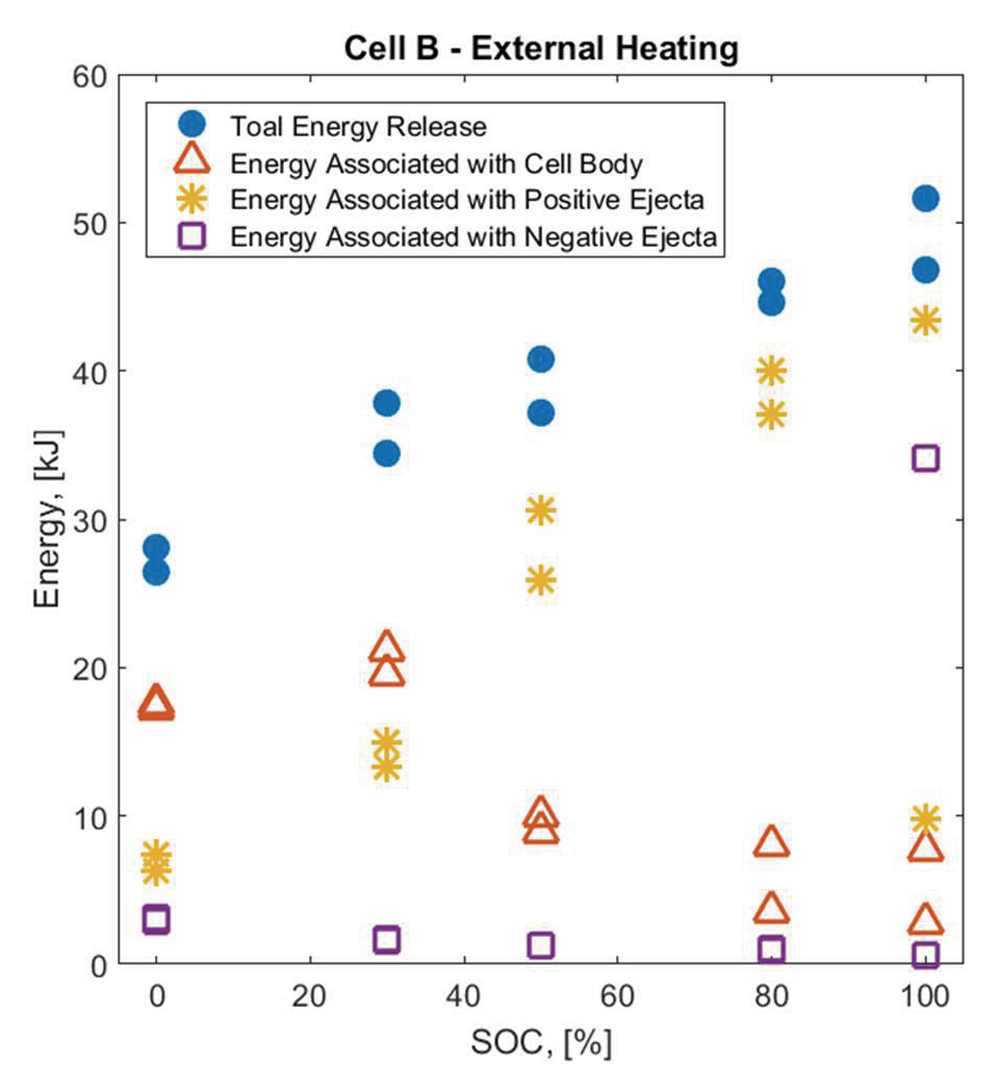
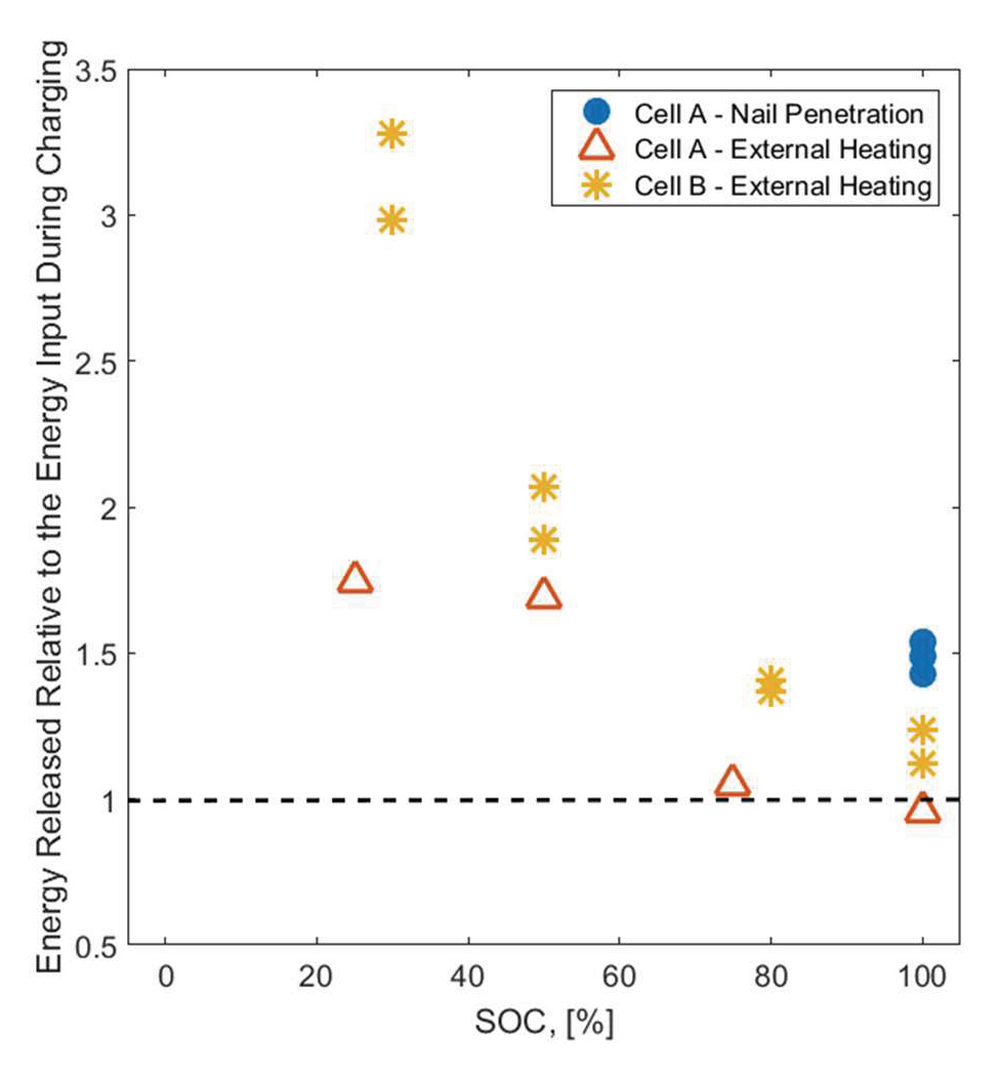
- While the energy release by the cell increases at higher SOC, a significant portion of energy is still released even at 0% SOC
- At high SOCs, most of the energy is associated with ejecta and gases, while at low SOCs, the majority of energy is contained within the cell body and
- The ratio between the energy released by the cell and the energy supplied to the cell during charging decreases with the increasing SOC
- Somandepalli, Vijay, and Hubert Biteau. “Cone calorimetry as a tool for thermal hazard assessment of li-ion cells,” SAE International Journal of Alternative Powertrains, vol. 3, no. 2 (2014): 222-233.
- Wang, Qingsong, Binbin Mao, Stanislav I. Stoliarov, and Jinhua Sun. “A review of lithium-ion battery failure mechanisms and fire prevention strategies,” Progress in Energy and Combustion Science, vol. 73 (2019): 95-131.
- Essl, Christiane, A. W. Golubkov, and Anton Fuchs. “Comparing different thermal runaway triggers for two automotive lithium-ion battery cell types,” Journal of the Electrochemical Society, vol. 167, no. 13 (2020): 130542.
- Lei, Boxia, Wenjiao Zhao, Carlos Ziebert, Nils Uhlmann, Magnus Rohde, and Hans Jürgen Seifert. “Experimental analysis of thermal runaway in 18650 cylindrical Li-ion cells using an accelerating rate calorimeter,” Batteries, vol. 3, no. 2 (2017): 14.
- Golubkov, Andrey W., David Fuchs, Julian Wagner, Helmar Wiltsche, Christoph Stangl, Gisela Fauler, Gernot Voitic, Alexander Thaler, and Viktor Hacker, “Thermal-runaway experiments on consumer Li-ion batteries with metal-oxide and olivin-type cathodes,” RSC Advances, vol. 4, no. 7 (2014): 3633-3642.
- Hoelle, S., S. Scharner, S. Asanin, and O. Hinrichsen, “Analysis on Thermal Runaway Behavior of Prismatic Lithium-Ion Batteries with Autoclave Calorimetry,” Journal of The Electrochemical Society, vol. 168, no. 12 (2021): 120515.
- Koch, Sascha, Alexander Fill, and Kai Peter Birke, “Comprehensive gas analysis on large scale automotive lithium-ion cells in thermal runaway,” Journal of Power Sources, vol. 398 (2018): 106-112.
- Golubkov, Andrey W., René Planteu, Philipp Krohn, Bernhard Rasch, Bernhard Brunnsteiner, Alexander Thaler, and Viktor Hacker, “Thermal runaway of large automotive Li-ion batteries,” RSC Advances, vol. 8, no. 70 (2018): 40172-40186.
- Essl, Christiane, Andrey W. Golubkov, Eva Gasser, Manfred Nachtnebel, Armin Zankel, Eduard Ewert, and Anton Fuchs, “Comprehensive hazard analysis of failing automotive Lithium-ion batteries in overtemperature experiments,” Batteries, vol. 6, no. 2 (2020): 30.
- Zhang, Yajun, Hewu Wang, Weifeng Li, and Cheng Li, “Quantitative identification of emissions from abused prismatic Ni-rich lithium-ion batteries,” eTransportation, vol. 2 (2019): 100031.
- Lammer, Michael, Alexander Königseder, and Viktor Hacker, “Holistic methodology for characterisation of the thermally induced failure of commercially available 18650 lithium-ion cells,” RSC Advances, vol. 7, no. 39 (2017): 24425‑24429.
- Walker, William Q., Kylie Cooper, Peter Hughes, Ian Doemling, Mina Akhnoukh, Sydney Taylor, Jacob Darst et al, “The effect of cell geometry and trigger method on the risks associated with thermal runaway of lithium-ion batteries,” Journal of Power Sources, vol. 524 (2022): 230645.
- Somandepalli, Vijay, Kevin Marr, and Quinn Horn, “Quantification of combustion hazards of thermal runaway failures in lithium-ion batteries,” SAE International Journal of Alternative Powertrains, vol. 3, no. 1 (2014): 98-104.