

The FCC decision was issued in response to petitions from 17 separate state, local, and municipal transportation authorities across the country and two equipment manufacturers. Each individual petitioner sought a waiver of certain Part 90 and Part 95 rules that regulate the operation of dedicated short-range communication (DSRC) based roadside units and onboard units in the upper 30 megahertz of the 5.9 GHz band.
According to the petitioners, the waiver would allow for the deployment of C-V2X technologies within the 5.895-5.925 GHz band in support of intelligent transportation systems (ITS) operations.
In issuing its decision granting the individual waivers, the FCC stated that “the underlying purpose of the rules governing ITS operations would not be served by denying these requests and thereby delaying or precluding C-V2X operations.” Further, “a waiver in this case will facilitate early C-V2X deployment…and serves the public interest by encouraging the widespread deployment of ITS operations using C-V2X technology.”
According to a press release published on its website, the National Association for Amateur Radio (ARRL) has filed comments against a proposal that would allow the introduction of high-power digital communications in spectrum directly adjacent to amateur HF bands. The proposal for the change was filed as a petition to the U.S. Federal Communications Commission (FCC) by the Shortwave Modernization Coalition (SMC), a group that reportedly represents organizations involved in high-frequency stock trading.
Specifically, the proposal would allow data communications on multiple bands within the HF 2-25 MHz range with up to 20 KW, including those immediately adjacent to spectrum allocated to the Amateur Radio Service. The ARRL says that its own evaluation and testing has concluded that, if the proposed rules were to be adopted, it would lead to “significant harmful interference to many users of adjacent and nearby spectrum, including Amateur Radio licensees.”
Published in the Official Journal of the European Union, the stated goal of Commission Delegated Regulation (EU) 2023/1669 is to “limit the energy consumption of smartphones and slated tablets in 2030 to 23.3 TWh, meaning 35% of primary energy consumption is saved compared to what would happen if no measures were taken.”
Toward that end, the Delegated Regulation sets forth in Annex III specific requirements for the labeling of smartphones and tablets. Details to be shown on the label include the supplier’s model identifier, battery endurance data, and a QR code allowing users to access additional information. Further, Annex II details “energy efficiency classes,” which are assigned based on the energy efficiency index rating of a given device, from “most efficient” to “least efficient.” Information regarding a device’s energy efficiency class must also be included on the product energy label.
The requirements under the Delegated Regulation are applicable to smartphones and tablets from June 20, 2025.
According to reports listed on multiple media platforms, Apple is testing 3D printing in the production of its upcoming Apple Watch 9. Currently, the casing of Apple watches is created by cutting pieces of metal into exactly the correct shape. So, the use of 3D printing would likely reduce the amount of material required for production as well as production time.
If Apple’s 3D testing experiments meet its expectations and requirements, the company is expected to integrate 3D printing technologies into the production processes of additional product lines. This includes the next generation of the Apple Watch Ultra, a titanium-encased watch scheduled for sometime next year.
UV wands are consumer products designed to give off UV-C radiation as a method of disinfecting surfaces outside of healthcare settings. However, testing by the FDA shows that some UV wands currently being marketed to consumers expose users to unsafe levels of UV-C radiation. In some cases, FDA testing showed that certain UV wands generate as much as 3000 times more UV-C radiation than the exposure limit recommended by the International Commission on Non-Ionizing Radiation Protection (ICNIRP).
The FCC has posted an updated list on its website of 13 specific UV wands that give off unsafe levels of UV-C radiation. The FDA warns against the use of any UV wand product that fails to provide safety instructions or information about potential risks associated with emissions radiated from UV wands.

According to the Commission’s report, entitled Internet Access Services: Status as of December 31, 2021, over 95% of fixed Internet connections to households meet or exceed the speed tier that most closely approximates the target set in the National Broadband Plan of 3 megabits per second (Mbps) downstream and 768 kilobits per second (kbps) upstream. This penetration rate for fixed high-speed service compares with approximately 81% at the end of 2013, 70% at the end of 2012, and just 49% in 2009.
Without accounting for speed, Internet connections overall are growing. By the end of December 2021, at least 510 million Internet connections were operating at speeds over 200 kbps, a 4% year-over-year increase. Overall growth continues to be driven by dramatic increases in mobile connections. At the end of December 2021, there were approximately 384 million mobile Internet connections, compared with only about 126 million fixed Internet connections.
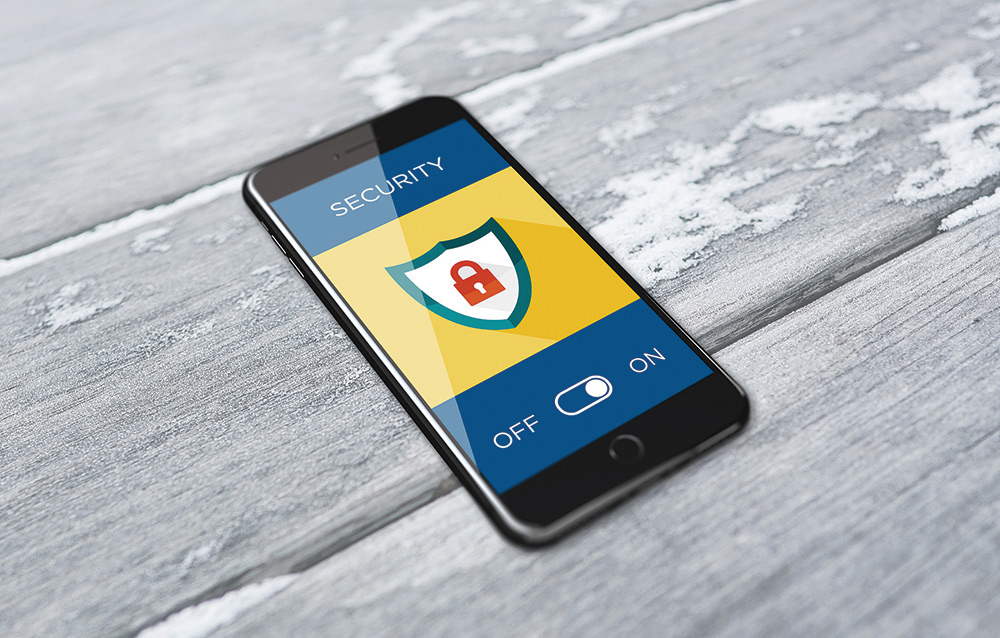
According to a Notice of Proposed Rulemaking (NPRM) issued in mid-August, the FCC’s “U.S. Cyber Trust Mark” Program would enable manufacturers of internet-enabled devices to qualify their products in accordance with rigorous cybersecurity requirements based on criteria developed by the National Institute of Standards and Technology (NIST). Devices that meet those requirements would then be permitted to apply the Cyber Trust Mark to their products, similar to the Energy Star logo currently applied to energy-efficient appliances.
As we previously reported, the FCC’s proposed Cyber Trust Program is intended to help consumers make informed decisions regarding their purchases of internet-enabled devices, while also providing an incentive for manufacturers to meet higher cybersecurity standards.
The FCC’s NPRM seeks public comments on several questions regarding the implementation of the Cyber Trust Program, including:
- The scope of devices or products that should be considered for inclusion in the labeling program;
- Who should be responsible for managing the program and program oversight;
- How to develop the security standards that could apply to different types of devices;
- How to demonstrate compliance with those standards;
- How to safeguard the cybersecurity label against unauthorized use; and
- How to educate consumers about the program.
First published in 2014, the NIST Cybersecurity Framework is a voluntary framework that includes standards, guidelines, and best practices to help organizations more effectively manage cybersecurity risks. The Framework also fosters increased communications between both internal and external stakeholders about risk and cybersecurity issues.
The release of the public draft of CSF 2.0 follows the April release of a “Discussion Draft” of CSF 2.0 that detailed proposed changes to the core elements of the framework.
The complete draft of NIST’s CSF 2.0 is available at https://csrc.nist.gov. Feedback on the draft may be submitted to NIST at cyberframework@nist.gov until November 4, 2023.
NIST has also released a reference tool to foster greater access and use of its draft Cybersecurity Framework 2.0 (CSF 2.0). According to NIST, the new “Cybersecurity Framework (CSF) 2.0 Reference Tool” will allow users to explore the core elements of the framework (Functions, Categories, Subcategories, and Implementation Examples) more easily. The Reference Tool also provides both human and machine-readable versions of the draft, enabling users to create their own customized versions of the framework with personally selected information and references.
Notices of Apparent Liability for Forfeiture were issued to two pirate radio operators, one in Burney, CA and the other in Rockford, IL. In the first instance, the operator was found to have willfully and repeatedly interfered with radio communications of the Western Amateur Radio Friendship Association (WARFA) during the Association’s regularly scheduled on-air meetings.
In the second case, the operator made multiple one-way radio transmissions for an extended period of time, including recorded comedy routines, air raid siren sounds, and digital noises. One transmission observed by an Enforcement Bureau field agent continued for over 30 minutes, during which time other users were blocked from accessing the channel. The FCC proposed financial penalties of $24,000 and $25,000 respectively in these cases.
In a separate action, the FCC issued a Notice of Unlicensed Operation to a Utica, NY operator who reportedly made unauthorized transmissions on frequencies used for police dispatch communications in Herkimer County, NY. The operator was given 10 days to cease the illegal interference and to notify the FCC of the specific steps they have taken to avoid operating on unlicensed frequencies in the future.
In the Miami area, nine separate warnings were issued to landowners and property managers in the Miami area.
The Notices of Illegal Pirate Radio Broadcasting were issued by the Atlanta Regional Office of the Enforcement Bureau. In each case, violators were identified by Bureau enforcement officers from the Miami Office using direction-finding techniques to identify the location and source of the illegal radio signals. And in each case, a search of FCC records showed no license issued for radio operation at the identified location.
The federal PIRATE Act allows the FCC to propose penalties of up to $115,802 per day with a maximum of $2,316,034 for violations of its illegal radio broadcasting rules. In addition, FCC is empowered to conduct periodic enforcement sweeps as well as the authority to take enforcement action against landlords and property owners that willfully and knowingly permit illegal radio broadcasting on their properties.
In a press release, the U.S. Federal Communications Commission (FCC) reminded gateway and facilities-based small service providers of the June 30, 2023 deadline to implement the requirements of the Commission’s STIR/SHAKEN standards (the acronyms stand for Secure Telephone Identity Revisited (STIR) and Signature-based Handling of Assorted information using toKENS (SHAKEN)).
The STIR/SHAKEN standards provide a common digital language that can be used by phone networks to pass valid information from provider to provider, thereby helping individual service providers strengthen their own blocking tools to reduce the incidence of unwanted calls. The largest U.S.-based voice service providers were required to adopt the STIR SHAKEN standards as of June 30, 2021.
“While there is no single cure-all when it comes to robocalls, having this technology in our networks is real progress,” noted FCC Chair Jessica Rosenworcel in the press release. “We will continue to push forward with this and every other tool we have to fight these junk calls.”
The Guidance, “Qualification of Medical Device Development Tools,” describes a voluntary program for the qualification of medical device development tools (MDDTs) used in the evaluation of devices regulated by the Administration’s Center for Devices and Radiological Health (CDRH).
According to the Guidance, MDDTs are “a method, material, or measurement used to assess the safety, effectiveness, or performance of a medical device.” Some examples of MDDTs include non-clinical assessment models (NAMs), biomarker tests (BTs), and clinical outcome assessments (COAs).
The CDRH says that the use of MDDTs will help to “facilitate the development and timely evaluation of medical devices by providing a more efficient and predictable means for collecting information to support regulatory submissions.”
Guidance documents issued by the FDA are intended only to represent the current thinking of the agency and are not binding on either the FDA or the public.
According to a Forfeiture Order issued by the Commission, the multi-unit enterprise headed by Roy M. Cox and Aaron Michael Jones made over five billion robocalls to more than 500 million phone numbers during a three-month span in 2021. The calls prompted recipients to “Press 1” to speak with a “warranty specialist” about either extending a current auto warranty or reinstating an expired one. Call recipients who complied were ultimately connected with a “client sales agent,” who would push the consumer to purchase a new vehicle service contract.
The robocall campaign violated several robocall prohibitions, including making pre-recorded voice calls to mobile phones without consent, placing telemarketing calls without written consent, and dialing numbers listed on the National Do Not Call Registry. The robocalls also violated current spoofing laws by using a misleading call ID to get consumers to answer the call.
The FCC says that the Forfeiture Order follows the issuance of a Notice of Apparent Liability for Forfeiture in December 2022, to which the enterprise never responded. Should the enterprise now fail to pay the $299,997,000 fine, the case will be turned over to the U.S. Department of Justice for collection and further action as necessary.