

n compliance testing, EMI absorbing materials play a pivotal role in mitigating electromagnetic interference (EMI) and ensuring the reliability of electronic devices. These materials are designed to absorb and dissipate electromagnetic energy, preventing reflection, resonance, and interference in sensitive environments. The selection of the right absorbing material is critical for achieving accurate test results and meeting regulatory standards. This guide explores key factors in choosing absorbing materials, including absorption properties, frequency range, and environmental durability, while highlighting examples such as ferrites and polyurethane foam, two of the most widely used RF absorbing materials in compliance environments.
The following factors are essential:
- Absorption Properties
- Definition: Absorption properties refer to the material’s ability to attenuate electromagnetic waves by converting energy into heat or dissipating it within the material structure.
- Importance: Materials with high absorption efficiency reduce reflections and interference, ensuring more accurate testing results.
- Guideline: Choose materials with absorption levels tailored to the application’s requirements. For example, ferrite sheets (common EMI ferrite absorbers) offer excellent absorption at low frequencies, while polyurethane foam is more effective in higher-frequency ranges.
- Frequency Range
- Definition: The frequency range specifies the band of electromagnetic waves that the material is capable of absorbing effectively.
- Importance: Matching the material’s frequency response to the testing requirements is crucial for achieving optimal performance.
- Guideline:
- For low-frequency applications (e.g., 1 MHz to 300 MHz), ferrites are ideal due to their magnetic properties and their effectiveness as low‑frequency EMI absorbers.
- For high-frequency applications (e.g., GHz range), polyurethane foam impregnated with conductive elements provides effective absorption and is widely used as microwave absorbing material.
- Environmental Durability
- Definition: Environmental durability refers to the material’s ability to withstand physical and environmental stresses such as temperature fluctuations, moisture, UV exposure, and mechanical wear.
- Importance: Durable materials ensure long‑term performance and reliability in harsh testing environments.
- Guideline: Select materials with properties suited to the operating conditions. For example, polyurethane foam may degrade over time under UV exposure, while ferrites offer robust durability but are less flexible.
- Ferrites
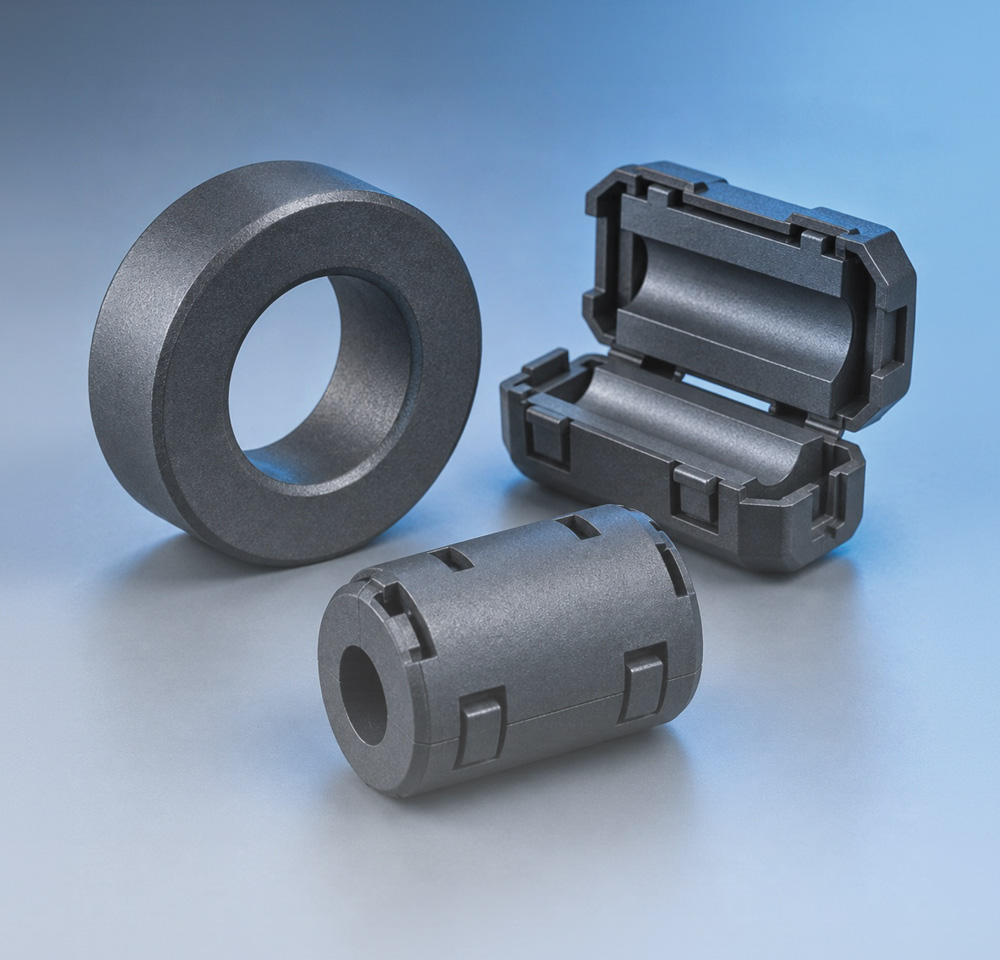
- Description: Ferrites are ceramic-like materials composed of metal oxides with magnetic properties, commonly used for low-frequency EMI attenuation and as EMI ferrite cores for cables.
- Applications: Ideal for shielding cables, connectors, and electronic enclosures in industrial and consumer electronics.
- Advantages:
- High absorption efficiency at low frequencies.
- Robust and durable, suitable for harsh environments.
- Limitations: Less effective at higher frequencies and rigid, making them unsuitable for flexible applications.
- Polyurethane Foam
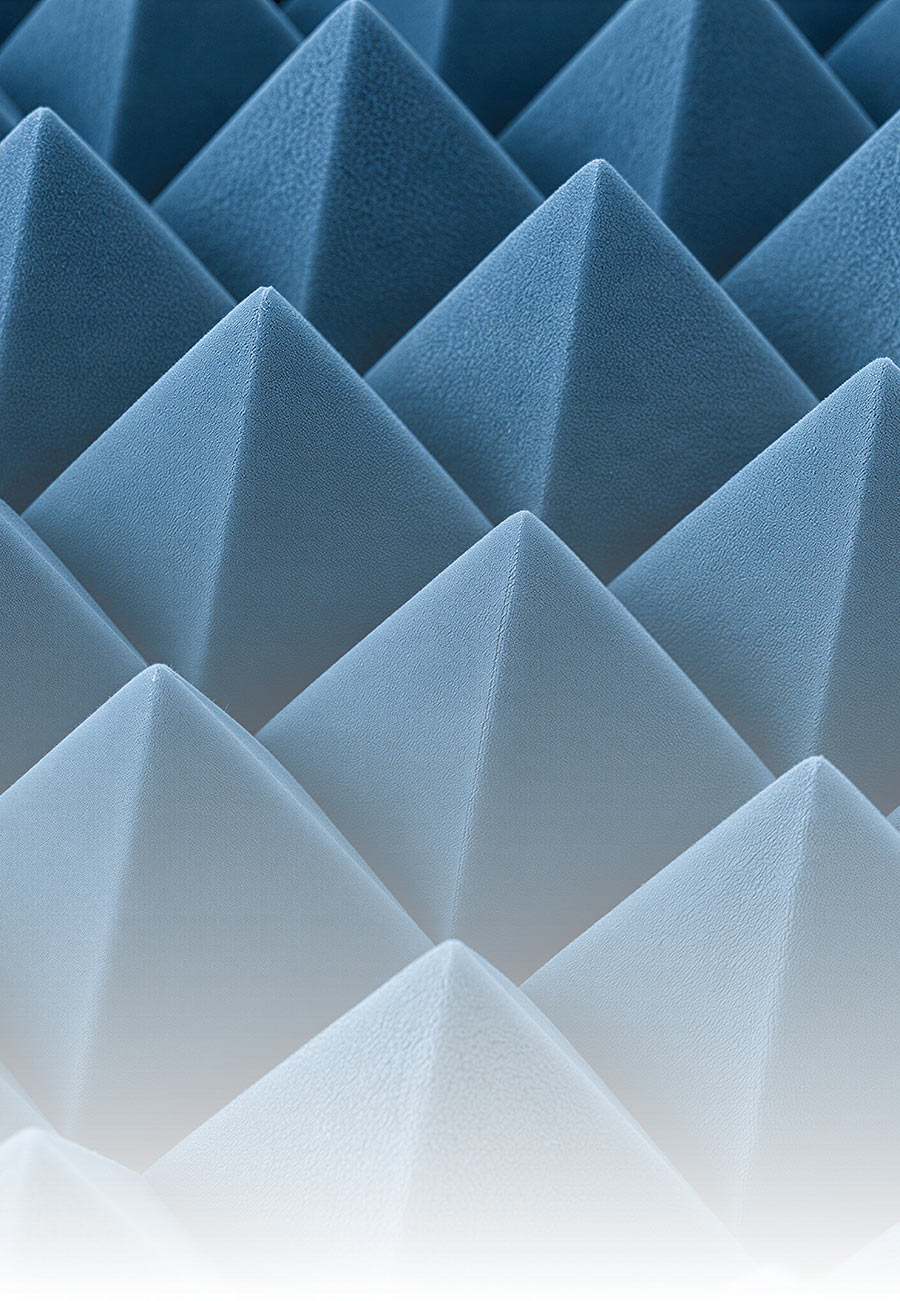
- Description: Polyurethane foam, often impregnated with conductive elements such as carbon or metal particles, is lightweight and versatile.
- Applications: Used in anechoic chambers, RF enclosures, and EMI mitigation for high-frequency applications as RF absorber foam.
- Advantages:
- Lightweight and flexible, ideal for complex geometries.
- High absorption efficiency at microwave and RF frequencies.
- Limitations: Susceptible to degradation from UV exposure and humidity, requiring protective coatings for long-term use.
- Conductive Polymers
- Description: Conductive polymers are synthetic materials infused with conductive elements, offering a balance between flexibility and performance as lightweight EMI shielding materials.
- Applications: Used in portable electronics and compact devices requiring lightweight shielding solutions.
- Advantages:
- Customizable for specific frequency ranges.
- Lightweight and flexible, suitable for mobile applications.
- Limitations: Limited durability compared to metals or ferrites.
- Magnetic Sheets
- Description: Magnetic sheets are thin, flexible materials with magnetic properties, often used for close-range EMI suppression.
- Applications: Popular in shielding wireless charging systems and mobile devices as near‑field absorbers.
- Advantages:
- Effective in both low and high-frequency ranges.
- Flexible and easy to apply.
- Limitations: Lower absorption efficiency compared to ferrites for high-power applications.
- Anechoic Chambers
- Materials: Polyurethane foam (microwave absorber foam).
- Focus: High-frequency absorption with low reflectivity to ensure accurate RF and EMI testing.
- Cable Shielding
- Materials: Ferrites (ferrite cable absorbers).
- Focus: Low-frequency absorption to mitigate noise and interference in power and signal cables.
- Consumer Electronics
- Materials: Conductive polymers or magnetic sheets (thin EMI absorbing sheets).
- Focus: Lightweight, flexible solutions tailored to compact device designs.
- Industrial Equipment
- Materials: Ferrites or metal-coated foams.
- Focus: High durability and effective absorption to withstand harsh operating conditions.