

The FCC’s updated Mobile Speed Test application includes new features, including a “repeat test” functionality that allows users to conduct repeated tests without having to reenter and certify their information before each individual test, and an in-app map that displays the location where an individual test was performed.
The revised Mobile Speed Test app also allows users to log in to the National Broadband Map to review their speed test results in context. The Mobile Speed Test app is part of the FCC’s Broadband Data Collection program to continually evaluate the characteristics of our national broadband service capability, as well as actual broadband performance in residential consumer markets.
According to Notice of Proposed Rulemaking (NPRM), the FCC would require those who must file information with the agency about television and radio political advertising to specify whether AI technologies were used in the generation of such content and, if so, to disclose the use of AI in the advertisements.
The FCC says that it’s proposed rulemaking follows growing concerns among the American electorate that misleading AI-generated content will have an undue influence on the outcome of the 2024 U.S. presidential election, and cited specific recent examples of the use of AI-generated voices and images in misleading political advertising.
The IEEE Standards Association announced that several testing facilities operated by atsec Information Security have been officially recognized to conduct testing in accordance with the requirements of the IEEE’s Medical Device Cybersecurity Certification Program. The atsec facilities that have received IEEE recognition under the Program are located in Sweden, Germany, and the United States.
In addition, the IEEE says that the first medical devices have now been reviewed and certified in accordance with the requirements of the IEEE 2621 series of standards, which have been recognized by the U.S. Food and Drug Administration (FDA) and which serve as the basis for the IEEE’s cybersecurity certification.
According to a press release issued by the Commission, the new rules would allow in-vehicle and roadside units to operate cellular-vehicle-to-everything (C-V2X) technology in the 5.9 GHz spectrum. C-V2X technology supports “direct communications between vehicles, roadside infrastructure, and other road users…to facilitate…non-line-of-sight awareness, notice of changing driving conditions, and automated driving.”
The new rules would also codify C-V2X technical parameters, including power and emission limits, and prioritize safety-of-life communications. Finally, the rules would set a two-year timeline for phasing out the use of dedicated short‑range communications (DSRC‑based technologies.
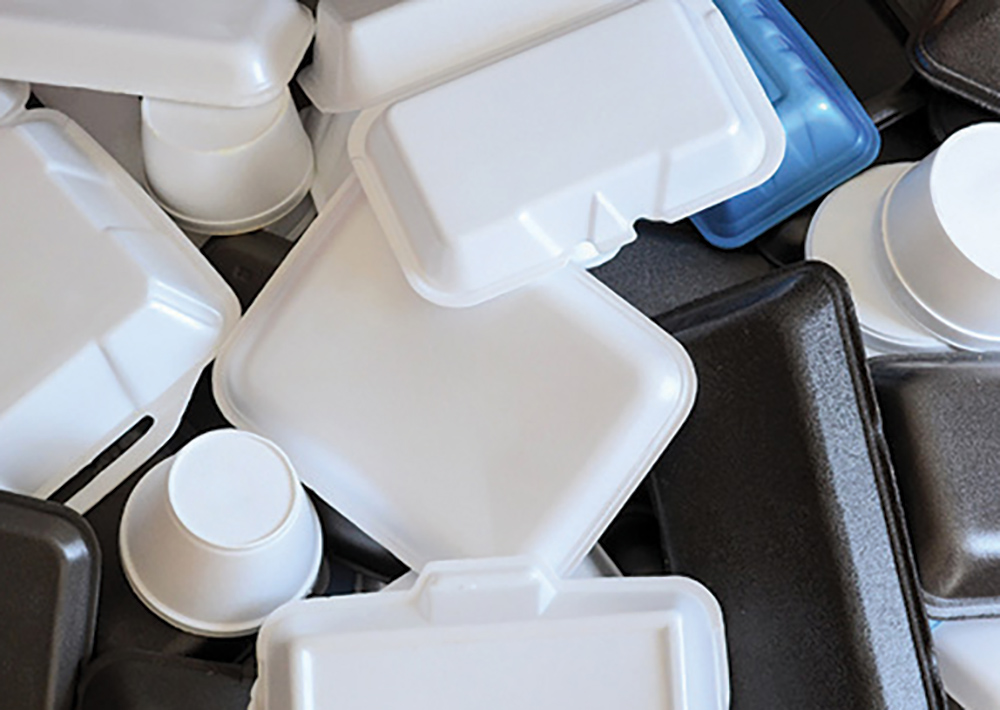
According to a paper published in the Journal of the American Chemical Society (ACS), the joint research team started with evaluating whether PEDOT:PSS, a polymer that has electronic and ionic conductivity could be synthesized from plastic waste. Specifically, they explored the sulfonation of plastic waste made from polystyrene, which is used in many types of containers and packaging materials.
After extensive experimentation and testing over several months, the researchers ultimately determined the specific solvents, the molar ratios of sulfonating agents, and the temperatures needed to achieve the highest possible polymer sulfonation of polystyrene samples. They then compared the resulting waste-derived material compared with conventional PEDOT:PSS and found comparable performance.
In addition, the researchers also found that their process minimized the amount of waste generated during the conversion process, resulting in a win-win outcome!