




Advanced CDM Simulation Methodology for High‑Speed Interface Design

Advanced CDM Simulation Methodology for High‑Speed Interface Design




Or contact us at info@arworld.us & 215.723.8181


ISSN 1948-8254 (print)
ISSN 1948-8262 (online)
is published by
Same Page Publishing Inc.
451 King Street, #458
Littleton, MA 01460
tel: (978) 486-4684
fax: (978) 486-4691
© Copyright 2024 Same Page Publishing, Inc. all rights reserved
Contents may not be reproduced in any form without the prior consent of the publisher. While every attempt is made to provide accurate information, neither the publisher nor the authors accept any liability for errors or omissions.
editor-in-chief
Please contact our circulation department at circulation@incompliancemag.com

 Visit In Compliance’s booth at these events!
EMC Europe Symposium
September 11-13
Fundamentals of Product Safety
September 12
Space Applications, EMC, ENV
September 15-19
46th Annual EOS/ESD Symposium and Exhibits
September 19
2024 Minnesota EMC Event
September 22-27
European Microwave Week 2024
September 24-27
Applying Practical EMI Design and Troubleshooting Techniques
October 2-4
Battery Japan
EMC COMPO 2024
October 7-10
The Battery Show
October 10
Cyber-Security Webinar
October 15
2024 San Diego Test Equipment Symposium
October 22-25
Applying Practical EMI Design and Troubleshooting Techniques
October 27-November 1
46th Annual Meeting and Symposium of the Antenna Measurement Techniques Association
October 28-October 31
Military Standard 810 (MIL-STD-810) Test Training
According to Notice of Proposed Rulemaking (NPRM), the FCC would require those who must file information with the agency about television and radio political advertising to specify whether AI technologies were used in the generation of such content and, if so, to disclose the use of AI in the advertisements…
The IEEE Standards Association announced that several testing facilities operated by atsec Information Security have been officially recognized to conduct testing in accordance with the requirements of the IEEE’s Medical Device Cybersecurity Certification Program. The atsec facilities that have received IEEE recognition under the Program are located in Sweden, Germany, and the United States…


s a product designer, one of the biggest issues you’ll face is radiated emissions. This month, we’ll describe the minimal set of tools to characterize and help mitigate radiated emissions right on your workbench.
These can either be constructed as DIY projects or commercial probe kits may be purchased. Flexible or semi-rigid coaxial cables may be used. H-field (loop) probes may be constructed by soldering the center conductor to the shield, as in Figure 1. An E-field probe may be constructed by cutting away a short (5mm) portion of the shield, exposing the center conductor. Both types of DIY probes should be dipped in rubberized “tool dip” or otherwise insulated to avoid shorting out circuitry. See the example in red.
How to Select the Correct Type
-type capacitors suppress differential mode conducted emissions in applications such as switch-mode power supplies, DC‑DC converters, variable-speed motor drives, and other similar devices. The X designation means they are applied line-to-neutral, as shown in the simple diagram below.
ast month, I talked about the RTCA and who they are. This month, let us look at the history and development of DO-160.
The RTCA document titled “Environmental Conditions and Test Procedures for Airborne Equipment” is better known as DO-160 and as EUROCAE ED-14 in Europe and elsewhere. It is based on a history of documents and test procedures to establish equipment performance standards for avionics in a wide range of environmental conditions.
The roots of this document go back to April 13, 1954, and a publication called DO-60 (Note 60, not 160), titled “Environmental Test Procedures Airborne Radio Equipment” – based on earlier works such as DO-44. The document includes just 15 pages for temperature, altitude, humidity, vibration and shock tests, and two tests one would consider EMI Tests. These two tests were a “Susceptibility Test,” which injected a 1000 µV signal through a capacitor onto various lines, and a “Low Voltage Test.”

lectrostatic discharge (ESD) poses significant hazards in healthcare settings, affecting both patient safety and the functionality of medical equipment. Understanding these hazards is crucial for implementing effective prevention measures.
The earliest concerns with ESD in the healthcare environment were related to preventing ignitions of anesthesia caused by ESD. In 1953, the Bureau of Mines published “Static Electricity in Hospital Operating Suites: Direct and Related Hazards and Pertinent Remedies”1. This document provided technical background on the nature of these hazards and prescribed the use of static control flooring and equipment grounding to mitigate this risk. Since that time, the National Fire Protection Agency (NFPA) created NFPA 99 “Healthcare Facilities Code”2 to help prevent fires and explosions in healthcare facilities and included guidance on preventing ESD-related events.

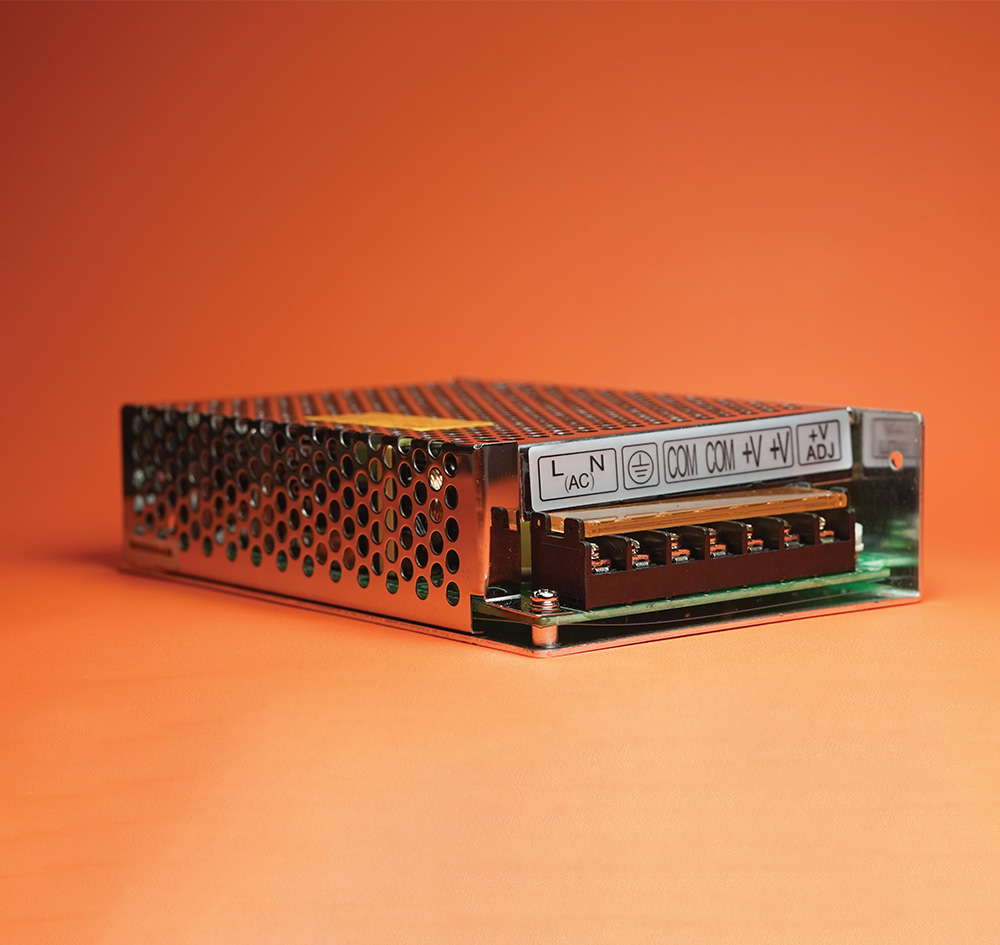
have always wanted to write articles on filter design. Needless to say, the subject alone can easily spawn a book. This is because, in the world of electronics, we have power filters, transformers, low-frequency filters, digital circuit filters, and analog circuit filters. Each design requires its unique and dedicated filter design principles. Additionally, we have different requirements, and it is fair to say that most commercially available filters are designed to meet certain EMC specifications. Hence, they are most likely designed to work efficiently with the test setup, particularly the line impedance stabilization network (LISN) for conducted emission tests.
Given the numerous points to consider, capturing everything in one article is nearly impossible. My favorite books and articles on this subject are listed in the reference section [1]-[3], and I encourage readers to explore them.



The event will feature an extensive lineup of workshops, presentations, and tutorials, covering the latest developments in Electronic Design Automation (EDA), Device Testing, Manufacturing, Electromagnetic Compatibility (EMC), Photonics, and Emerging Technologies. These sessions are designed to equip you with cutting-edge knowledge that can be directly applied to your current and future projects.
Moreover, the symposium provides access to certification programs, enhancing your professional credentials, and a robust exhibit hall showcasing the latest tools and technologies. This is not just a chance to learn but also to connect with industry peers, share insights, and discuss challenges in an environment rich with networking opportunities.
In a field as specialized as ours, staying updated is not just beneficial—it’s essential. This symposium offers you the chance to refine your skills, expand your knowledge, and position yourself at the forefront of industry advancements.
We encourage you to attend to gain the expertise needed to excel in your role, and we hope to see you there!


Reno, NV
- Engage in Cross-Disciplinary Learning
- Participate in Interactive Sessions
- Access Exclusive Content and Resources
- Stay updated on Regulatory Standards
- Explore Cutting Edge Technologies
- Expand your Professional Network


- Electronic Design Automation
- Device Testing
- Manufacturing
- Electromagnetic Compatibility
- Photonics
- Emerging Technologies
Explore evolving requirements for automotive ESD protection design as data transfer speeds increase.
Design Challenges Due to Ultra-Short Voltage Stress Pulses in Advanced Technologies
Discuss new challenges ESD designers face with sub-nanosecond voltage stress pulses, including new characterization methods and optimization strategies.

Explore the critical role of DRAM and NAND memory technologies in advanced computing systems.
Discover the transformative power of cloud connectivity in embedded devices and the IoT.
Gain insights into new failure analysis methods for 3D packaged devices.



- Meets every ESD and ASTM standard
- Easy to clean and keep clean
- Extremely durable
- Lays perfectly flat
- Can go over almost any subfloor with minimal prep
- Supported by a 5-time, Inc. Magazine-fastest growing private company in the U.S.
Bob Glover,
President, BG Floors (EIT)

staticworx.com

his article explains how to use a Smith Chart to determine the voltage standing wave ratio (VSWR). The concept of the standing waves and VSWR was described in detail in [1], while the Smith Chart construction and its use for determining the input impedance to the transmission line was discussed in [2,3,4].
Let’s briefly review these concepts to provide the background needed for determining the VSWR graphically using a Smith Chart. Consider the transmission line circuit shown in Figure 1. A sinusoidal voltage source  S with its source impedance
  S drives a lossless transmission line with characteristic impedance ZC, terminated in an arbitrary load L.
 positioned symmetrically at the origin of the coordinate system and oriented along the z-axis.





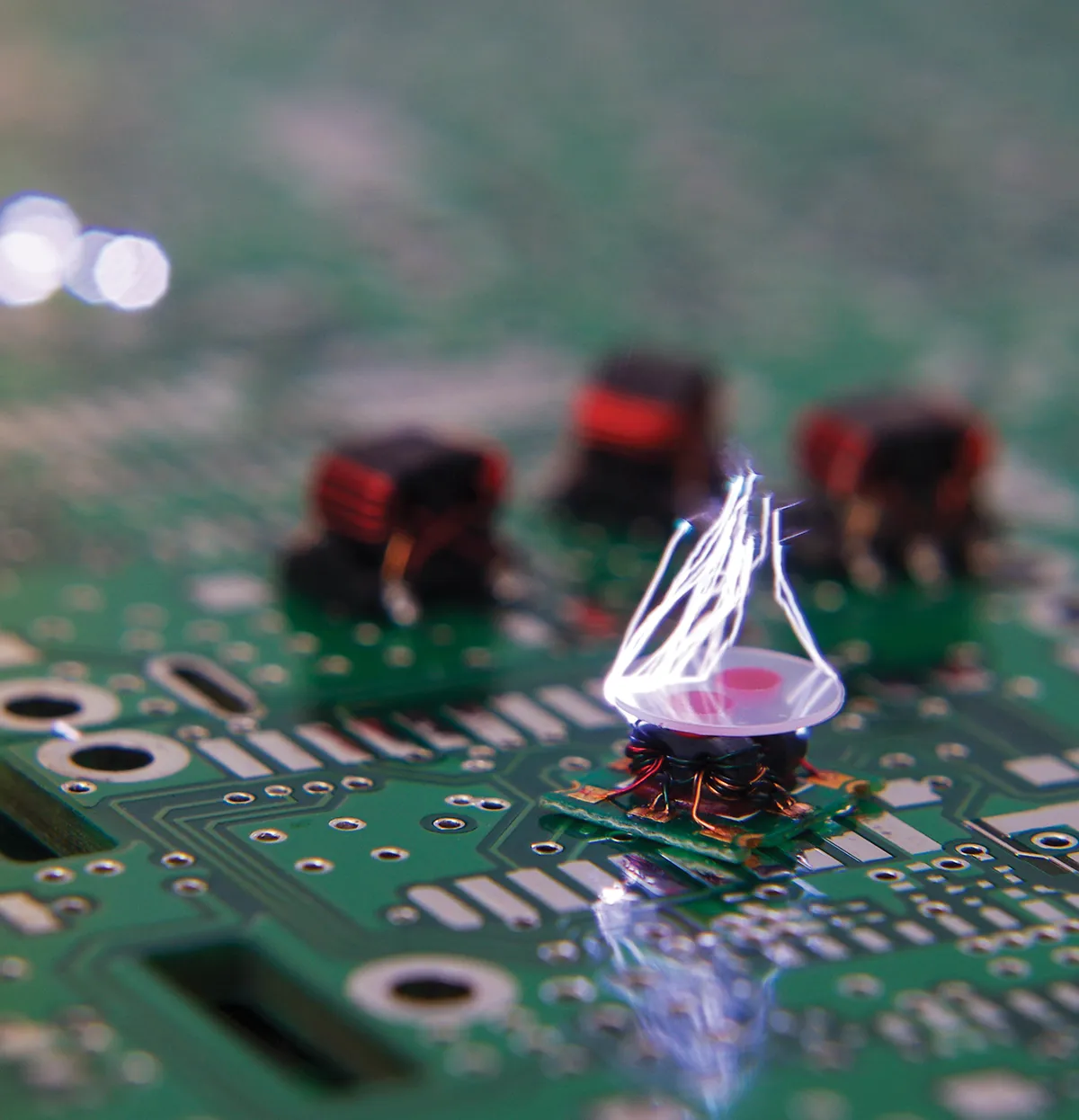
tandards continuously evolve, and EOS/ESD Association, Inc. standards are no different. Besides the routine five-year and ten-year review of standards (S), standard test methods (STM), and standard practices (SP), documents on new topics in the field of electrostatic control, electrostatic discharge (ESD) testing and characterization, electrical overstress (EOS), and ESD design and modeling are developed and published by more than thirty working groups (WGs). From 2021 to the beginning of 2024, approximately 30 documents have been reaffirmed, revised, or newly released. Slightly more than half of these documents address ESD control topics, some of which are covered in this short overview article. A second article will cover the new developments in ESD and EOS test and characterization and ESD design and modeling documents.
The central document on ESD control is ANSI/ESD S20.20 – ESD Association Standard for the Development of an Electrostatic Discharge Control Program for Protection of Electrical and Electronic Parts, Assemblies, and Equipment. This standard defines the limits of ESD control items and ESD control measures. ANSI/ESD S20.20 refers to several standards and STMs defining the test methods for ESD control items, such as ESD-control flooring, seating, packaging, etc., and ESD control measures, such as personnel grounding (see Figure 1). Furthermore, it references the technical report (TR) ESD TR53 – ESD Association Technical Report for the Protection of Electrostatic Discharge Susceptible Items – Compliance Verification of ESD Control Items for all requirements on compliance verification. The new version of ANSI/ESD S20.20 was released at the end of 2021, and, consequently, ESD TR53 as a “companion document” was updated slightly later in May 2022 to align with the new version of ANSI/ESD S20.20. The second companion document of ANSI/ESD S20.20, ESD TR20.20 – ESD Association Handbook for the Development of an Electrostatic Discharge Control Program for the Protection of Electronic Parts, Assemblies, and Equipment, is currently being updated to address the comments received during the review processes of ANSI/ESD S20.20.




You can do that here.
View Index
