


he Dunning–Kruger effect1 explains how overestimating one’s technical reach can narrow ESD evaluations to the decades‑old floor resistance-to-ground (Rtg) test—an essential metric since the 1950s, yet blind to system interactions. Three case studies show that skipping resistance tests of mobile technical elements (casters, chairs, carts) that depend on the floor as a series path to ground leads to false confidence and missed risks.
This article advocates pilot floor installations plus insitu body voltage, probability analysis of charge generation data, and mobileelement resistance tests to validate system-level performance and secure long-term staticrisk mitigation.
Their client was offered the chance to conduct an in-house pilot evaluation comparing conductive and dissipative ESD flooring options. However, she declined, reasoning that another division had already selected an appropriate product. She considered her evaluation complete after reviewing supplier literature and performing standard resistance-to-ground and flooring/footwear resistance tests according to ANSI/ESD STM7.1 and STM97.1.
Notably absent from her evaluation were body voltage measurements required by ANSI/ESD S20.20 and evaluations specified in ANSI/ESD TR53, including seating (Section 7.3.10.1), shelving (Section 7.3.12.1), and mobile workstations (Section 7.3.13.1). These steps are critical for validating the flooring’s effectiveness as the primary grounding path for chairs, shelving units, and mobile workstations, and for comprehensively assessing the system’s real-world performance. Nevertheless, she considered compliance adequately verified and viewed the matter as resolved.
This scenario exemplifies the Dunning–Kruger effect, a cognitive bias wherein individuals with limited expertise significantly overestimate their own understanding. This effect has contributed to numerous well-documented technical and financial failures, including the 2007–2008 Subprime Mortgage Crisis, the Theranos Scandal, the 1986 Challenger Disaster, and fatal programming errors in the mid‑1980s associated with the Therac-25 radiation machine. In each instance, misplaced confidence and incomplete assumptions overshadowed expert analysis, leading to serious, avoidable outcomes.
In the specialized field of static control, such overconfidence poses easily avoided risks. Historically, the role of an ESD coordinator or engineer was a dedicated, full-time position within electronics manufacturing. Today, however, many organizations have integrated these responsibilities into broader quality functions, reducing ESD management to routine compliance checks rather than treating it as a rigorous, proactive discipline. This shift is reflected in declining attendance at critical events like the annual ESD Symposium, despite rising ESD sensitivities in components and increasing associated liabilities.
Commonly, individuals mistake basic achievements, such as completing ANSI/ESD TR53 training or quarterly resistance measurements, as sufficient evidence of expertise in static control. Yet static electricity is a silent threat, causing degradation and damage to sensitive electronics without obvious immediate indicators. As our reliance grows on microelectronics, used to operate aircraft, weapons systems, medical imaging devices, autonomous vehicles, and sophisticated AI technologies, organizations must move beyond superficial testing and incomplete knowledge to effectively manage ESD risks.
Until recently, advancements in microelectronics closely followed the prediction of Intel co-founder Gordon Moore, who forecast that transistor density would approximately double every two years. Despite these significant technological advancements, many organizations continue to rely on outdated practices, insufficient training, and institutional overconfidence in their static control programs. Given the transformative potential of artificial intelligence and autonomous technologies, organizations cannot afford simplistic approaches to adequately protect the sophisticated electronics upon which these innovations depend.
Today, ESD flooring is broadly adopted in diverse mission-critical environments far beyond traditional electronics and aerospace sectors, including SCIFs, data centers, MRI suites, air traffic control towers, operational control rooms, and emergency dispatch facilities. Given this widespread adoption, one might reasonably assume technical specifications for ESD flooring have grown more rigorous. However, the opposite often occurs.
Many professionals responsible for specifying ESD flooring still lack clarity on fundamental distinctions between conductive, dissipative, and antistatic classifications. For instance, during a recent meeting at a multinational architectural firm, a senior industry leader mistakenly stated that his project did not require ESD-grade flooring, proposing that a “dissipative” solution would suffice. This individual was unaware that dissipative flooring is, in fact, a specific subset within the broader category of ESD flooring. Such misconceptions underscore the critical need for thorough, technically accurate guidance when specifying static control solutions.
Misplaced Priorities: When Initial Questions Miss the Mark
- What is the cost per square foot of the flooring?
- Is the flooring conductive or dissipative?
- Will the flooring require waxing or polishing?
- What colors are available?
The actual complexity and total cost associated with effectively implementing ESD flooring extend far beyond initial material pricing and aesthetic preferences. Crucial considerations that are often overlooked include:
- Concrete moisture emission testing and site-specific preparation requirements.
- Failing to distinguish between point and distributed loads of existing mobile equipment.2
- Specific aesthetic and uniformity standards for the installation environment.
- Sensitivity levels of the ESD-sensitive devices and equipment handled in the area.
- Installation logistics, such as whether operations can continue during installation or if downtime is required.
- The flooring’s practical ability to effectively ground mobile equipment like carts, chairs, and shelving units, which previously required dedicated grounding methods.
- Anticipated occupancy duration and maintenance requirements for the facility.

Lessons Learned from Audits: Why One Test Subject is Never Enough
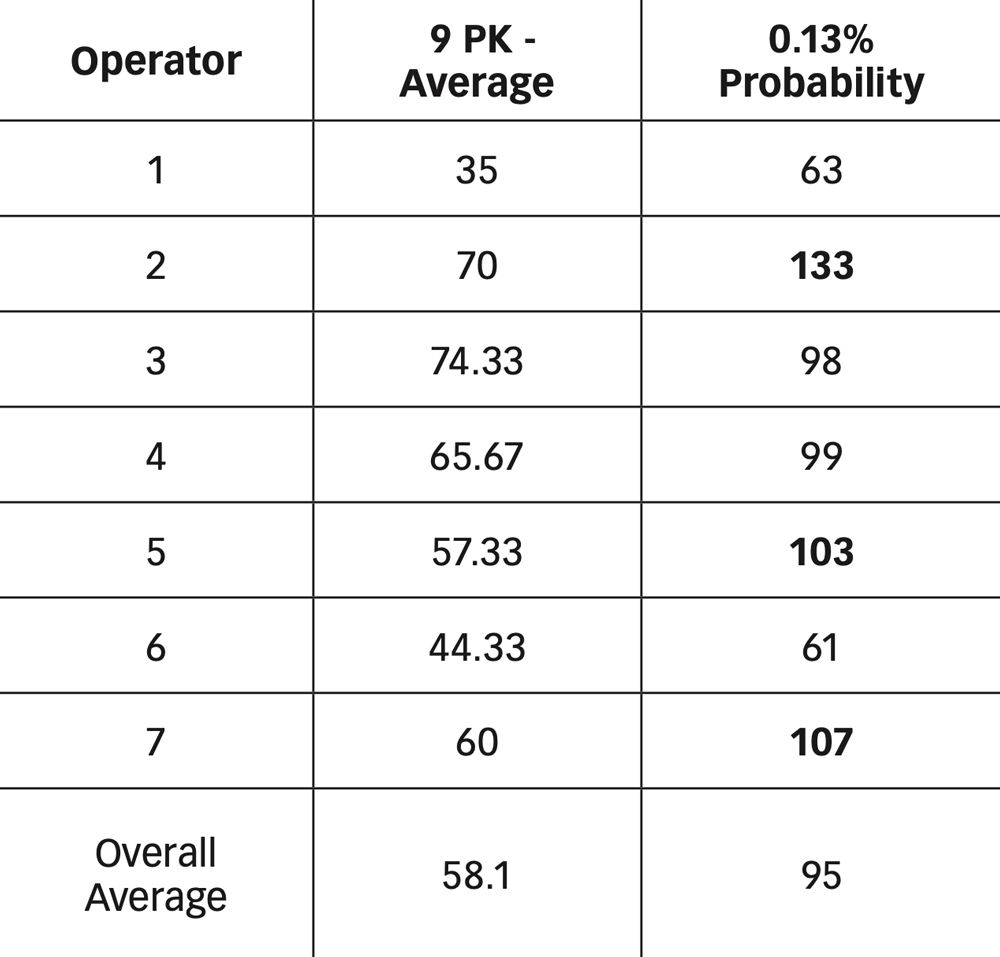
Gibson’s thorough analysis highlighted significant limitations of this commonly accepted approach. He initially tested seven individuals, all wearing identical ESD footwear, walking on the same conductive vinyl flooring within a factory environment at normal relative humidity (approximately 30-50%). When analyzing this data using only peak voltage averages (as per the standard), the results suggested general compliance.
However, upon further statistical analysis that involved applying a rigorous three-sigma method to the entire voltage waveform data rather than peak voltages alone, the risks appeared considerably greater.
Specifically, Gibson’s comprehensive statistical review identified significant variability among subjects:
- Three individuals demonstrated a high probability of exceeding the 100-volt threshold, indicating clear non-compliance concerns.
- Two individuals showed probable voltages close to the threshold, providing minimal margin.
- Only two individuals presented a high probability of voltage generation below 100 volts.
Moreover, this risk assessment remains conservative since Gibson’s data was collected under typical factory humidity conditions (around 30-50%). Had the tests been performed under the lower relative humidity conditions (e.g., 12% RH) used in standard STM 97.2 qualification tests, the resulting voltages likely would have been significantly higher, amplifying the risk even further. Additionally, the inherent subjectivity of the walking test, including variability arising from individual electrical capacitance, hydration levels, foot size, footwear types, walking style, speed, and body movements, introduces further uncertainty and underscores the inadequacy of relying on a single-subject evaluation.
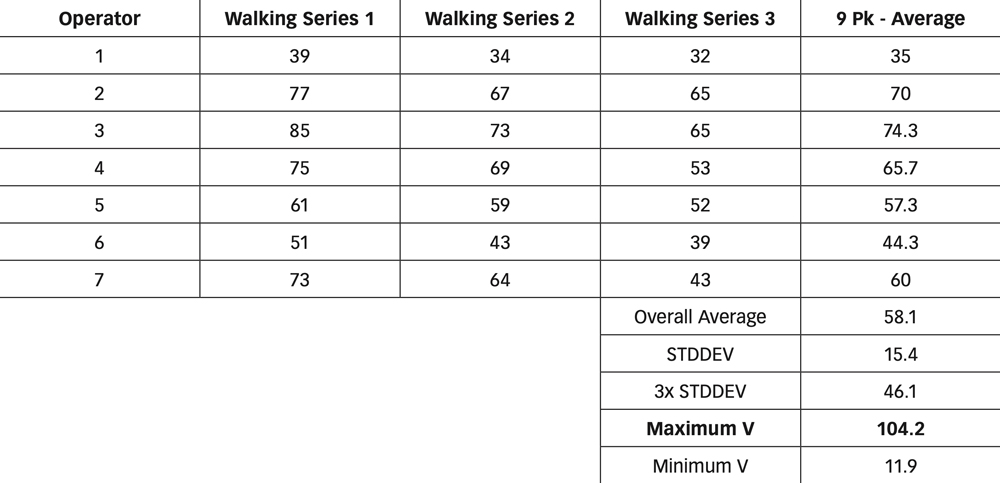
Table 2: Probabilistic charge generation analysis of peak voltages across multiple test subjects
Together, these findings underscore the importance of adopting comprehensive testing methodologies for effective ESD protection. Organizations must move beyond simplistic or limited peak-voltage measurements and implement full waveform testing coupled with rigorous statistical analysis. Ideally, this should include pilot installations conducted under realistic operational conditions, using actual equipment, chairs, carts, and multiple personnel. Evaluating flooring in situ provides the most reliable insight into real-world performance, ensuring robust and effective static control throughout the facility.
Still Tethering: When Conductive Flooring Doesn’t Ensure True Mobility
Post-installation audits frequently reveal that the anticipated mobility benefits of compliant flooring are not realized, not due to a lack of inherent floor conductivity, but because mobile equipment cannot reliably maintain electrical contact with the floor’s conductive surface.
Sometimes the root cause is attributed to faulty grounding components, such as ineffective drag chains, inappropriate casters, or shelving sleeves that electrically isolate shelves from their posts. However, in most instances, the underlying issue lies with the flooring itself. For example, certain Generation 2 epoxy coatings incorporate a conductive layer beneath the surface but lack sufficient surface-level conductivity. Similarly, poorly designed conductive tiles with inadequate or unevenly distributed conductive granules compromise the effectiveness of grounding performance.

As detailed in [4], passing the STM7.1 compliance test confirms general floor conductivity but does not guarantee effective grounding or bonding in practical conditions. True grounding performance depends entirely on whether these small, real-world contact points consistently engage conductive elements within the flooring material. If casters or leveling feet rest on insulative fillers, non-conductive surface textures, or gaps between conductive granules, the equipment remains electrically isolated, regardless of nominal compliance on paper.
The practical consequence of this oversight is that casters, shelves, and similar mobile equipment effectively become electrically isolated, or “floating,” unable to dissipate static charges reliably. This scenario leaves operators susceptible to static shocks, exposes sensitive electronic components to damage, and negates the anticipated advantages of mobile grounding.
This issue arises frequently because many engineers and facility managers evaluating ESD flooring for the first time may inadvertently overlook critical supplementary requirements, such as those outlined in ANSI/ESD STM4.1. Typically, these problems only come to light during detailed audits or after operational failures linked to static discharge events occur.
To ensure robust static control under realistic operating conditions, specifiers must look beyond basic resistance compliance tests. A thorough and effective evaluation of ESD flooring should involve:
- Testing mobile equipment, including carts, chairs, and shelving, under realistic operational loads.
- Verifying electrical continuity, specifically at caster-to-floor and leveling foot-to-floor interfaces.
- Carefully examining the flooring’s surface construction to confirm consistent and reliable conductive pathways.
- Conducting body voltage and charge decay tests to evaluate real-world static dissipation performance comprehensively.
When Redundancy Fails: Ensuring System-Level Reliability in ESD Control
To counteract these deficiencies, some facilities implement passive redundancy measures, such as using conductive flooring combined with static control seating. But does this redundancy reliably achieve effective ESD protection?
A recent internal audit conducted at a semiconductor laboratory highlighted inherent risks associated with relying on passive grounding strategies, even when redundancy appeared sufficient on paper. In this instance, an engineer proactively installed a pilot area consisting of interlocking conductive flooring paired with conductive ESD chairs featuring metal casters. The flooring used was notable for its relatively low surface density of conductive granules.
According to supplier test reports, the flooring met ANSI/ESD S20.20 compliance criteria based on ANSI/ESD STM7.1 resistance-to-ground and ANSI/ESD STM97.2 body voltage measurements. The ESD chairs individually passed ANSI/ESD STM12.1 resistance tests, verifying their individual compliance.


- On the original low-density flooring, resistance from chair to ground varied significantly, from acceptable levels (~106 ohms) to highly non-compliant values (~1011 ohms).
- Corresponding body voltage readings were unacceptably high, ranging from -188 volts to +142 volts.
- On the replacement flooring with higher conductive granule density, resistance measurements stabilized consistently below 1.2 × 10⁶ ohms, and body voltage readings remained near zero volts.
- ESD flooring does not operate in isolation: It serves as the critical grounding interface for chairs, carts, shelves, and all mobile equipment.
- Compliance of individual components alone does not ensure reliable system-level performance: Interfaces between components—such as the contact between casters and conductive flooring elements—are critical.
- Passing basic resistance tests (ANSI/ESD STM7.1) alone is insufficient: Effective grounding performance in real-world scenarios relies on the actual, consistent contact between small contact points (e.g., caster wheels) and conductive granules on the floor surface.
- Without enforced additional grounding methods like wrist straps or footwear, the flooring becomes the sole grounding mechanism, significantly increasing dependence on its functional effectiveness.
Drawing from physicist Richard Feynman’s insights, true understanding of any system involves the capacity to clearly and simply articulate how each component integrates into the overall system. Merely confirming compliance through isolated tests or technical datasheets is insufficient. Instead, organizations must rigorously test pilot installations under realistic operating conditions, involving actual chairs, carts, material-handling equipment, and realistic daily operational activities. Such proactive validation uncovers critical issues that isolated compliance tests alone might miss.
Aligned with industry best practices, a comprehensive evaluation beyond basic compliance standards is essential. Organizations must move beyond simply asking, “Does the flooring meet the standard?” to more crucial questions such as, “Does it perform reliably in our environment, with our actual equipment, under realistic operational conditions?” By adopting this rigorous and holistic approach, organizations ensure robust static control reliability, effectively safeguarding sensitive electronic components from unintended risks and vulnerabilities.
- Justin Kruger and David Dunning, “Unskilled and Unaware of It: How Difficulties in Recognizing One’s Own Incompetence Lead to Inflated Self-Assessments,” Journal of Personality and Social Psychology, 1999, Vol. 77, No. 6, pp. 1121-1134.
- Jordan Tlumak, “Point Load vs. Distributed Load,” OneRack website, May 27, 2024.
- Jeremy Smallwood and David E. Swenson, “Evaluation of performance of footwear and flooring systems in combination with personnel using voltage probability analysis,” Journal of Physics: Conference Series, 301 012064.
- David Long, “Caster Contact: The Achilles Heel of ESD Floors,” In Compliance Magazine, September 2021.