




RED’s Cybersecurity Requirements Update: EN 18031-X:2024
EMC Concepts Explained
Hot Topics in ESD
RED’s Cybersecurity Requirements Update: EN 18031-X:2024
EMC Concepts Explained
Hot Topics in ESD

solid-state amplifiers


Visit us at www.arworld.us to learn more







ISSN 1948-8254 (print)
ISSN 1948-8262 (online)
is published by
Same Page Publishing Inc.
451 King Street, #458
Littleton, MA 01460
tel: (978) 486-4684
fax: (978) 486-4691
© Copyright 2025 Same Page Publishing, Inc. all rights reserved
Contents may not be reproduced in any form without the prior consent of the publisher. While every attempt is made to provide accurate information, neither the publisher nor the authors accept any liability for errors or omissions.
editor-in-chief
Please contact our circulation department at circulation@incompliancemag.com
In the latest round, the Commission voted to remove 11 outdated and “useless” rule provisions from its regulations. The FCC says that this round of changes covers 39 “regulatory burdens,” 7194 words, and 16 pages.
Specifically, the changes repeal restrictions on phone booth enclosures and captioning on analog TV receivers…
Managed by the Center for Devices and Radiological Health (CDRH), the FDA’s Regulatory Accelerator initiative offers developers of digital health and software-based medical devices access to several new online resources. These resources include…







n Part 1, we discussed some of the sources of and the historical basis for HIRF testing. With the increased use of “Fly by wire” controls of aircraft, the high intensity of radio frequency transmitters caused interference with these controls, at times with very serious effects. Test levels had to be increased, and methodology changed for components and subsystems, as well as complete systems and the full aircraft. RTCA’s DO-160B, which was in effect until 1989, had as its highest radiated susceptibility level ‘Category Z,’ which was 1 V/m from 35 MHz to 1215 MHz, with a bump to 2 V/m from 118-136 MHz. The lowest level in DO-160C (December 1989) would be 5 V/m, with a new maximum of 200 V/m up to 18 GHz.1
In 1988, the SAE “was requested to develop guidance for designers’ aircraft, aircraft engine, and electronics components on how to maximize protection of airborne avionics and electronic systems from the adverse effects of high energy RF fields through which aircraft may fly.”2 The SAE would create three groups, or Panels, to address the subject. Panel 1 would validate the HIRF environment. Panel 2 would support the FAA by writing the high-level advisory material for their rule making effort. Panel 3 would write the recommended practices to meet the environments they would identify. This work was focused on environments found in the Continental U.S. and its territories. A similar effort was underway in Europe through EUROCAE with Working Group 33, members of which participated in SAE’s AE4R HIRF Subcommittee. To assure uniformity and completeness, the Electromagnetic Effects Harmonization Working Group, or EEHWG, would assemble the data and information generated by the groups involved.

ompliance engineering is a field that demands meticulous attention to detail, a proactive mindset, and a deep understanding of regulatory landscapes. In this practical engineering article, we explore some of the lesser-discussed aspects of compliance engineering—those “odds and ends” that can make a significant difference in ensuring products meet stringent standards and regulations.
ome requirements are set in stone. But many of them need to be tailored for your specific hardware. If you apply standards blindly, you’ll run into all kinds of schedule-delaying problems: test methods and setups that don’t make sense, test failures that aren’t important and need to be waived, and missing problems that will pop up later during integration and checkout. Some standards, such as MIL-STD-464 and MIL‑STD-461, are explicit that they must be tailored. When a standard needs to be so general that it can cover everything from a walkie‑talkie to an aircraft carrier, you need to make sure that you’re applying it in a way that makes sense for‑your hardware.
So, when you’re sitting down to tailor your program requirements down to a specific set of hardware to be tested, where should you start? Here are some suggestions.
- The document itself. It’s worth the time to sit down and read, in detail, as much of the original text as possible. It may have a table showing which requirements apply to different applications (such as Table V of MIL-STD-461 Rev G). There may be notes or footnotes that mention exceptions or specific configuration types to include or avoid.

he Dunning–Kruger effect1 explains how overestimating one’s technical reach can narrow ESD evaluations to the decades‑old floor resistance-to-ground (Rtg) test—an essential metric since the 1950s, yet blind to system interactions. Three case studies show that skipping resistance tests of mobile technical elements (casters, chairs, carts) that depend on the floor as a series path to ground leads to false confidence and missed risks.
This article advocates pilot floor installations plus insitu body voltage, probability analysis of charge generation data, and mobileelement resistance tests to validate system-level performance and secure long-term staticrisk mitigation.


dvanced system on a chip (SoC) components use multi-die package technologies where single silicon chips are assembled on top of each other, beside each other on a larger interposer, or by combining various 3D packaging methods together. Connections between chips are formed by utilizing multiple technologies such as flip chips, substrates, interposers, silicon bridges, bond wires, micro bumps, and through-silicon-vias (TSV).
A single SoC can have hundreds to thousands of external connections between a component package and a printed circuit board (PCB). These connections require certain robustness against external electrical stress and can often tolerate electrostatic discharge (ESD) withstand voltages of more than 250 V charged board model (CDM) and 500 V human body model (HBM) during qualification tests. Each of these on-chip protection structures requires surface area from the silicon, but due to a limited number of connections, this is still feasible.


staticworx.com
An ESD floor can pass lab tests and still fail in the field.
That’s why we recommend a pilot installation.
We provide the test patch. You simulate real-world use. No assumptions. No surprises. Just real-world data you can trust.
Visit us at the ESD Symposium – Booth 302





The event will feature an extensive lineup of workshops, presentations, and tutorials, covering the latest developments in Electronic Design Automation (EDA), Device Testing, Manufacturing, Electromagnetic Compatibility (EMC), Photonics, and Emerging Technologies. These sessions are designed to equip you with cutting-edge knowledge that can be directly applied to your current and future projects.
Moreover, the symposium provides access to certification programs, enhancing your professional credentials, and a robust exhibit hall showcasing the latest tools and technologies. This is not just a chance to learn but also to connect with industry peers, share insights, and discuss challenges in an environment rich with networking opportunities.
In a field as specialized as ours, staying updated is not just beneficial—it’s essential. This symposium offers you the chance to refine your skills, expand your knowledge, and position yourself at the forefront of industry advancements.
We encourage you to attend to gain the expertise needed to excel in your role, and we hope to see you there!
To learn more visit: www.esda.events


Riverside, California
- Engage in Cross-Disciplinary Learning
- Participate in Interactive Sessions
- Access Exclusive Content and Resources
- Stay updated on Regulatory Standards
- Explore Cutting Edge Technologies
- Expand your Professional Network


- Electronic Design Automation
- Device Testing
- Manufacturing
- Electromagnetic Compatibility
- Photonics
- Emerging Technologies

Advanced CMOS scaling and packaging co-innovations are essential to meet AI’s unprecedented performance and energy efficiency demands.
Solid-state electrohydrodynamic cooling technology offers silent thermal management but presents unique electrostatic reliability challenges.
Advanced CMOS scaling beyond 2nm requires innovative backside interconnect technologies despite significant processing and integration challenges.
GaN HEMT devices show excellent performance but face reliability and ESD robustness challenges across multiple applications.



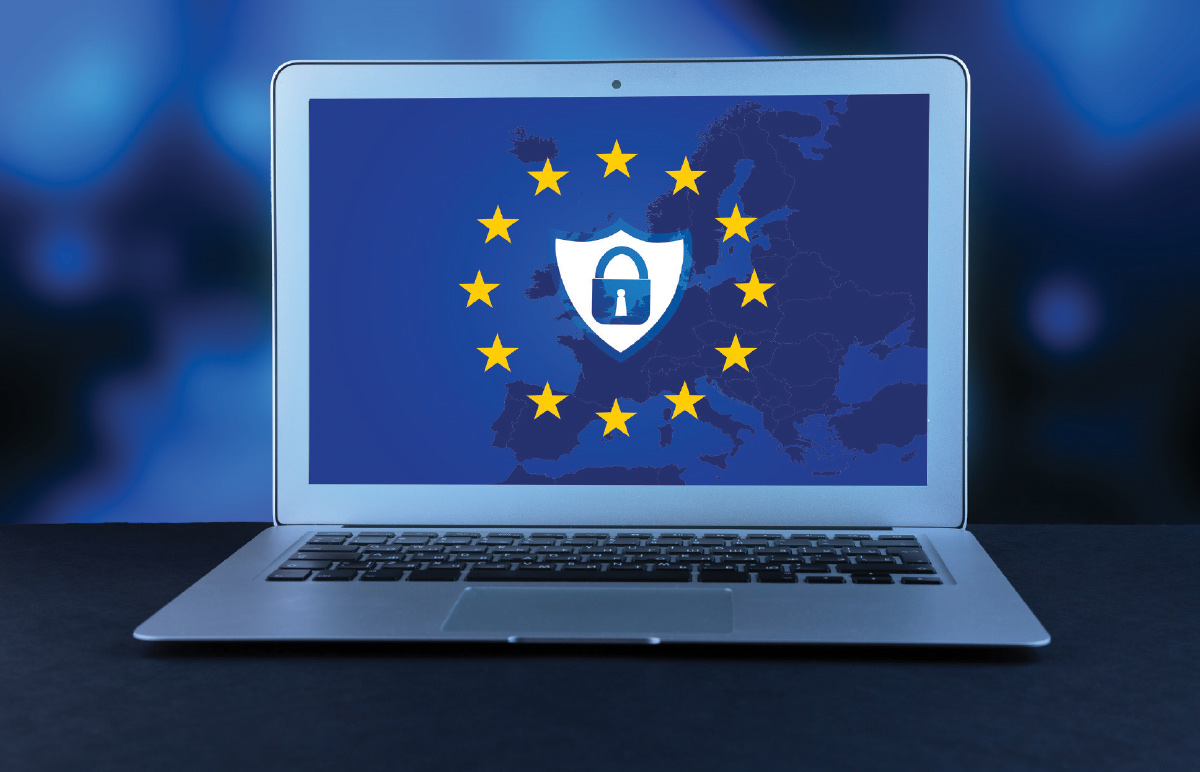
s a continuation of our article Preparing for the EU’s New RED Cybersecurity Requirements from the June issue of In Compliance Magazine, this article will concentrate on the EN 18031-X series that was harmonized and published in the Official Journal of the European Union in January 2025, after our previous article was written.
Since our previous article covered the Radio Equipment Directive (Directive 2014/53/EU, known as the RED), plus other acts and directives referring to cybersecurity and why cybersecurity rules are necessary, we will not repeat them in this article.
The EN 18031-X series of standards was developed to provide manufacturers of radio equipment with a harmonized framework to meet the European Union’s (EU’s) cybersecurity requirements that became mandatory on August 1, 2025.
his is the first part of the fourth installment in a series devoted to the topic of shielding to prevent electromagnetic wave radiation. The first article [1] discussed reflection and transmission of uniform plane waves at a normal boundary. The second article, [2], addressed normal incidence of a uniform plane wave on a solid conducting shield with no apertures. The third article, [3], presented the exact solution for shielding effectiveness of a solid conducting shield. In this article, two approximate, yet accurate, solutions are obtained from the exact solution.


 << η0. (For instance, the magnitude of the intrinsic impedance of copper at 1 MHz is 3.69 × 10⁻⁴ << 377 Ω).




You can do that here.
 Visit In Compliance’s booth at these events!
EMC Europe
September 13-18
47th Annual EOS/ESD Symposium
September 16-17
Auditing Your Laboratory to ISO/IEC 17025:2017
September 16-17
Understanding ISO/IEC 17025:2017 for Testing and Calibration Labs
September 21-26
European Microwave Week 2025
September 23
2025 Milwaukee EMC Seminar and Exhibits
September 25
2025 Minnesota EMC Seminar and Exhibits
October 1
Impact of Electric Vehicles on AM Radio Reception
October 2-3
Principles of EMC
The Battery Show 2025
October 7-10
EMC Course by SILENT Solutions
October 14
San Diego Test Equipment Symposium
October 14-17
EMC Course by SILENT Solutions
October 20-23
TCB Council Fall Workshop
October 20-23
Auditing Your Laboratory to ISO/IEC 17025:2017
October 20-23
Understanding ISO/IEC 17025:2017 for Testing and Calibration Labs
October 30
Meeting MIL-STD 461 and MIL‑STD 810 Test Requirements
View Index