
t’s often said, by myself and many other EMC instructors, that good bonding is key for EMC success. And that’s true! But it leaves out some nuance: how good does “good” need to be?
It turns out that depends on what you need the bond to do for you. We usually talk in terms of preventing radio frequency interference (RFI), but there are several reasons you may need to pay close attention to your bonding scheme.
NASA-STD-4003A is a great document that packs a lot of practical information and guidance into a relatively short page count—less than 50, in the most recent version I have. It’s also publicly available for free! It defines bonding as: “The process of providing good electrical connection across faying surface mechanical interfaces to minimize electrical potential differences between equipment and individual parts of structure.” It then goes on to define five classes of bond:
- Class C, when structure will be carrying return currents, as in traditional internal combustion engine vehicles
- Class H, for hazard control when there might be a short to case or other fault that results in currents flowing on structure
- Class R, bonding to prevent RFI or enable RF systems to operate properly
- Class L, to conduct currents resulting from a direct or nearby lightning strike
- Class S, to control static buildup on surfaces and prevent ESD
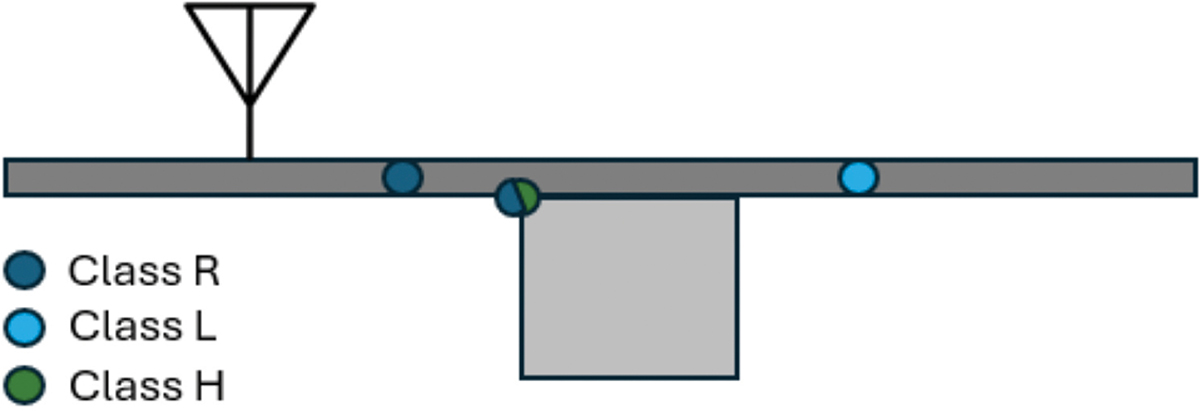
If you’re designing a new platform from scratch, it may be helpful to create a bonding diagram like the one in Figure 1. This shows, for each expected metal bond, what class of bond is needed—or if multiple classes are needed at a particular joint, such as bonding the case of RF equipment. That joint may need to handle both Class R and Class H requirements. In this case, meeting the lower impedance of Class R will also satisfy Class H, and making sure it can handle hazard currents will be more than adequate to carry RF currents.