



In Compliance: The Compliance Information Resource for Electrical Engineers logo
From Nyquist to Now
The Evolving Role of Electrochemical Impedance Spectroscopy
Including
Automotive EMC Testing Under Dynamic Driving Conditions

Build Your Own ESD Target

A large cylindrical battery with green light waves against a dark teal background.
Including
Automotive EMC Testing Under Dynamic Driving Conditions

Build Your Own ESD Target

2026 Product Resource Guide
October 2025
Or continue scrolling for full digital issue
Ametek Compliance Test Solutions
rethinking
solid-state amplifiers
Electronic equipment with a beige front panel featuring a display, knobs, and ventilation grilles.
One Demand Webinar
Think you know solid-state amplifiers?
THINK AGAIN!
Our latest solid-state amplifiers are redefining the limits of what this technology can achieve. With advanced combiner technology we’re breaking new ground in power and frequency capabilities, traditionally dominated by TWT systems. Experience seamless scalability and high performance, including improved harmonic results, reduced warm-up time, and extended reliability with high MTTF.
Watch our latest webinar and gain a deeper insight into the performance and reliability advantages of solid-state amplifiers.”

Visit us at www.arworld.us to learn more

The Power of 3: Emtest / Teseq / AR logos
Visit us at www.arworld.us
Contact us at ari-sales@ametek.com or telephone 215.723.8181
Ar Ametek logo
In Compliance logo
In Compliance Magazine
ISSN 1948-8254 (print)
ISSN 1948-8262 (online)
is published by

Same Page Publishing Inc.
451 King Street, #458
Littleton, MA 01460
tel: (978) 486-4684
fax: (978) 486-4691

© Copyright 2025 Same Page Publishing, Inc. all rights reserved

Contents may not be reproduced in any form without the prior consent of the publisher. While every attempt is made to provide accurate information, neither the publisher nor the authors accept any liability for errors or omissions.

publisher/
editor-in-chief
Lorie Nichols
lorie.nichols@incompliancemag.com
(978) 873-7777
business development director
Sharon Smith
sharon.smith@incompliancemag.com
(978) 873-7722
production director
Erin C. Feeney
erin.feeney@incompliancemag.com
(978) 873-7756
marketing director
Ashleigh O’Connor
ashleigh.oconnor@incompliancemag.com
(978) 873-7788
circulation director
Alexis Evangelous
alexis.evangelous@incompliancemag.com
(978) 486-4684
features editor
William von Achen
bill.vonachen@incompliancemag.com
(978) 486-4684
senior contributors
Bogdan Adamczyk
Keith Armstrong
Ken Javor
Kenneth Ross
Christopher Semanson
Min Zhang
columns contributors
Bogdan Adamczyk
Erin Earley
Min Zhang
EOS/ESD Association, Inc.
advertising
For information about advertising, contact Sharon Smith at sharon.smith@incompliancemag.com.
subscriptions
In Compliance Magazine subscriptions are free to qualified subscribers in North America. Subscriptions outside North America are $149 for 12 issues. The digital edition is free.

Please contact our circulation department at circulation@incompliancemag.com

October 2025
Volume 17 l Number 10
Contents
Feature Articles
From Nyquist to Now:

The Evolving Role of Electrochemical Impedance Spectroscopy (EIS)
By Christian Loew and Bob Zollo
By Matic Novak
SPECIAL COVERAGE
Columns
By Bogdan Adamczyk
By Ellen Merkel and Heinrich Wolf for EOS/ESD Association, Inc.
Departments
An Expert’s View:
Element Materials Technology
Our featured expert this month takes readers behind the work—decoding complex regulations, uncovering performance insights, and helping shape safer, smarter technologies for what’s next.
Electric vehicle battery modules with orange connectors and a person in green gloves working on them.
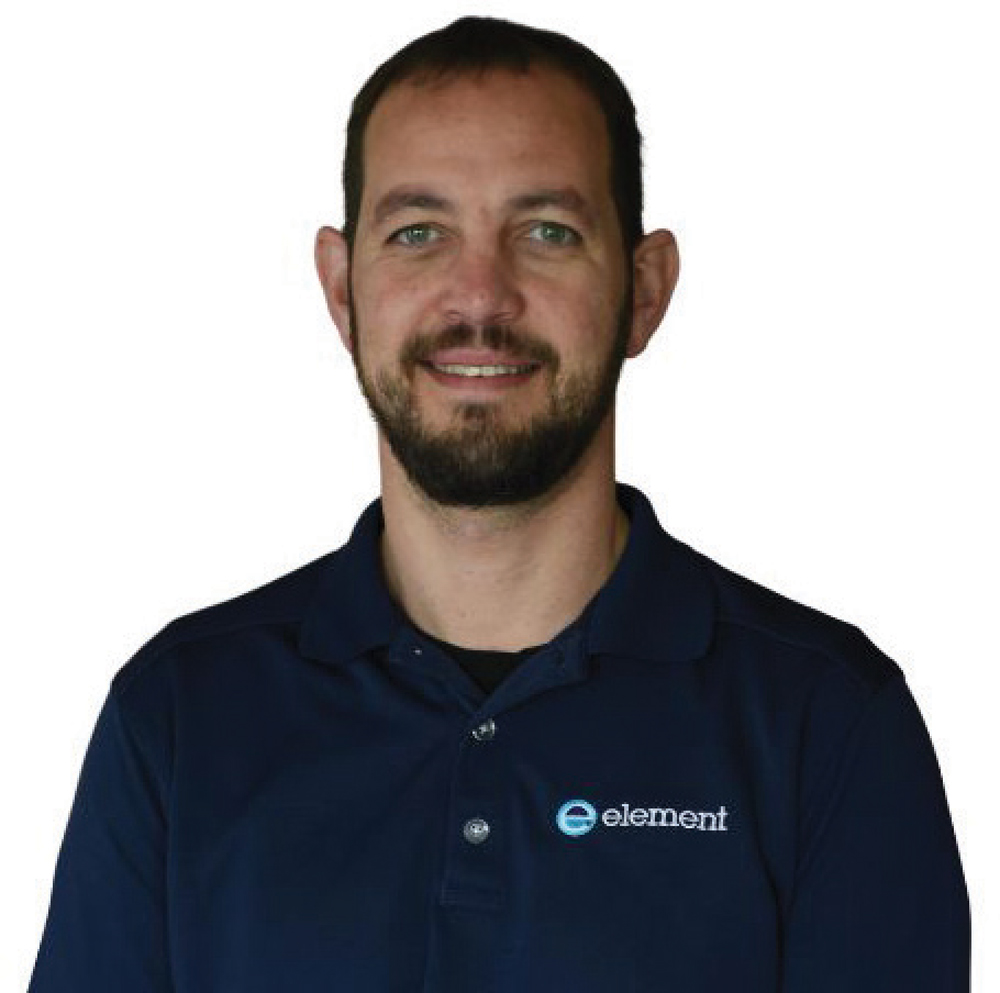
Mike Pendleton headshot
Mike Pendleton
Technical Director, Battery
Element Materials Technology
2350 Centennial Drive, Gainesville, GA 30504 | 888-786-7555

Navigate Battery Regulations with Confidence
Element is leading the charge in battery testing, ensuring that the latest advancements meet stringent safety and performance standards. With the new Regulatory Battery Regulations always on the horizon, manufacturers face continued compliance challenges – from CE marking requirements, to NRTL, IEC and CB Scheme, to UN/DOT transportation mandates and enhanced safety testing.
Testing That Goes Beyond Standard Certification
At Element, we focus on a variety of stress testing, evaluating how batteries withstand all types of abuse, from extreme environmental conditions, electrical abuse, and mechanical/physical forces encountered in actual use. Complimenting those, our thermal runaway testing helps our clients understand the worst-case scenario and prepare for it. This meticulous approach uncovers discrepancies and provides critical real-world performance insights not found on specification sheets.
Regulatory Expertise, And Then Some
But the thorough battery manufacturer will not stop with just regulatory testing. To go above and beyond to place the best product on the market, or to integrate the best battery into your product, Performance testing to simulate life, charge cycles and overall quality of the battery is an equally important pillar of our battery testing services. Quality reviews include benchmarking cell vendor products by way of conducting charge/discharge cycling, calendar life and aging and are a highly demanded area of our expertise.
And What Can We Learn from the Failures?
Whether it’s a failing result of one of our tests in the lab or a product failure in the field, our Failure Analysis experts have the experience and know-how to determine what happened and why. Using state-of-the-art resources from CT Scans, Microscopy and SEM imaging as well our hands-on methods of cell, module and pack teardowns our teams take a multi-pronged approach to cause analysis and deliver to the client the intelligence and evidence to make the best decisions.
Excellence in Every Test
Our commitment to quality and safety drives us to continually evolve our methods, staying ahead of industry trends. As one of our technical experts emphasizes, “Battery testing is not just about meeting standards; it’s about exceeding them to deliver products that perform reliably, safely, and efficiently in every situation.”

Element remains a forward-thinking leader, pushing the boundaries of battery testing to support the future of technology. Ready to ensure your batteries meet tomorrow’s standards? Reach out today.

Element – Your Partner in Battery Testing Excellence
Making tomorrow safer than today
Sponsored Content: Meet the Expert
compliance news
FCC Removes Non-Compliant Carriers from Robocall Database
The U.S. Federal Communications Commission (FCC) is taking steps to reduce the impact of robocalls by delisting operators who have failed to meet the Commission’s certification requirements.

Under an Order issued by the FCC, non‑compliant voice service providers (185!) have been removed from the Commission’s Robocall Mitigation Database (RMD) by the FCC’s Enforcement Bureau. The RMD was established by the FCC in 2020 to help promote transparency regarding the compliance of voice service providers with Commission rules intended to reduce illegal robocalls made to consumers…

Three MedTech Companies Get FDA Warning Letters
The U.S. Food and Drug Administration (FDA) has reportedly sent warning letters to several medical device manufacturers for violations of its device marketing and good manufacturing practices requirements.

According to a news item posted to the website of the Regulatory Affairs Professional Society (RAPS), the FDA recently sent warning letters to three different medical device companies. In at least one case, a company was cited for promoting the use of its devices to treat medical issues that are outside the scope of the device’s authorization…

Thank you to our Premium Digital Partners
A.H. Systems logo
NSI MI Ametek logo
Advanced Test Equipment Rentals logo
Element logo
Feature Article
From Nyquist to Now:
The Evolving Role of Electrochemical Impedance Spectroscopy (EIS)
Enhanced Battery Test Insights with Electrochemical Impedance Spectroscopy
By Christian Loew and Bob Zollo
A macro close-up of a digital screen displaying a battery icon. The icon is part of a series of battery icons on a horizontal grid, likely showing different charging levels. One battery icon is glowing with a vibrant red-orange light, indicating a low-charge state. The other icons are faded or blurred in the background.
B

attery cells constantly change in form factor, capacity, chemistry, and application. And new types enter the market daily. However, all this traction is not changing one thing: the need for battery cells to be tested to ensure safety, performance, quality, and reliability.

Once a battery has passed its early development stages with an open structure, it becomes a closed one, limiting the possibilities of examining the different layers and components in a non-disruptive way. This makes it harder to gain insight into the battery. But different tests can help to get a deeper understanding of the battery’s structure and behavior without destroying it.

In this overview, we will cover one powerful method, electrochemical impedance spectroscopy (EIS).


Feature Article
Automotive EMC Testing Under Dynamic Driving Conditions
Beyond Static Testing: Integrated Approaches for EV EMC Validation
By Reiner Goetz
A futuristic, stylized outline of a fast-moving sports car is shown as a dynamic trail of glowing green and blue light against a dark background. The light streams backward, suggesting high speed, technology, and motion blur.
T

he shift from internal combustion engine (ICE) automobiles to electric vehicles (EVs) has come with an array of new subsystems and components that introduce new EMC considerations. The level of complexity involved in automotive electromagnetic compatibility (EMC) testing increases with dynamic driving conditions, where manufacturers not only have to refer to the framework standards offered but must also improvise and establish new internal standards to ensure the vehicle and its internal components all function properly under all driving conditions. A number of challenges may arise when building a suitable test bench that thoroughly tests EVs and electrical components.

This article discusses the importance of EMC testing in the automotive industry, as well as dynamic EMC test systems and their inherent challenges. It also describes the development of a unified EMC test platform for dynamic driving conditions.

Feature Article
Build Your Own ESD Target
Building IEC 61000-4-2 Compliant Test Equipment on a Budget
By Matic Novak
An electric-blue bullseye target with glowing crosshairs and concentric circles is positioned in the lower-left corner of the image. Surrounding the target, jagged lines of blue and white electricity crackle against a dark blue background, with small, glowing orbs scattered around.
O

ur internal EMC laboratory had decided to verify (not certify, as it’s not an accredited lab) all the equipment we use for pre-compliance EMC tests. The goal was to find some defective equipment and to repair or replace it to avoid the possibility of generating inaccurate test results.

One of the trickiest pieces of equipment to verify was the ESD gun because specialized equipment is needed for the verification test. Off-the-shelf ESD targets are relatively expensive (>1500 USD), so we decided to build a do-it-yourself (DIY) version. (See our final design in Figure 1 and Figure 2.)

DIY ESD Target Overview and Design Choices
After reading through IEC 61000-4-2, Testing and measurement techniques – Electrostatic discharge immunity test, which specifies the type of ESD target to use and its calibration procedure, and reading some articles on the topic, we decided to make the circuit in two separate parts, including a voltage divider and an ESD target.

The requirement for the maximum tested ESD voltage was set at 15 kV. The voltage divider was made by simply placing 100 MΩ and 1 MΩ high voltage resistors in series (HVR3700001004FR500 and HVA12FA50M0). We used two 50 MΩ in series to increase the voltage rating of the resistors we used. A single 50 MΩ resistor withstands a maximum voltage of 8 kV. So, with two in series, our device could withstand a maximum voltage of 16 kV. Three test points were placed so that connections with the ESD gun and multimeter would be easier to make.

We constructed our ESD target by finding a connector with enough distance between the center pin and the outer pins to fit eight 16.5 Ω 0805 SMD resistors connected in parallel (ERJ‑P06F16R5), which defines the <2.1 Ω input impedance at DC, consistent with the IEC 61000-4-2 standard. 2.0625 Ω is the equivalent input impedance of the eight 16.5 Ω selected resistors placed in parallel, which satisfied the criteria in the standard of under 2.1 Ω.

Resistors were chosen as they have the maximum voltage of 400 V. Maximum voltage during the ESD event would be 15 kV (max voltage requirement)/(330 Ω (output impedance of the ESD gun)/2.1 Ω (impedance of the ESD target)) = 96 V. The maximum voltage can reach a slightly higher value (due to a parasitic capacitance in the ESD gun) that is in parallel to the 330 Ω resistor, which allows for higher current. The ESD target resistor’s datasheet also specifies resistance to 3 kV ESD pulses.

2026
Product
Resource
Guide
2026 Product Resource Guide
Finding the right products to meet your unique compliance requirements can be challenging. Multiple considerations play into your decision‑making process.

In this special issue, we highlight seven product categories—and offer guidance on choosing and using the right products and services for your applications.

Contributing Author
Don MacArthur

“The Practical Engineer”

Don MacArthur headshot
Absorbing Materials
Future Trends and Innovations in RF Absorbing Materials
Amplifiers
Understanding RF Amplifiers
Antennas
Design and Operation of Antennas
Chambers
Design Considerations for EMC Test Chambers
Components
Building Compliant Electronics
Filters
Case Studies and Real-World Applications of EMI Filters
Test Services
Key Features and Capabilities of Compliance Testing Labs
For Your Next Project
Absorbing Materials
Future Trends and Innovations in RF Absorbing Materials
By Don MacArthur
R

adio Frequency (RF) absorbing materials play a crucial role in mitigating interference and enhancing the performance of electronic devices. As technology advances, the demand for more efficient and sustainable RF absorbing materials continues to grow. This article explores the latest trends and innovations in RF absorbing materials, focusing on advancements in material science, sustainability, and their impact on Electromagnetic Compatibility (EMC) and compliance engineering.

Advancements in Material Science
New Developments in RF Absorbing Materials and Their Potential Impact on EMC and Compliance Engineering
Recent advancements in material science have led to the development of new RF absorbing materials with enhanced properties. These materials are designed to effectively control and mitigate interference, ensuring cleaner signal paths and improved device performance. Some notable developments include…
Amplifiers
Understanding RF Amplifiers
By Don MacArthur
I

n the realm of radio frequency (RF) electronics, amplifiers play a pivotal role in enhancing signal strength and maintaining the integrity of transmitted data. This article delves into four critical parameters—gain, noise figure, linearity, and efficiency—providing insights into their significance and how they shape RF amplifier performance.

Gain: The Measure of Amplification
Gain, a fundamental parameter, quantifies the amplification provided by an RF amplifier. It is expressed in decibels (dB) and represents the ratio of output power to input power. Higher gain implies a stronger output signal for a given input, which is crucial in applications where signal attenuation over long distances is a concern.
Antennas
Design and Operation of Antennas
By Don MacArthur
I

n the world of electromagnetic compatibility (EMC) compliance, ensuring that electronic devices meet regulatory standards is paramount. A key component in achieving this compliance is the use of antennas, which are essential for testing and measuring electromagnetic emissions and susceptibility. This article explores the role of antennas in compliance testing, focusing on their construction and materials, setup and calibration, and maintenance and care. By understanding these critical aspects, engineers and technicians can ensure accurate and reliable measurements, ultimately leading to devices that perform optimally and comply with stringent regulatory requirements.

Construction and Materials
Antennas are critical components in various communication systems, and their construction and materials play a significant role in their performance. The choice of materials and design considerations for compliance testing antennas, such as biconical antennas, is essential to ensure accurate and reliable measurements.
Chambers
Design Considerations for EMC Test Chambers
By Don MacArthur
E

lectromagnetic compatibility (EMC) test chambers are critical facilities where electronic devices are tested for their ability to function properly without emitting or being affected by electromagnetic interference (EMI). Designing an EMC test chamber requires careful consideration of several factors to ensure accurate and reliable testing. This article explores the key design considerations for EMC test chambers, focusing on material selection, chamber size, and configuration.

Material Selection
The materials used in the construction of EMC test chambers play a pivotal role in their performance. The primary materials to consider are RF absorbers and shielding materials.
Components
Building Compliant Electronics
By Don MacArthur
I

n the world of electronics, ensuring compliance with regulatory standards is paramount to the successful launch and operation of any device. Compliance covers a broad spectrum of requirements, including electromagnetic compatibility (EMC), safety, and environmental considerations. This article delves into the critical design considerations for selecting components, layout and placement on printed circuit boards (PCBs), and effective thermal management, all aimed at achieving compliance.

Component Selection
Selecting the right components is fundamental to meeting compliance requirements. Here are key criteria to consider…
Filters
Case Studies and Real-World Applications of EMI Filters
By Don MacArthur
E

lectromagnetic interference (EMI) can disrupt the performance and functionality of electronic devices, leading to potential safety hazards and reliability issues. EMI filters are essential components that help mitigate these interferences by blocking unwanted electromagnetic noise. This article delves into real-world applications of EMI filters in consumer electronics, automotive systems, and industrial equipment, highlighting their significance and effectiveness in ensuring smooth and reliable operation.

Consumer Electronics
In the realm of consumer electronics, EMI filters play a crucial role in maintaining the performance and safety of devices such as smartphones and laptops. These devices are often packed with high‑density circuitry and operate at high frequencies, making them susceptible to electromagnetic interference from various sources.
Test Services
Key Features and Capabilities of Compliance Testing Labs
By Don MacArthur
I

n the fast-paced world of technology and electronics, ensuring that products meet stringent regulatory standards is critical for market entry and consumer safety. Compliance testing labs play a vital role in this process by verifying that electronic devices adhere to electromagnetic compatibility (EMC), safety, and other regulatory requirements. This article explores the key features and capabilities of compliance testing labs, focusing on accreditation and certification, state-of-the-art equipment, and the expertise and experience of lab personnel.
Accreditation and Certification
Accreditation and certification are fundamental to the credibility and reliability of compliance testing labs. Accreditation to standards such as ISO/IEC 17025 indicates that an independent body has evaluated a lab and meets the required standards for testing and calibration competencies. ISO/IEC 17025 is the international standard for testing and calibration laboratories, ensuring they operate competently and generate valid results.
Product
Marketplace
A curated collection of innovative solutions from key industry suppliers. Find the right fit for your projects.
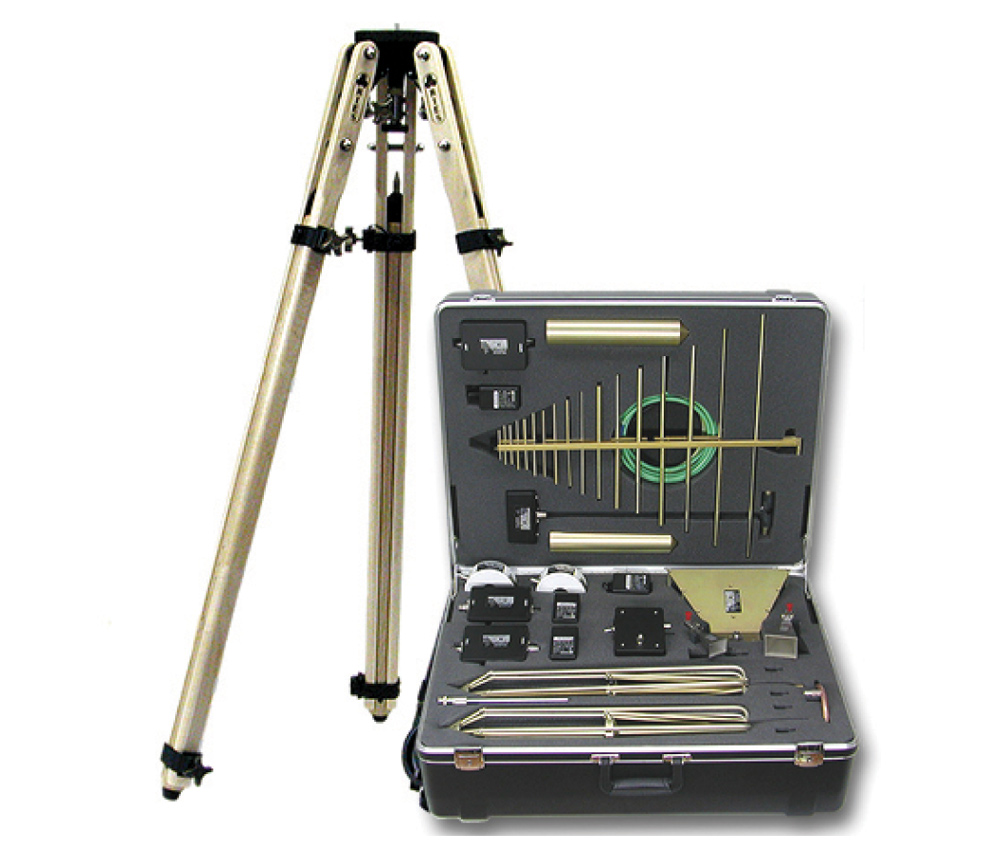
A tripod stand next to an open equipment case containing a set of brass antenna elements and probes for Electromagnetic Compatibility (EMC) testing.
AK-40G Antenna Kit 20 Hz- 40 GHz
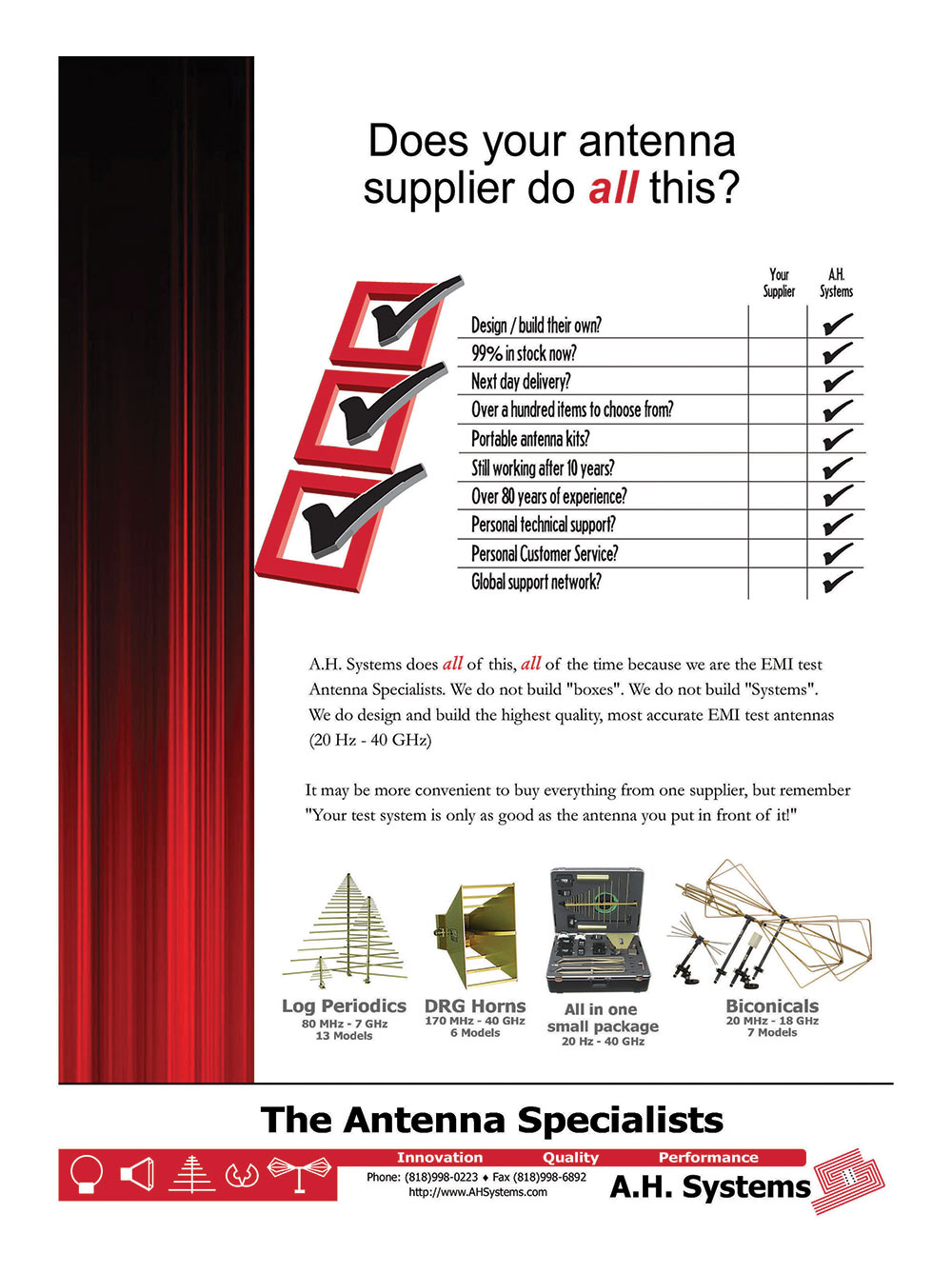
A.H. Systems’ AK-40G Portable antenna kit offers the best frequency range and performance in one case. This is the antenna kit you need for everyday testing. Just grab it and go. Inside the case is all the reliable antennas, current probes, and cables needed to satisfy a wide array of customer requirements. The antenna kit also comes with a tripod with azimuth and elevation head for antenna positioning and a tripod carrying case. Excellent performance, compact size and a lightweight package make this kit a preferred choice for field-testing and can ship with next‑day, on-time delivery. Other antenna kits available.
Absolute EMC logo and slogan: 'Your Partner in EMC Excellence' with icons representing electric vehicles, military, aerospace, energy/lighting, and medical industries.
Strength Through Partnership
At Absolute EMC LLC, we deliver world-class support and products across all EMC markets. Our team strives to be proactive, responsive, and efficient—working alongside you as a true partner. By collaborating only with manufacturers who share our commitment to quality and customer care, we ensure your testing challenges are met with confidence and success.
A cross-section view of a large semi-anechoic or anechoic chamber used for EMC testing, showing a car inside with a chassis dynamometer.
AP Americas
A leading global manufacturer of RF/anechoic chambers and RF shielded rooms for various applications in EMC, antenna testing and high-frequency technology. Our expertise lies in the development, design, and realization of test environments to verify the electromagnetic compatibility of your products according to national and international requirements in industries including military, aerospace, wireless, automotive, and OTA. We also provide RF secure facilities for various applications including EMP shielding, SCIF rooms, and secure conference rooms.
A large, dual-cabinet AR brand radio frequency (RF) power amplifier, typical equipment used for high-power EMC immunity testing.
AR BP Series | Advanced Pulsed Power
The AR BP Series offers solid-state, Class A-AB, air-cooled amplifiers designed for low-duty-cycle pulsed RF applications. With output power from 20 kW to 500 kW and bandwidth from 1 MHz to 400 MHz, they deliver high gain, wide instantaneous bandwidth, and proven reliability—ideal for NEMP testing and other demanding environments. Discover more at https://www.ar.ametek-cts.com.
MAGPro software interface on a laptop showing a common mode choke finder and analyzer screen with a table of component data and impedance versus frequency graphs.
Precision Common Mode Choke Search Tool for EMI Solutions”
Coilcraft’s MAGPro® Common Mode Choke Finder is a powerful search and analysis tool for finding the optimal off-the-shelf common mode chokes. It allows you to search for your desired impedance, attenuation, or inductance, as well as specific current rating and frequency range. Whether you are designing a line filter, or addressing a specific EMI issue, this search and analysis tool provides the analysis you will need to find the right part in the shortest time, reducing your design cycle time.
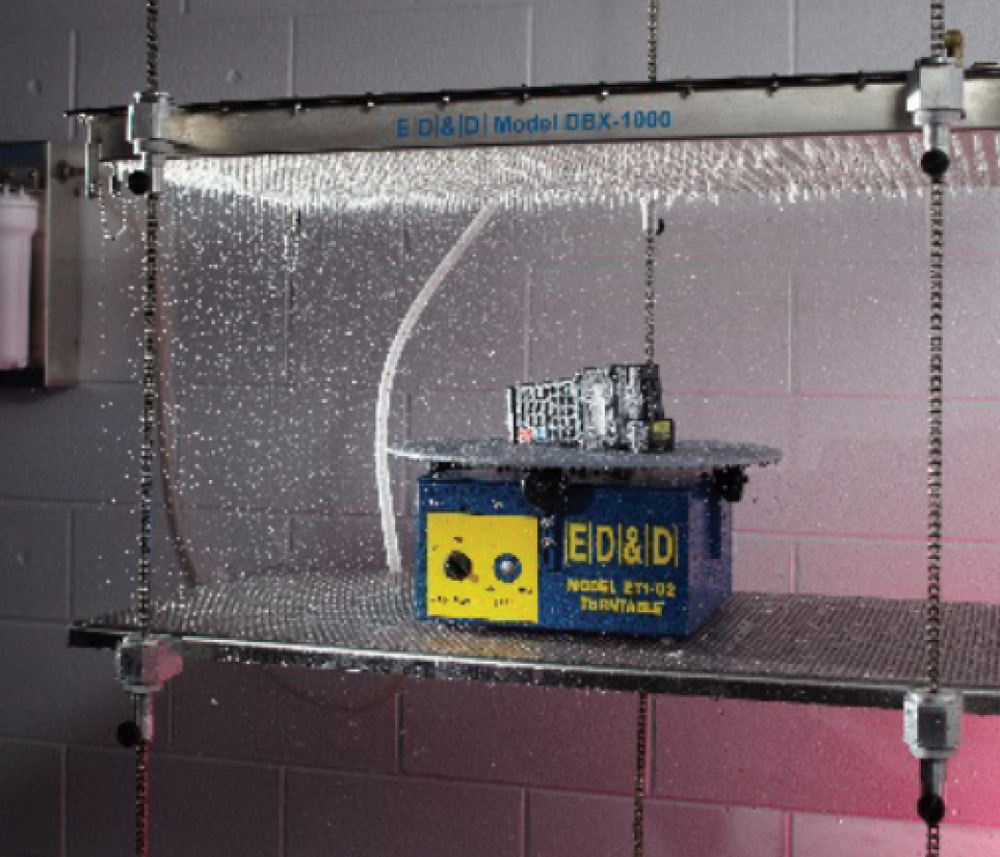
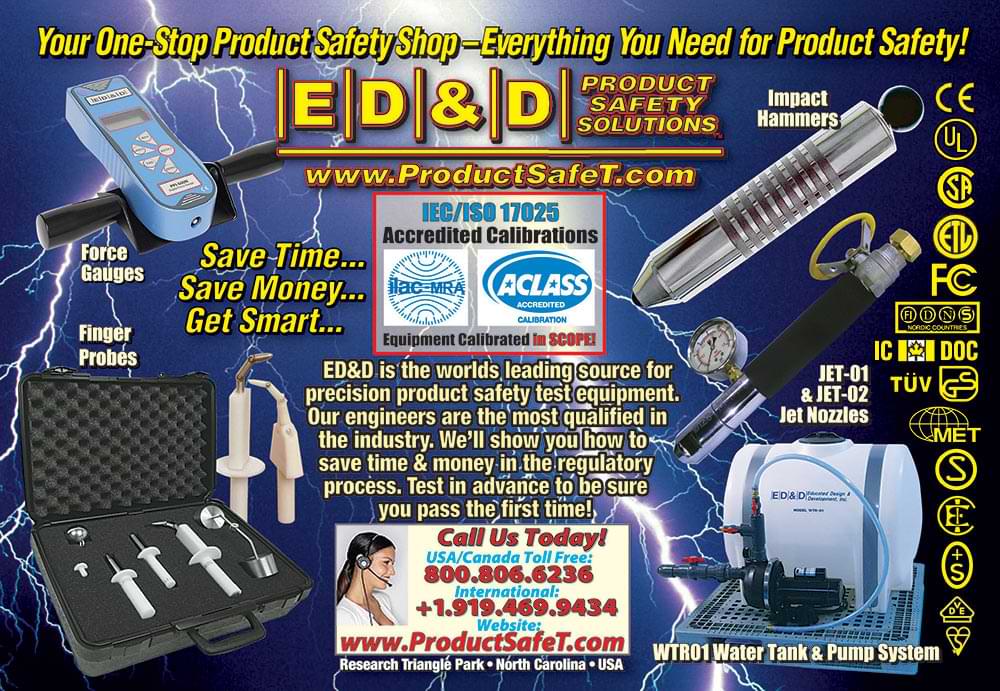
E D & D Model DBX-1000 water spray test apparatus showering a device placed on an E D & D Model 2T1-02 turntable, likely for environmental or ingress protection testing.
IPX1 / IPX2 Drip Box System
Products intended for outdoor environments, or wet environments, often require Ingress Protection (IP) Code testing. ED&D’s cutting-edge solution for the IPX1 and IPX2 tests is the DBX Series Drip Box Test Systems. ED&D also invented IP Code Turntables, including a mini-turntable (shown) that allows for meeting requirements of the IP Code. ED&D also offers the device mounted in a chamber or it can be offered in combination with the Spray Test Chamber (STC-DBX Series). Other products for the IP Code include Dust Chambers, Spray Test Chambers, Spray Nozzles, Jet Nozzles, Accessibility Probes, and Oscillating Spray Testers.
Close-up of a worker in green gloves assembling a high-voltage electric vehicle battery pack with multiple silver-colored cooling tubes between the cell modules.
Advance Your Battery Designs
Advance your battery designs with Element’s performance testing. We deliver precise insights through charge/discharge cycling, calendar life, aging, and thermal runaway testing. Our experts go beyond compliance, providing data you can trust to optimize safety, quality, and reliability.
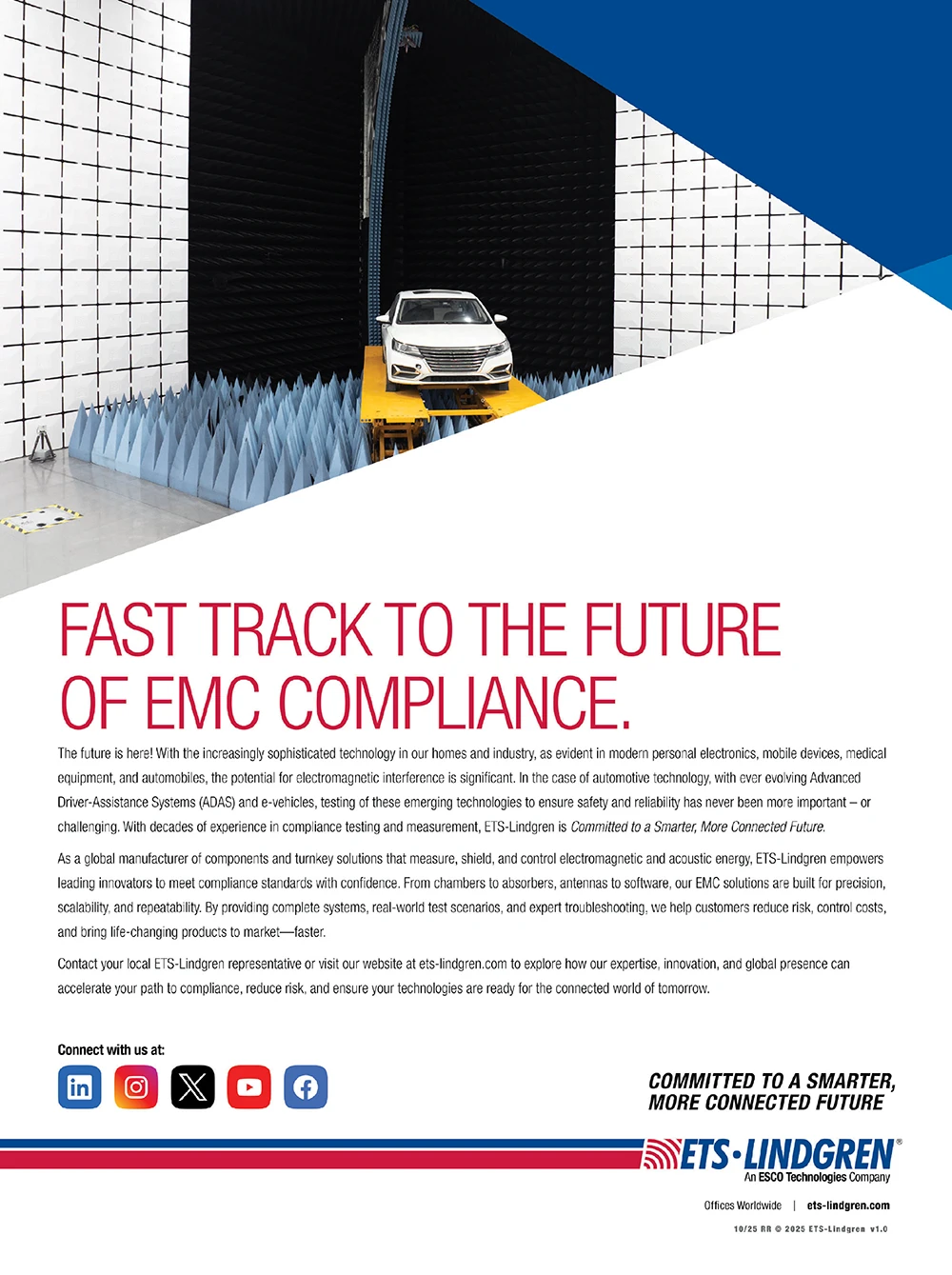
A white sedan on a yellow rotating platform inside a semi-anechoic EMC test chamber with black and white foam absorbers on the walls and blue ferrite cones on the floor.
Fast Track to the Future of EMC Compliance
The future is now! As technology in our homes and industries becomes increasingly sophisticated, the potential for electromagnetic interference grows significantly. In the automotive world, where vehicles are essentially computers on wheels with varying levels of automation, ensuring the safety and reliability of these emerging technologies is more critical—and more challenging—than ever. With decades of expertise, ETS-Lindgren is Committed to a Smarter, More Connected Future.
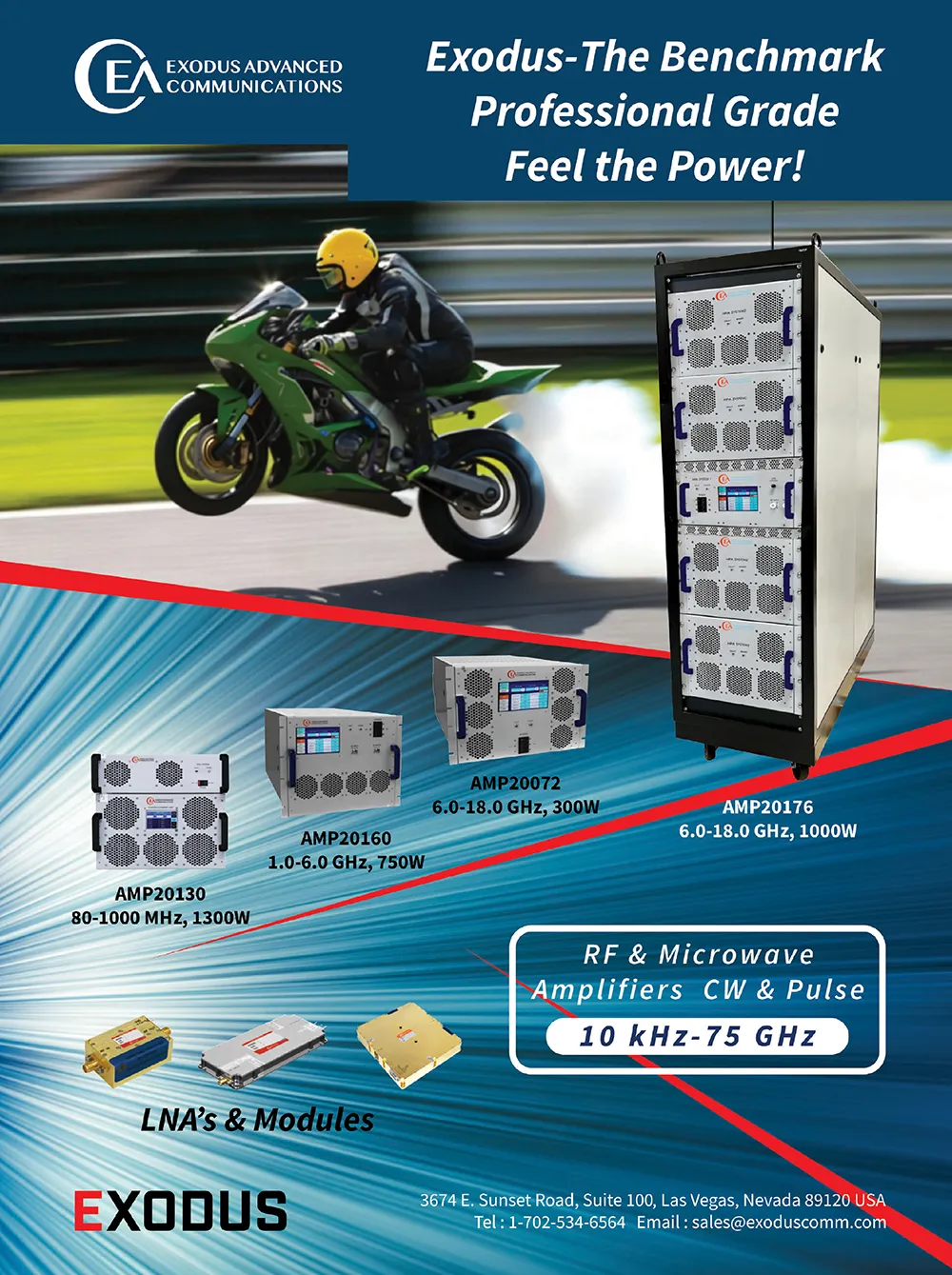
Advertisement for Exodus Advanced Communications showing a solid-state RF power amplifier, Model AMP20085, with specifications 1.0-10.0 GHz, 100W, for EMC Testing.
AMP20085 – 1.0–10.0 GHz, 100 W Broadband Amplifier
Exodus Advanced Communications’ AMP20085 is a rugged, compact solid-state amplifier covering 1.0–10.0 GHz. Delivering 100 W minimum with 50 dB gain, this Class A/AB design outperforms TWTs. Features include forward/reflected power monitoring in dBm/Watts, plus VSWR, voltage, current, and temperature sensing for extreme reliability. Compact 5U chassis, 30 kg.
A young man on a longboard and a young woman on an electric scooter laughing while riding outdoors on a paved area at sunset.
SGS was the First NRTL to Certify e‑Mobility Devices under OSHA Standards
SGS was the world’s first NRTL accredited by OSHA to test and certify personal e-Mobility devices and e-Bikes for US markets. We are one of a few labs authorized for ANSI/CAN/UL 2272 and UL 2849 safety standards. Our services include substance screening, battery evaluation, mechanical durability and design‑to‑market consulting. Ensure your product meets mandatory safety benchmarks. Partner with SGS today!
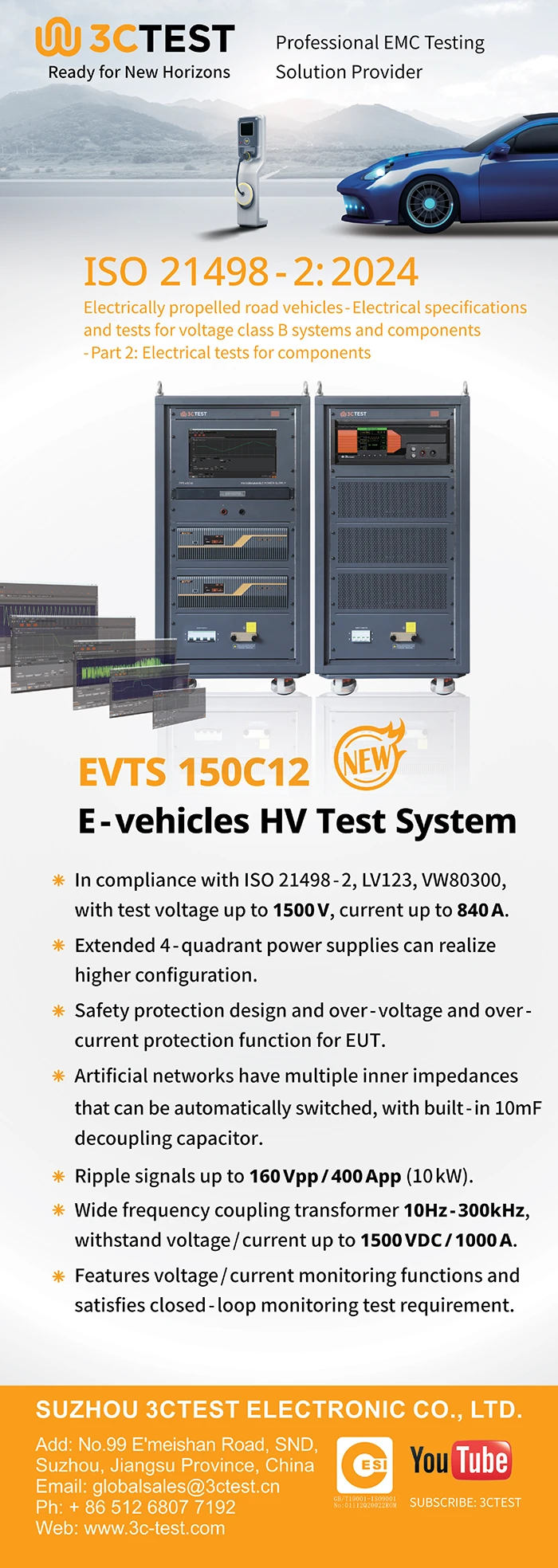
W3C Test EVTS 150C12 E-vehicles High Voltage Test System, a dual-cabinet rack of EMC test equipment that complies with ISO 21498 and other automotive standards.
EVTS 150C12 E-vehicles HV Test System
The EVTS 150C12 E-vehicles HV Test System is designed according to ISO 21498 – 2, LV123, VW80300, with test voltage up to 1500 V, current up to 840 A. Max., and ripple signal of 160 Vpp/400 App (10 kW). It includes a 4-quadrant power supply, artificial networks, coupling transformer, and control software. Higher configurations can be achieved by adding extendable power sources. The system is equipped with safety protection design and over-voltage and over-current protection functions. Visit https://www.3c-test.com.
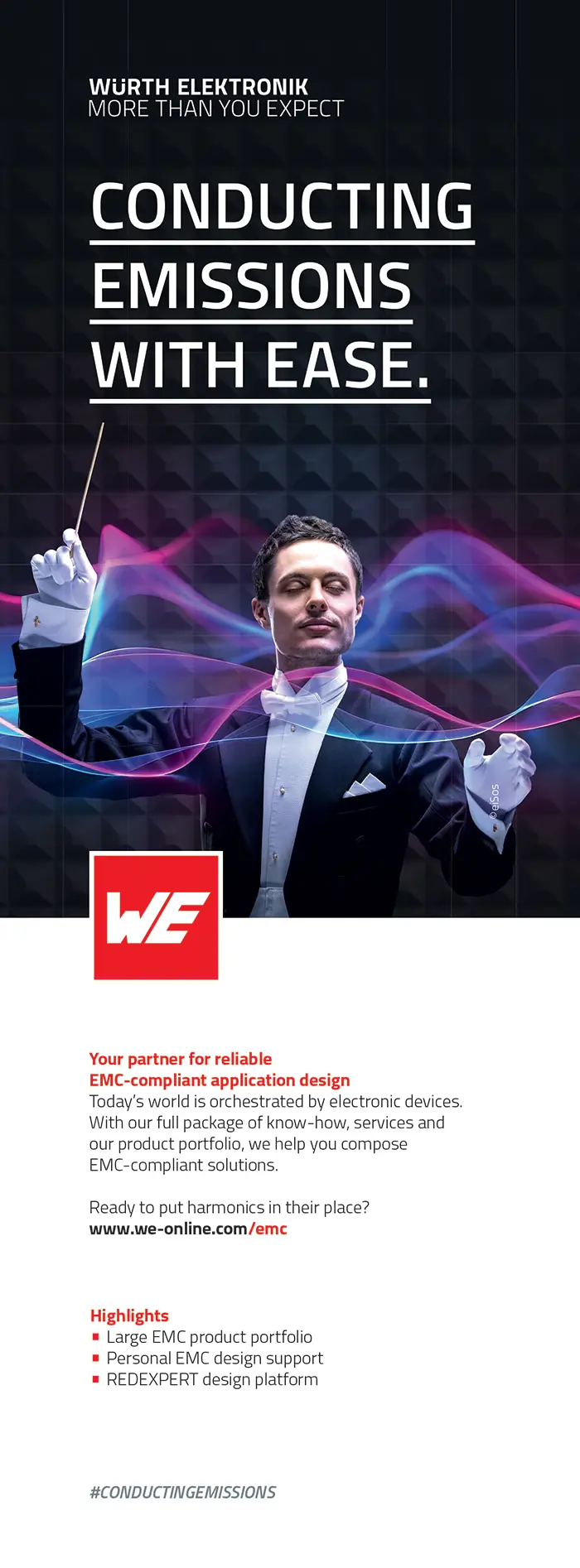
8-bit pixel art image of a man running and cheering as electronic components like coils, transformers, and integrated circuits fall from a red 'WE' logo platform under a blue sky.
Power Up with Würth Elektronik!
With our wide portfolio of high-quality components, a toolbox full of technical guidelines, our design platform REDEXPERT, books, and application-based content, we provide the right solution for every aspect of your design. Our team of experts provides you with personal and digital support for all questions relating to power conversion. Power up your efficiency and design-in time with us. Visit us at https://www.we-online.com/en/components/products.
Featured
Suppliers
Quickly locate and connect with trusted industry partners for your business needs.
A.H. Systems logo
A.H. Systems, Inc.
Absolute EMC, LLC logo
Absolute EMC, LLC
ar logo
AR RF/Microwave Instrumentation
E. D. & D., Inc. logo
E. D. & D., Inc.
Exodus Advanced Communications logo
Exodus Advanced Communications
Suzhou 3ctest Electronic Co, Ltd. logo
Suzhou 3ctest Electronic Co, Ltd.
Würth Elektronik logo
Würth Elektronik
A.H. Systems logo
A.H. Systems, Inc.
Absolute EMC, LLC logo
Absolute EMC, LLC
ar logo
AR RF/Microwave Instrumentation
E. D. & D., Inc. logo
E. D. & D., Inc.
Exodus Advanced Communications logo
Exodus Advanced Communications
Suzhou 3ctest Electronic Co, Ltd. logo
Suzhou 3ctest Electronic Co, Ltd.
Würth Elektronik logo
Würth Elektronik
EMC concepts explained
Shielding to Prevent Radiation
Part 4B: Far-Field Shielding Effectiveness of Solid Conducting Shield – Approximate Solutions – Version 2
By Bogdan Adamczyk
T

his is Part 4B of seven devoted to the topic of shielding to prevent electromagnetic wave radiation. The first article [1] discussed reflection and transmission of uniform plane waves at a normal boundary. The second article, [2], addressed the normal incidence of a uniform plane wave on a solid conducting shield with no apertures. The third article, [3], presented the exact solution for the shielding effectiveness of a solid conducting shield. In Part A of the fourth article [4], Version 1 of the approximate solution was derived. In this article, a more practical Version 2 of the approximate solution (obtained from Version 1) is presented.
hot topics in ESD
In-situ ESD Current Sensing in a Pick-and-Place Machine
By Ellen Merkel and Heinrich Wolf
On behalf of EOS/ESD Association, Inc.
I

n the rapidly evolving semiconductor industry, the shift towards Multi-Chip Modules (MCM) and Systems in a Package (SiP) is notable. These advanced assemblies comprise multiple chiplets, sensors, and optoelectronic components, which are vulnerable to Electrostatic Discharge (ESD). The complex internal architecture of MCMs and SiPs—with their internal pins and through-silicon vias—poses challenges for ESD protection in assembly processes.

During the assembly of these systems, components may be exposed to ESD stress. Established methods for assessing the Charged Device Model (CDM) [1] robustness of individual devices exist, including advanced methods such as Capacitively-Coupled Transmission Line Pulsing (CC-TLP) [2]-[7] or low-impedance contact CDM (LICCDM) [8] [9]. While CC-TLP yields reproducible results even for bare dies or wafers, it uses current to determine the robustness level. Insufficient data currently exists regarding the correlation between charging voltages in production machines and discharge currents during the assembly process. This study proposes a method to measure discharge currents during the pick and place process, aiming to link this current to a pre-charge voltage and enhance the evaluation of ESD protection requirements for internal pins.


The EERC logo
Electrical Engineering Resource Center
Unlocking compliance and efficiency in EMI testing is pivotal for seamless product development. Traditional methods falter in capturing intermittent interference, risking non-compliance with stringent standards. Delve into the transformative power of FFT‑based time domain scans, surpassing limitations of stepped scanning.
Vitrek’s application note details how MTI’s Accumeasure™ uses non-contact, push-pull capacitance probes for real-time, sub-micron thickness monitoring during semiconductor wafer lapping—even in electrically noisy, ungrounded environments. Automated alerts prevent over-thinning, improving yield consistency, precision, and process safety.
Is it time to renew your subscription to In Compliance?
Was this issue of In Compliance forwarded to you?
Do you only want to receive the In Compliance enewsletters?

You can do that here.

Upcoming Events
red star Visit In Compliance’s booth at these events!
October 1
Impact of Electric Vehicles on AM Radio Reception

October 2-3
Principles of EMC

October 6-9
red star The Battery Show 2025

October 7-10
EMC Course by SILENT Solutions

October 14
red star San Diego Test Equipment Symposium

October 14-17
EMC Course by SILENT Solutions

October 20-23
TCB Council Fall Workshop

October 20-23
Auditing Your Laboratory to ISO/IEC 17025:2017

October 20-23
Understanding ISO/IEC 17025:2017 for Testing and Calibration Labs

October 30
Meeting MIL-STD 461 and MIL‑STD 810
Test Requirements

November 2-7
red star 47th Annual Meeting and Symposium of the Antenna Measurement Techniques Association

November 10-11
Understanding ISO/IEC 17025:2017 for Testing and Calibration Labs

November 12-13
Auditing Your Laboratory to ISO/IEC 17025:2017

November 20
Year 2026 Regulatory Regulations Outlook: FCC TCBC Training

Advertiser Index
View Index
A.H. Systems, Inc. – Ad 1, Ad 2
Absolute EMC – Ad 1, Ad 2
AP Americas – Ad 1, Ad 2
AR RF/Microwave Instrumentation – Ad 1, Ad 2
Coilcraft – Ad 1, Ad 2
E. D. & D., Inc. – Ad 1, Ad 2
Element Materials Technology – Ad 1, Ad 2
ETS-Lindgren – Ad 1, Ad 2
Exodus Advanced Communications – Ad 1, Ad 2
SGS North America Inc. – Ad 1, Ad 2
Suzhou 3ctest Electronic Co. Ltd. – Ad 1, Ad 2
Würth Elektronik – Ad 1, Ad 2
In Compliance: The Compliance information Resource for Electrical Engineers logo
Thanks for reading our October 2025 issue!